
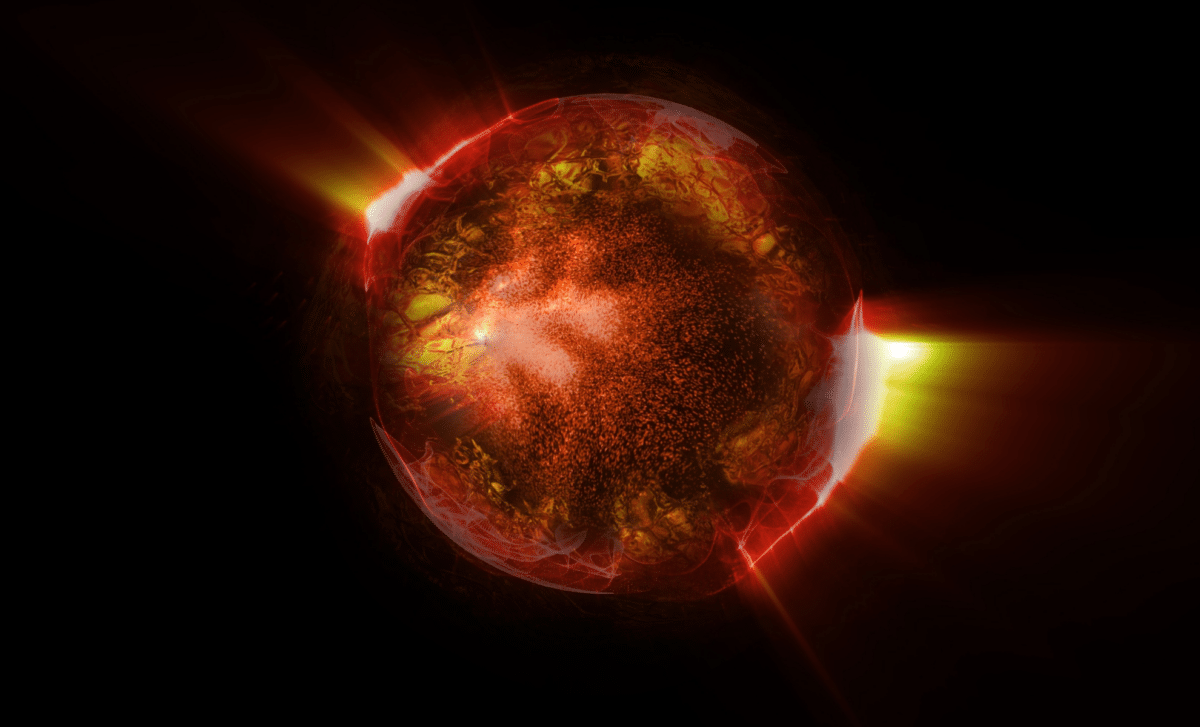
Stars frequently unleash intense bursts of energy called solar flares, causing ripples through space. While it was once believed that secondary flares, known as sympathetic flares, triggered by an initial burst were uncommon outside our Sun, recent research has uncovered that such flares happen on more than 16,000 stars, pointing to a galaxy-wide phenomenon.
Cracking the Code of Sympathetic Stellar Flares
Sympathetic flares, which are follow-up eruptions sparked by a main flare, have intrigued astronomers focused on solar activity for years. Previously, these chain reactions were observed rarely and thought to be a localized solar event. The trigger behind these successive flares had been a subject of speculation confined to our Sun's environment.
Now, scientists at Tufts University have demonstrated that sympathetic flares are common across diverse star types, from Sun-like stars to the smaller, colder M dwarfs that dominate our galaxy. This discovery, published in The Astrophysical Journal, broadens the horizon of stellar flare studies significantly.

David Martin, assistant professor in astronomy and physics at Tufts and a contributor to the research, highlighted the relevance of these findings:
“This is the first time that an effect well-known on the sun—sympathetic flaring—has been seen on other stars,” he remarked.
This revelation opens new avenues for understanding how stars exhibit complex behaviors beyond previous expectations.
Investigating the Dynamics Behind Stellar Flares
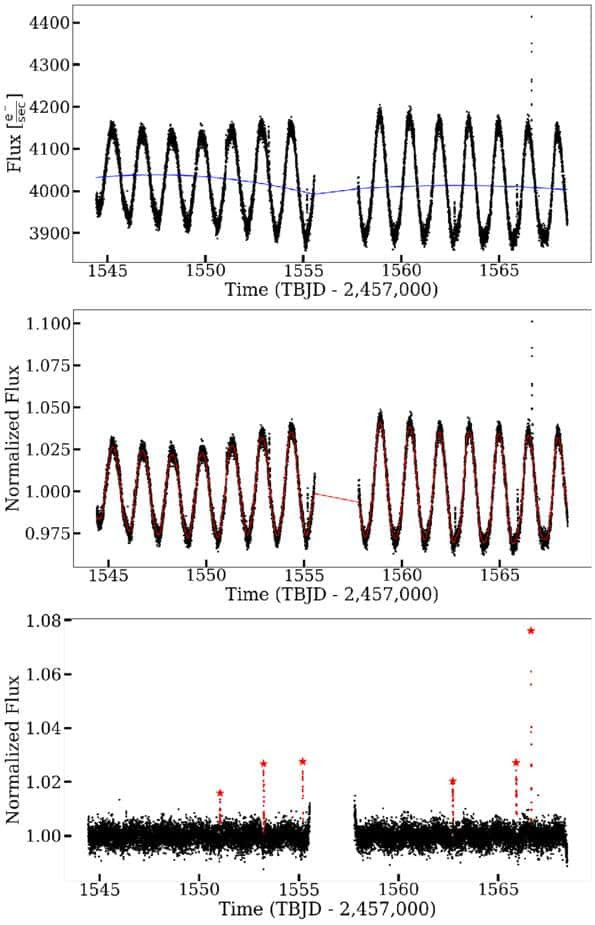
Sympathetic flaring arises when one flare's energy output sparks an additional flare shortly after. Detecting these sequences is challenging because the flares often overlap in time, with one flare fading as the next intensifies, making the star’s brightness fluctuate rhythmically. Veronica Pratt, a Tufts PhD candidate and lead author, explained, “Flares ignite rapidly but take some time to dim. Sometimes while one flare is subsiding, another starts, whether they are connected or not.”
The overlapping brightness changes can confuse conventional flare detection methods, which typically have trouble identifying closely spaced flares. “This pattern causes the star to appear as if it brightens, dims, and then brightens again, a scenario that many traditional algorithms cannot easily interpret,” Pratt added. To resolve this, the team introduced an innovative tool called TOFFEE (Threshold-Optimized Flare Finding and Energy Estimation), analyzing over 200,000 flares from 16,000 stars.
Developing such an advanced technique allowed the researchers to differentiate sequential unrelated flares from those causally connected. Martin compared the phenomenon to a social analogy:
“It is analogous to someone yawning and then someone else in the room yawning right afterwards—was this a response mechanism or were they simply both tired?”
Unexpected High Rates of Sympathetic Flares Among M Dwarf Stars
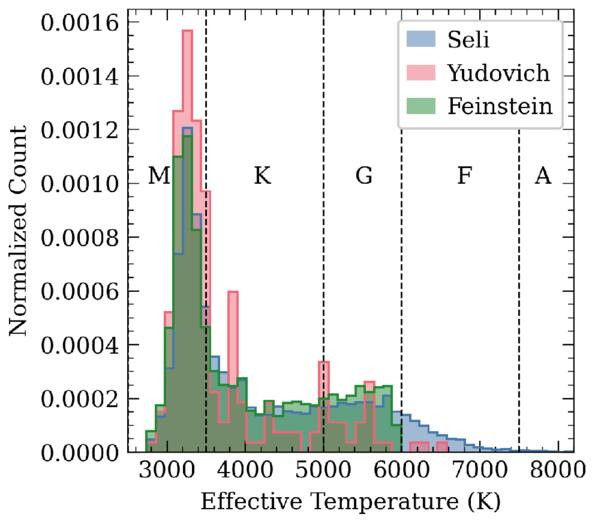
One remarkable outcome of this research is the significant prevalence of sympathetic flares on M dwarfs. These small, cooler stars are the most numerous in our galaxy but differ greatly from stars like the Sun, especially in their high activity levels and energetic emissions disproportionate to their size.
Pratt commented on this notable finding:
“M dwarfs, which made up the bulk of the sample, are so different from the Sun. They’re substantially smaller, half as warm, and substantially more active.”
Despite these vast differences, the rate of sympathetic flaring on M dwarfs matches that observed on our Sun, occurring between 4% and 9% of the time.
The results indicate that the driving mechanism behind sympathetic flares is not unique to any star type but may be a universal process operating throughout stellar systems. Pratt suggested, “This points to a shared underlying cause of sympathetic flaring that exists across stars with varied magnetic environments, though its precise nature remains unclear.”
- Categories:
- Astronomy







0 comments
Sign in to Comment