
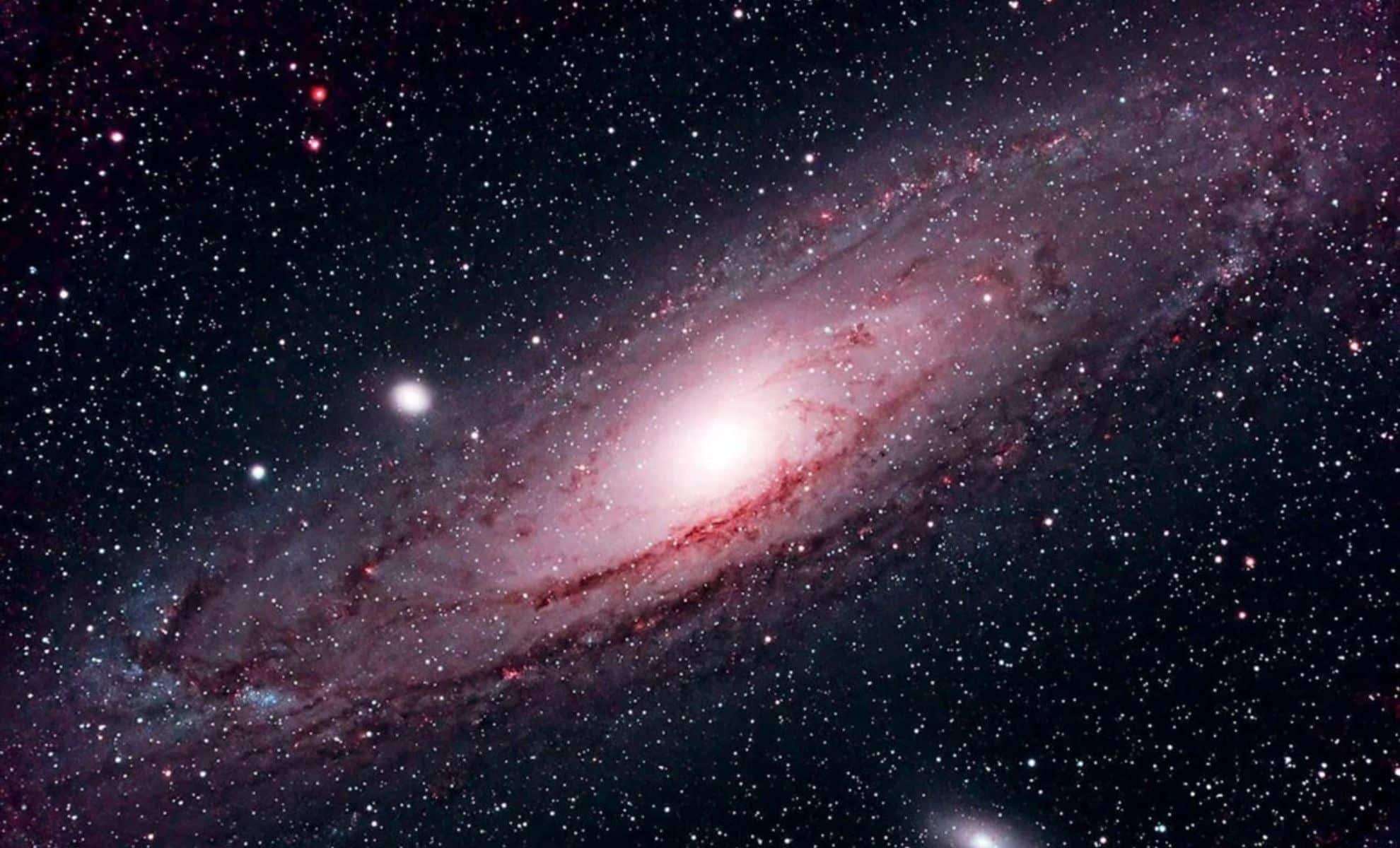
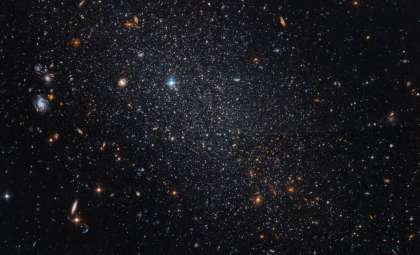
A recently identified dwarf galaxy has been spotted on the fringes of the Andromeda Galaxy, joining an expanding roster of elusive satellite galaxies orbiting nearby. This faint galaxy, designated Pegasus VII, ranks among the dimmest satellites ever observed around Andromeda, hinting that numerous other faint galaxies may remain concealed within the vast cosmic environment. This finding enriches our comprehension of galaxy formation and prompts fresh inquiries into the interactions between these ancient stellar systems and their dominant galactic hosts.
Discovery of a Concealed Galaxy in the Cosmic Outskirts
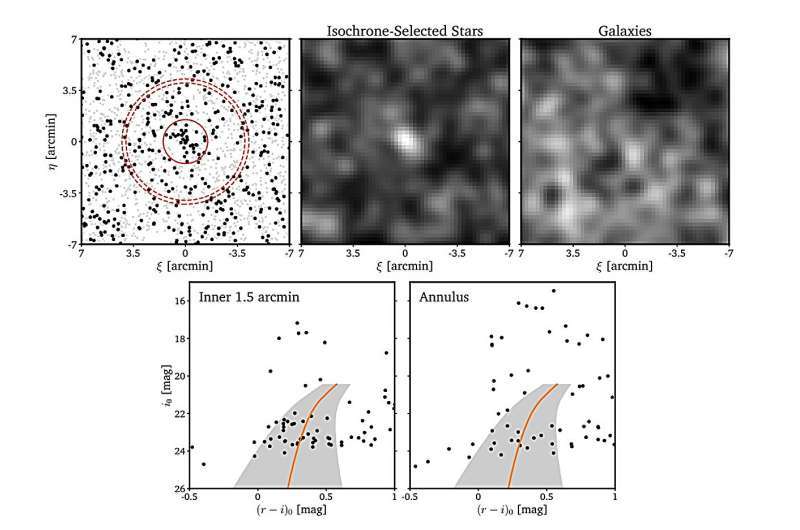
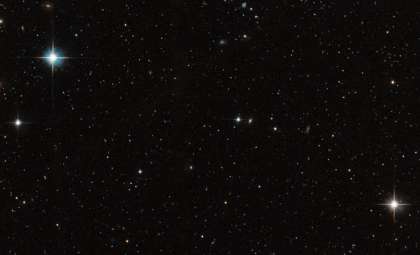
A recent paper published on February 13, 2025, on the arXiv repository reveals the detection of Pegasus VII, a dwarf galaxy approximately 2.4 million light-years distant. The research team, led by Simon E. T. Smith from the University of Victoria in Canada, utilized observations from the Ultraviolet Near-Infrared Optical Northern Survey (UNIONS) to identify an unusual concentration of stars in the halo of Andromeda (Messier 31).
Subsequent detailed imaging from the Canada-France-Hawaii Telescope alongside Gemini-North Telescope confirmed that Pegasus VII is indeed a dwarf galaxy rather than a simple star cluster. The analysis suggests Pegasus VII is just now moving within Andromeda’s gravitational domain, implying it had remained isolated for billions of years prior to this cosmic approach.

An Ancient, Dim Galactic Relic
Dwarf galaxies serve as cosmic time capsules, preserving evidence from the universe’s earliest star formation phases. Pegasus VII fits this profile, with age estimates reaching about 10 billion years, dating back to the dawn of galactic development.
Despite its vast age, Pegasus VII remains exceptionally faint, exhibiting an absolute magnitude of −5.7 and possessing a stellar mass close to 26,000 times that of our Sun. Comparatively, this dwarf galaxy is roughly five times larger than the largest known globular clusters in the Andromeda system, yet it remains one of the tiniest and least luminous galaxies ever documented.
The investigation also showed that Pegasus VII has an elongated shape, with an ellipticity of 0.5. This shape alteration might signal past gravitational interactions with Andromeda, suggesting that Pegasus VII is gradually being pulled and distorted as it spirals inward toward Andromeda’s orbit.
Unique Characteristics of Pegasus VII
Though numerous dwarf galaxies exist within Andromeda’s halo, Pegasus VII stands apart for a few key reasons:
- It ranks among the faintest satellites detected around Andromeda, implying many additional faint satellites await discovery.
- Its current entry into Andromeda’s gravitational influence offers a rare glimpse of a dwarf galaxy just beginning to merge with a massive host.
- The stellar composition and chemical signatures indicate minimal disturbance over billions of years, presenting a pristine environment to explore primordial star formation.
Increasing Numbers of Concealed Galactic Companions
The unveiling of Pegasus VII backs theories that a significant number of dwarf galaxies still lie hidden near both Andromeda and the Milky Way. These faint and diminutive galaxies evade easy detection, but cutting-edge surveys like UNIONS are enhancing astronomers’ ability to find them.
“The discovery of Pegasus VII complements both the empirical and theoretical claim that a wealth of dwarf galaxy satellites remain undetected towards M31,” the study remarks. This suggests that with future observations, even more tiny galaxies may be identified, shedding light on the growth processes of giant galaxies like Andromeda through the absorption of smaller companions.
- Categories:
- News




0 comments
Sign in to Comment