
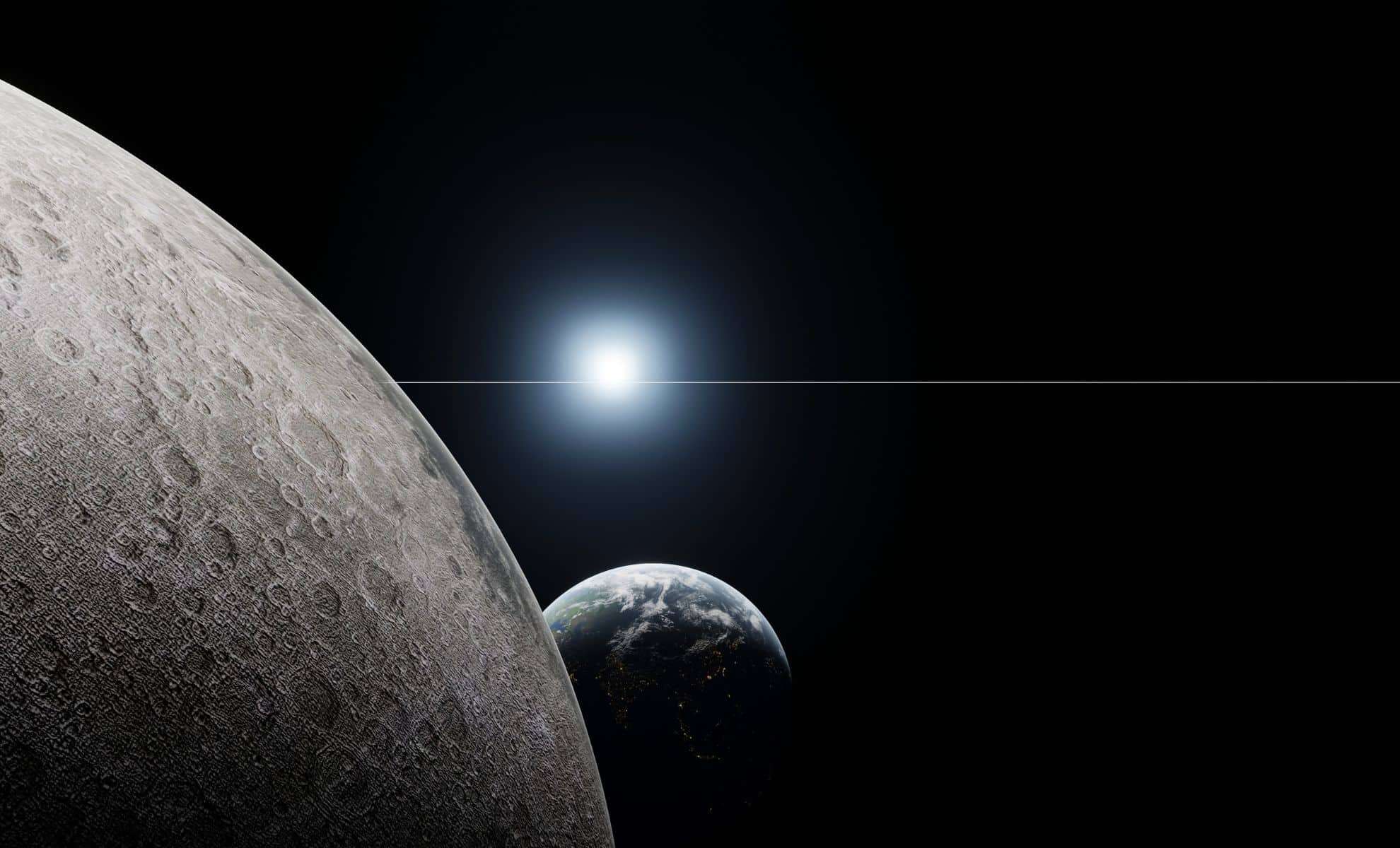
Astronomers have recently verified the existence of a quasi-moon dubbed 2025 PN7, which has quietly accompanied Earth in its solar orbit for more than six decades. The findings, detailed in the Research Notes of the American Astronomical Society, highlight how this small space rock has maintained a subtle gravitational relationship with our planet since the 1960s, without being a true satellite.
Understanding Quasi-Moons: What Sets Them Apart?
A quasi-moon, also known as a quasi-satellite, differs fundamentally from a conventional moon because it doesn’t orbit Earth directly. Instead, it shares Earth's solar orbit in a synchronized manner, creating the illusion of companionship while orbiting the Sun. This twin-orbit dynamic keeps the object near Earth but not gravitationally captured by it.
Unlike mini-moons—which are briefly trapped in Earth’s gravity and circle the planet for limited timespans—quasi-moons maintain a long-lasting resonance with Earth’s orbit. This indirect but stable association makes them celestial partners rather than orbiting satellites.

Currently, 2025 PN7 is among just seven identified quasi-moons. Its prolonged undetected presence, despite its persistent orbit around Earth’s vicinity, makes it an especially fascinating subject for astronomers.
Discovery of an Elusive Orbital Companion in 2025
The asteroid known as 2025 PN7 was initially spotted on August 2, 2025, by the Pan-STARRS Observatory located in Haleakalā, Hawaii. This object’s estimated diameter ranges between 15 and 19 meters, comparable in size to a modest building. Its orbit swings between distances as near as 2.8 million miles and as distant as 37.2 million miles from Earth. Its relatively small size and lengthy orbital path contributed to it remaining unnoticed until now.
Presently positioned within the Piscis Austrinus constellation—commonly visible from the Southern Hemisphere—2025 PN7 has likely traversed a resonant orbital path with Earth since the early 1960s. Classified as an Arjuna-type asteroid, it exhibits a slow, Earth-like orbital velocity.
Scientists have concluded that 2025 PN7 does not pose a risk to Earth, but its discovery provides an important chance to study the gravitational interplay of these co-orbital bodies. Additionally, its accessibility might make it an attractive target for future exploratory missions.
Insights Into the Stability of Quasi-Moons
Although not traditional satellites, quasi-moons like 2025 PN7 mirror Earth’s orbit closely enough to establish a distinctive celestial setup. This phenomenon is an area of active investigation as astronomers strive to understand the dynamics governing these objects.
Beyond being astronomical curiosities, such bodies offer practical scientific benefits. Their accessibility makes them excellent targets for exploration missions, whether robotic or crewed. Investigating their composition could yield valuable data about the early phases of our solar system if material sample returns become feasible.
In fact, missions to quasi-moons are already in progress. For example, China’s Tianwen-2 spacecraft, launched in May 2025, aims to visit Kamoʻoalewa (2016 HO3), with plans to bring samples back to Earth by 2027. This mission will mark the smallest asteroid ever explored directly.
While Kamoʻoalewa is larger—measuring between 40 and 100 meters in diameter—it shares a similarly steady orbit with Earth. Its orbital path features a distinctive looping motion, reflected in its Hawaiian name meaning “oscillating celestial object.”
Potential for Future Exploration of 2025 PN7
Despite being smaller than Kamoʻoalewa, 2025 PN7’s orbit and proximity make it an attractive option for an affordable spacecraft mission. Its steady trajectory and closeness to Earth could facilitate sample collection, resource examination, or even future exploitation.
Astronomer Sam Deen noted in an interview with Sky & Telescope that such objects are "exceptionally accessible for spacecraft visits" because of their orbital alignment and relatively low velocities. These features render quasi-moons valuable platforms for testing technologies designed for extended space travel.
- Categories:
- News








0 comments
Sign in to Comment