
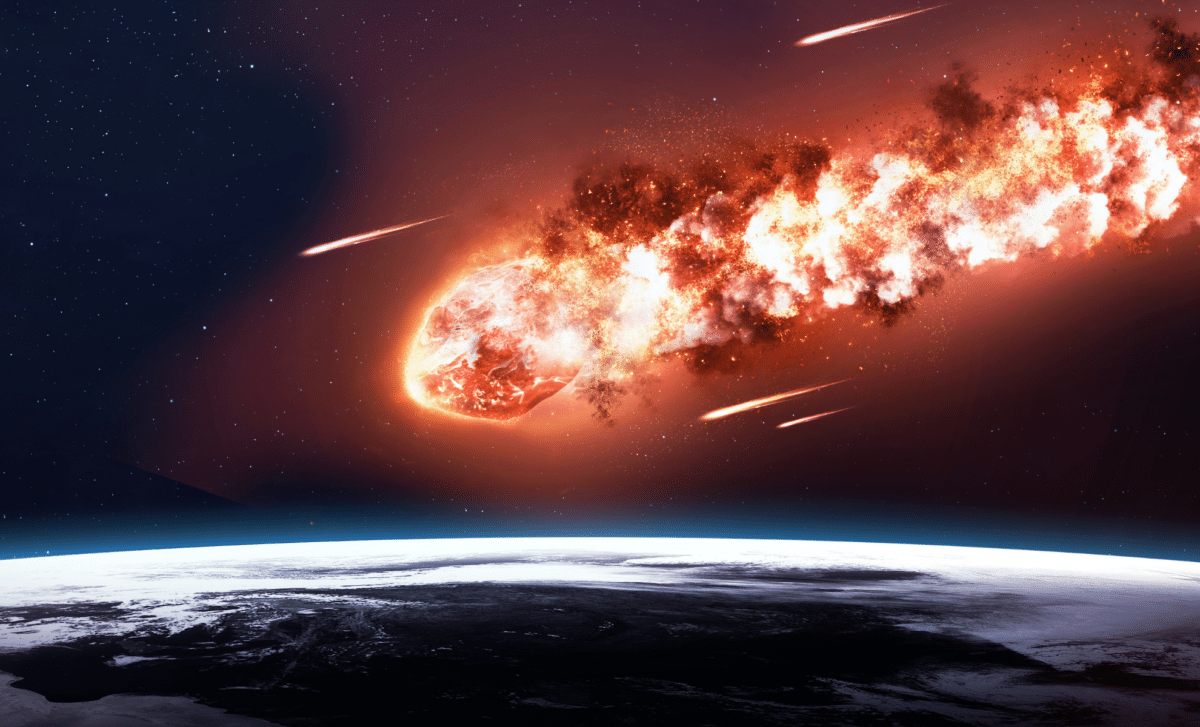
Concerns about the threat posed by near-Earth asteroids have taken a leap forward with new research unveiled in Nature Communications, shedding light on novel methods to prevent devastating asteroid impacts. While using nuclear devices against space objects once seemed purely speculative, recent scientific advances are bringing this approach firmly into the realm of possibility.
Physicists from the University of Oxford and the Outer Solar System Company (OuSoCo) have discovered that detonating nuclear explosives near asteroids could be an effective defense. Their innovative experiments, which involved irradiating meteorite specimens to test their resilience, may redefine future planetary protection strategies.
Asteroids’ Unexpected Strengthening Under Impact
The study published in Nature Communications reveals surprising new insights about asteroid composition. Contrary to earlier predictions that asteroids would shatter under force, researchers found evidence that these celestial rocks could actually reinforce their structure when stressed. This discovery has major consequences for designing asteroid mitigation tactics.

“These analyses are intended to examine changes in the meteorite’s internal structure caused by the irradiation and to confirm, at a microscopic level, the increase in material strength by a factor of 2.5 indicated by the experimental results,” explains Melanie Bochmann, co-founder of OuSoCo and co-leader of the research team.
This challenges longstanding beliefs about how asteroids react to high-energy impacts. Previously, it was assumed that nuclear blasts might fragment an asteroid into multiple hazardous pieces. Now, it appears that under specific scenarios, asteroids could maintain cohesion despite extreme forces, dramatically lowering fragmentation risks during a nuclear intervention.
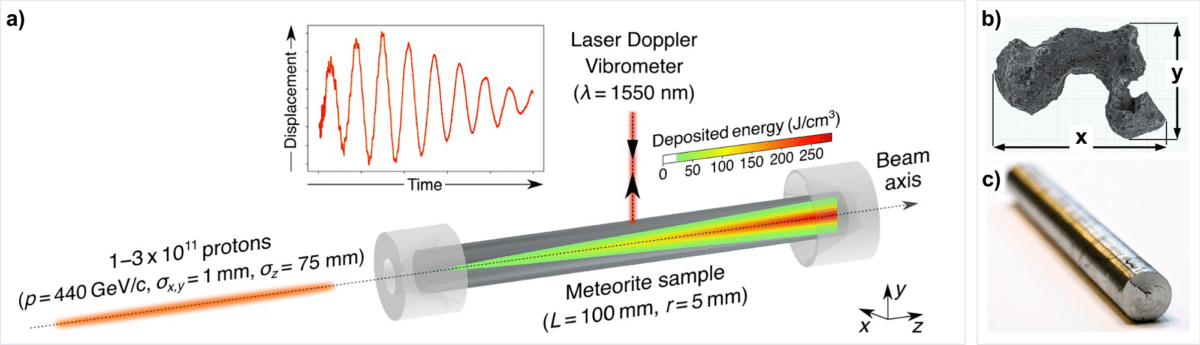
The findings derive from testing the Campo del Cielo iron meteorite, one of the most ancient and studied specimens. Using CERN’s HiRadMat facility, researchers exposed the meteorite samples to intense proton bursts. Initially, the meteorite material softened under the intense energy input but then re-hardened, demonstrating a remarkable property known as strain-rate dependent damping. This means the material absorbs impact energy more effectively as the force increases, making it more resistant to breaking apart.
A Paradigm Shift in Asteroid Protection Strategies
This advancement offers crucial information on asteroid durability, influencing how we might defend Earth from future threats. Prior techniques, such as those used by NASA’s DART mission, rely on kinetic impactors—spacecraft that crash into asteroids to alter their orbits. However, this method carries risks, including inadvertently fragmenting the asteroid or misdirecting its path.
Given the new data, a nuclear-based defense method is gaining traction. Rather than detonating directly on an asteroid, scientists propose a “stand-off” detonation nearby, vaporizing parts of the surface and nudging the asteroid's course. Though once considered science fiction, experimental evidence now supports this approach due to asteroids’ unexpected toughness.
“This is the first time we have been able to observe – non-destructively and in real time – how an actual meteorite sample deforms, strengthens and adapts under extreme conditions,” says Gianluca Gregori, a physicist at the University of Oxford and one of the study’s co-authors.
Real-time observation of meteorite behavior during impact enables researchers to better tailor nuclear deflection tactics, improving the chances of a successful planetary defense mission while reducing guesswork previously inherent in destructive tests.
Remaining Obstacles: Ensuring Effective and Safe Nuclear Interventions
Despite the encouraging outcomes, significant challenges remain before nuclear asteroid deflection can be confidently deployed. Karl-Georg Schlesinger, co-founder of OuSoCo, points out that "The world must be able to execute a nuclear deflection mission with high confidence, yet cannot conduct a real-world test in advance. This places extraordinary demands on material and physics data." In other words, due to the impossibility of actual test detonations on asteroids, scientists must depend on highly accurate laboratory data and simulations.
Further exploration and experimentation in asteroid defense remain vital. As nuclear deflection shows promise, understanding the wide range of asteroid compositions and their responses to stress is critical. Robust knowledge about these variations will be essential to develop personalized approaches for each threatening object. This study emphasizes that successful asteroid deflection demands comprehensive insights into material science and impact physics rather than a simple, universal solution.
- Categories:
- Science








0 comments
Sign in to Comment