

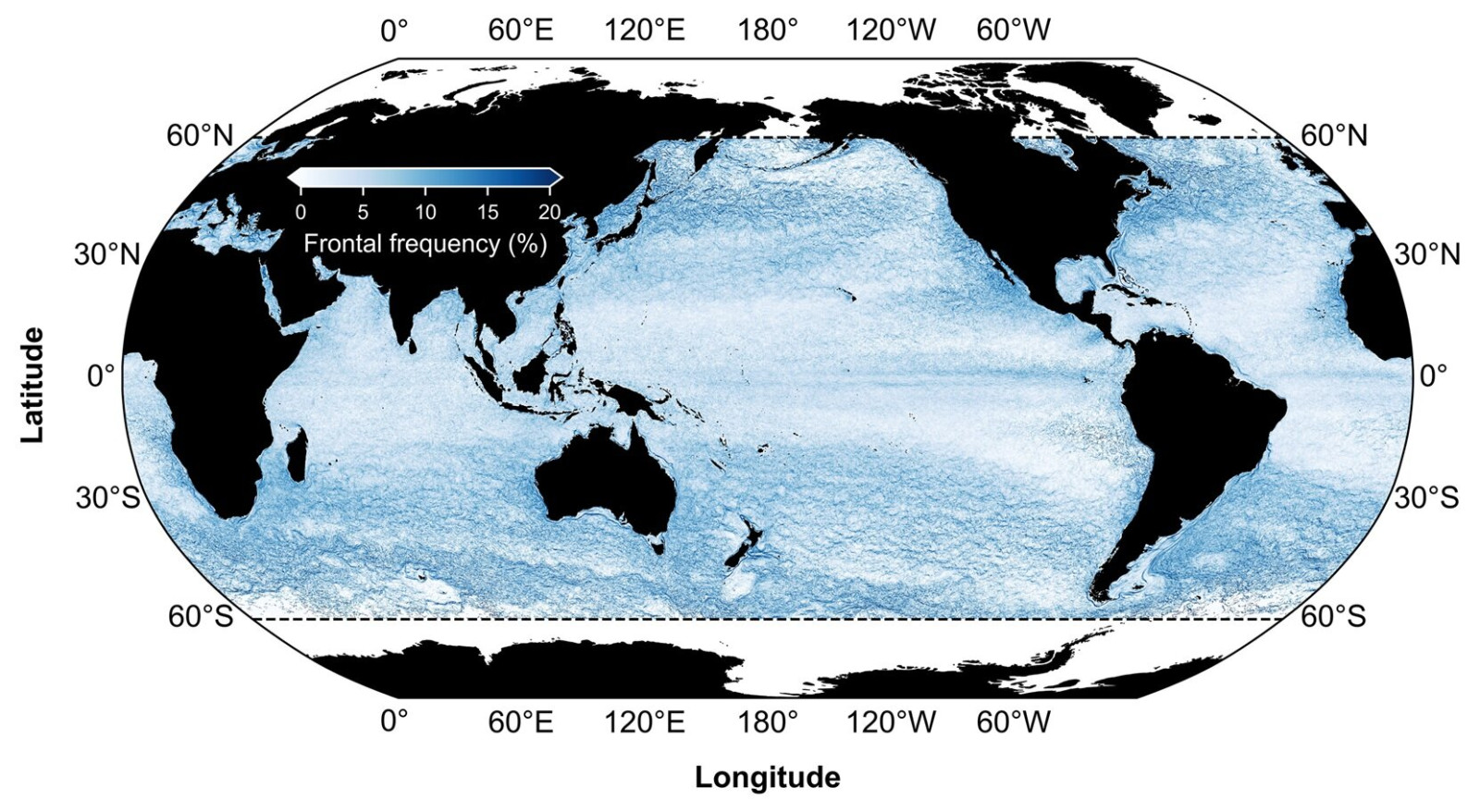
Recent findings published in Nature Climate Change highlight the critical role ocean fronts play as boundaries where distinct water bodies converge, marked by shifts in temperature, salinity, and density, profoundly influencing carbon processes. Despite occupying a minimal fraction of the ocean surface, these regions exhibit intense biological and chemical activity. Traditionally, they have been overlooked in climate models that prioritize larger, more uniform oceanic zones.
The researchers analyzed 20 years of satellite data to connect these dynamic ocean fronts with phytoplankton growth and enhanced CO₂ uptake. Their work reveals that fronts function as carbon sinks, absorbing significant amounts of atmospheric carbon, suggesting that current carbon budget estimates may undervalue the ocean’s true carbon storage capacity.
Compact Areas, Significant Carbon Storage
The study indicates that ocean fronts absorb disproportionately more carbon dioxide than adjacent waters. Although limited in size, these zones frequently emerge as CO₂ concentration hotspots. Constant mixing of energy and nutrients at these fronts fosters an environment conducive to marine life proliferation and carbon assimilation.

Key to this process is vertical water movement, where colder, nutrient-enriched water is brought to the surface, nourishing phytoplankton.
“These microscopic plants absorb carbon dioxide as they photosynthesize. And when they die, they sink, carrying carbon into the deep ocean where it can remain locked away for centuries,” explained Dr. Amelie Meyer, IMAS oceanographer and co-author of the study.
Phytoplankton Flourish at Ocean Boundaries
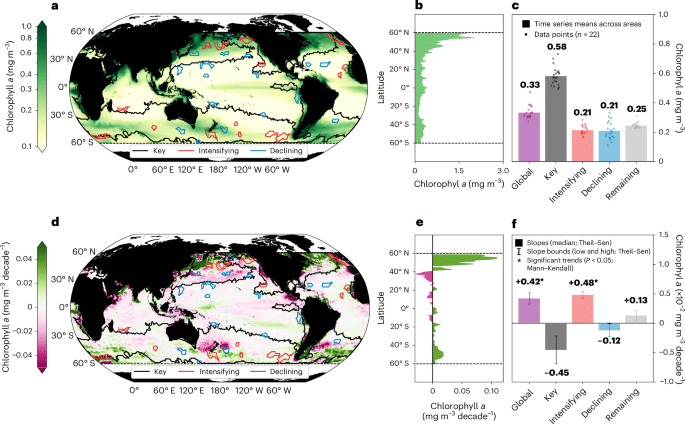
Data gathered from satellite observations also revealed elevated concentrations of phytoplankton biomass directly at ocean front locations. Since phytoplankton form the foundation of marine ecosystems, their abundance highlights these areas as not just carbon sinks but also biological hotspots. Greater phytoplankton populations drive increased photosynthetic activity, which in turn enhances atmospheric CO₂ absorption.
The persistence of this pattern over two decades is notable, with fronts consistently exhibiting high biological productivity rather than isolated events.
“Where fronts are intensifying, carbon dioxide uptake is strengthening at twice the global average rate. Where they’re declining, carbon absorption is weakening,” said the author of the research, Dr. Kai Yang said.
Climate Predictions Could Benefit from Including Ocean Fronts
A major implication of this study is that many current climate models are potentially leaving out a crucial component by failing to account for ocean fronts. Due to their coarse resolution, these models often overlook narrow, highly active areas, possibly leading to long-standing underestimations of oceanic carbon sequestration.
As noted by Phys.org, the researchers emphasize the importance of integrating such small-scale ocean features into future models. Thanks to advancements in satellite technologies and high-resolution data, it is now feasible to closely monitor these fronts and better understand their role, which could significantly enhance climate and carbon cycle forecasting.
- Categories:
- Science












0 comments
Sign in to Comment