

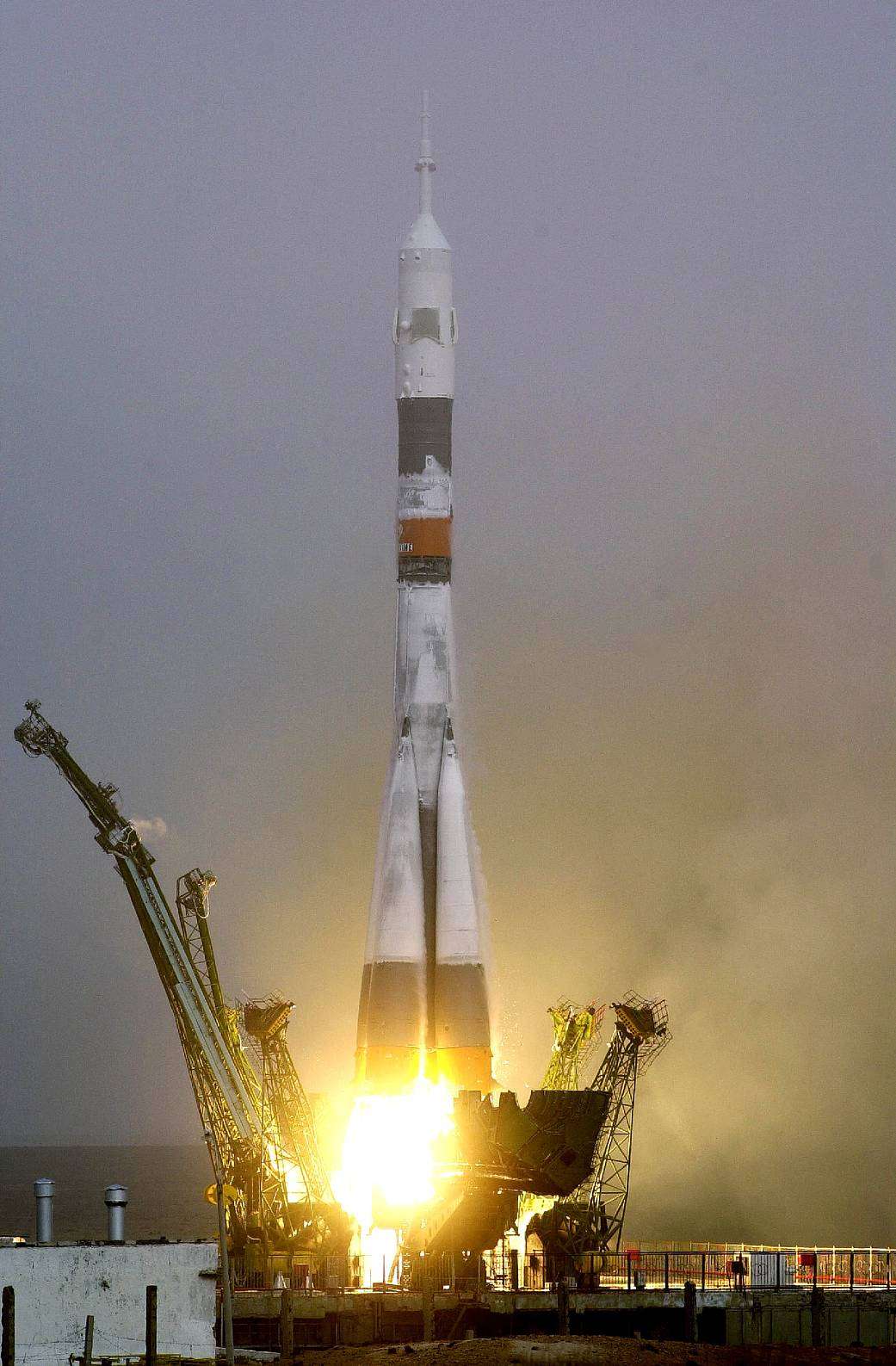
On October 31, 2000, a historic milestone was reached: the final moment when all humans were still on Earth. This date witnessed thelaunch of the Soyuz TM-31 spacecraft from the Baikonur Cosmodrome in Kazakhstan, carrying three astronauts bound for the International Space Station (ISS). The mission crew consisted of NASA astronaut Bill Shepherd alongside Russian cosmonauts Sergei Krikalev and Yuri Gidzenko from Roscosmos. Their arrival marked the commencement of an uninterrupted human presence in space, ongoing for nearly a quarter-century.
the beginning of nonstop orbital habitation
The team docked with the ISS on November 2, 2000. At that point, the station was still in early stages, predominantly featuring the Russian Zarya and American Unity modules. This space outpost, which has grown considerably since, has served as a permanent platform for scientific research beyond Earth’s atmosphere. The ISS represents a collaborative effort between five space agencies: NASA, Roscosmos, ESA, JAXA, and CSA.
Traveling around the Earth in about 90 minutes at speeds near 28,000 kilometers per hour, it can accommodate up to eight docked spacecraft simultaneously. Its living space rivals a six-bedroom home, usually supporting roughly seven astronauts at once.

To date, the ISS has hosted more than 3,000 science experiments from 108 nations, spanning fields such as fundamental physics, medical science, biology, and space engineering. It stands as a remarkable achievement in science and diplomacy, embodying global cooperation in space.
keeping the space station operational
After over twenty-five years orbiting Earth, the ISS faces increasing challenges as it ages. Persistent air leaks and outdated systems have made maintenance progressively costly. NASA and its partners plan to retire the station around 2030, including a controlled deorbiting, likely facilitated by a SpaceX spacecraft to ensure safe reentry destruction.
NASA intends to cease operating its own orbiting lab and shift toward purchasing services from private companies running commercial space stations. Firms like Axiom Space, Blue Origin, and Voyager Space, partnered with Airbus, are already developing next-generation space habitats. Should these commercial ventures face delays, China could become the sole nation maintaining an uninterrupted human foothold in low Earth orbit.
china’s expanding influence in orbit
Barred from the ISS program, China constructed its own station, Tiangong, which has maintained continuous human occupancy since 2022. Plans are underway to double Tiangong’s modules from three to six. China is also expanding cooperation with other countries, including training Pakistani astronauts for future missions. This positions China as a potential primary steward of crewed spaceflight, particularly for nations unable or unwilling to collaborate with the United States.
the growing problem of space debris
One of the biggest hurdles facing human spaceflight is the proliferation of orbital debris. Millions of fragments—ranging from obsolete satellites to collision remnants and military test leftovers—threaten spacecraft and their crews. The ISS has executed multiple evasive maneuvers to steer clear of these hazards.
Ensuring the longevity of space exploration demands enhanced safety measures. These include improved debris tracking, controlled rocket descents, and projects devoted to actively cleaning up orbiting junk, safeguarding the fragile environment where humans now live and work roughly 400 kilometers above Earth.
- Categories:
- News










0 comments
Sign in to Comment