
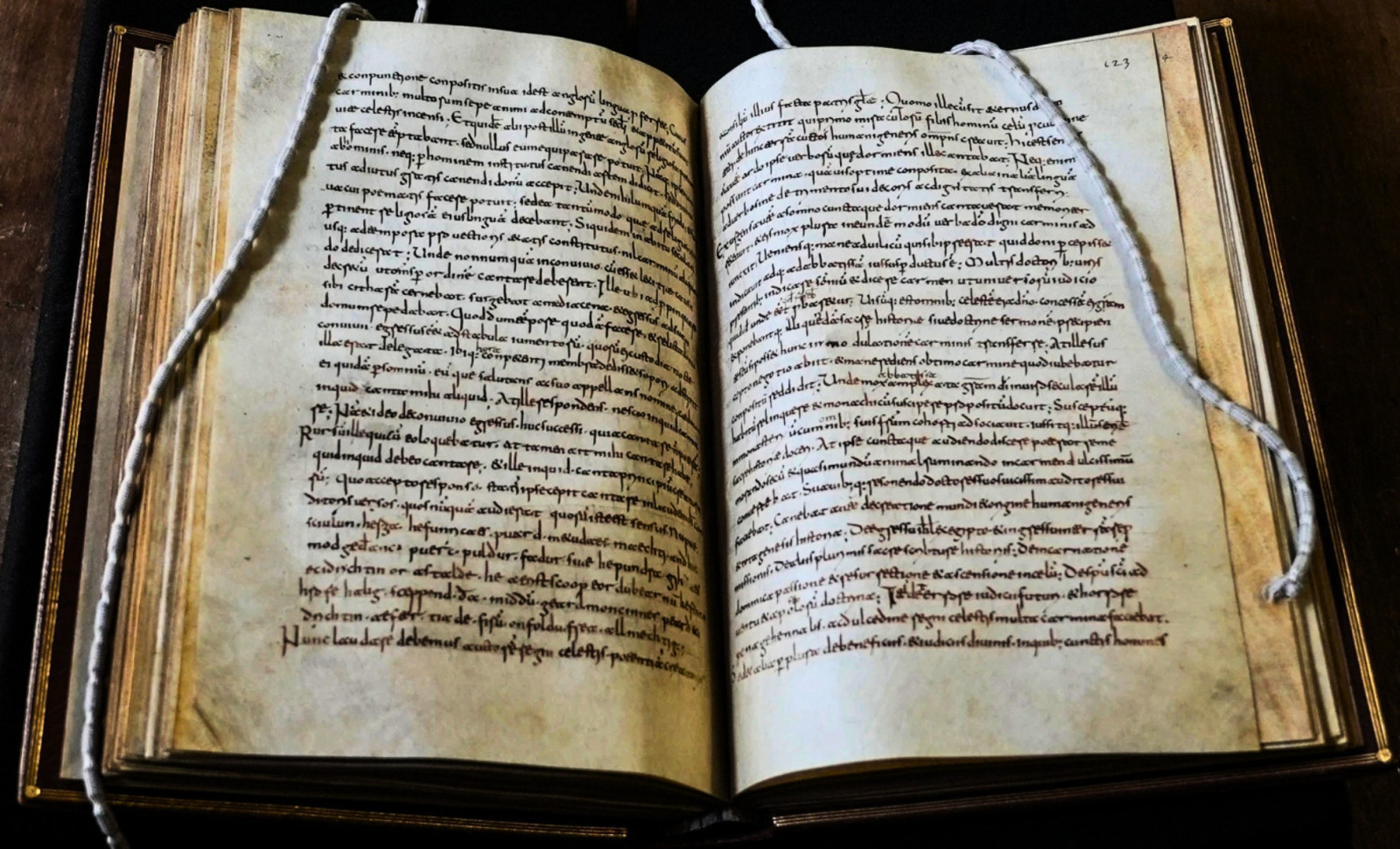
At Trinity College Dublin, two medieval manuscript experts recently identified the oldest surviving English poem hidden within a forgotten 9th-century manuscript housed in the National Central Library of Rome. This remarkable find is a preserved version of Caedmon’s Hymn, concealed inside a Latin text and undocumented by scholars since the 1970s.
Medievalists Elisabetta Magnanti and Mark Faulkner discovered the poem while examining digitized pages of the Venerable Bede’s Ecclesiastical History of the English People. The manuscript, created between 800 and 830 AD, represents the third oldest known copy of the hymn. Unlike earlier examples, the Old English lines are integrated into the body of the Latin narrative rather than relegated to margins or appendices.
“We exchanged looks and I said, ‘Nobody knows this exists,’” Magnanti recalled. The discovery, formally revealed by Trinity College Dublin, was published in Early Medieval England and its Neighbours. For decades, Bede experts believed this manuscript was lost.

The Origins of English Verse: A Cowherd’s Dream
Caedmon’s Hymn is a brief nine-line poem extolling God as Creator. According to 8th-century historian Bede, Caedmon was an unlettered cowherd at Whitby Abbey in North Yorkshire who, during a gathering where guests shared verses, felt unable to participate and left to rest among the livestock.
He dreamt of a mysterious figure commanding him to sing about the Creation. Upon waking, Caedmon composed the hymn, which is regarded as the earliest surviving Old English poem. Poet Paul Muldoon translated the opening: “Now we must praise to the skies, the Keeper of the heavenly kingdom, / The might of the Measurer, all he has in mind.”
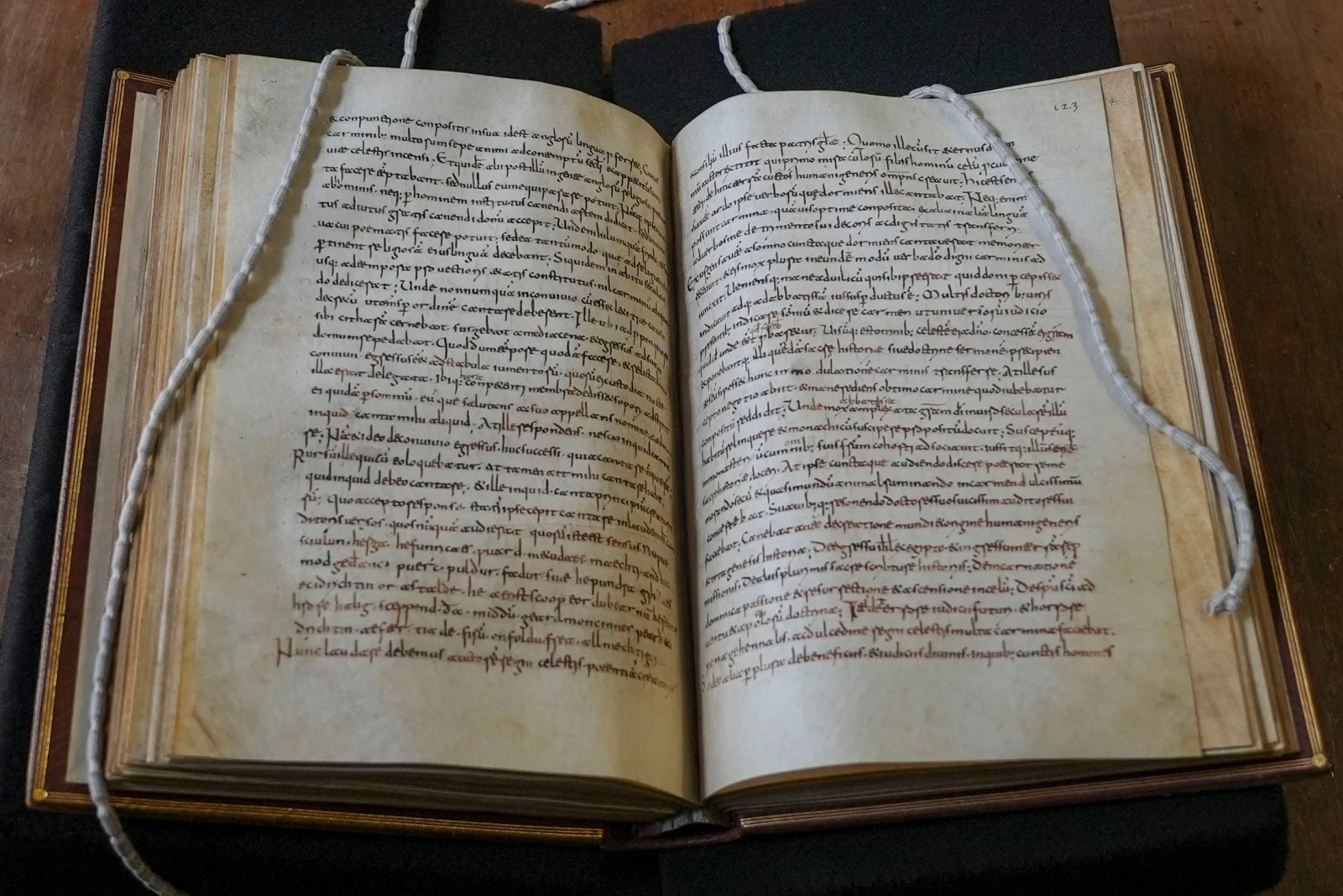
Bede’s original Ecclesiastical History presented only a Latin translation of the hymn, excluding the Old English text. This editorial decision remained normative for centuries until now. The newly identified manuscript breaks from tradition.
Within about a century of Bede’s passing, a monk from the Abbey of Nonantola in northern Italy copied the text, embedding the Old English version directly into the main Latin narrative. Faulkner noted this placement illustrates “how much early audiences treasured English poetry.” In contrast, the two older copies, held in Cambridge and St. Petersburg, limit Old English to notes or appendices.
The Manuscript’s Complex Journey to Rome
The artifact’s survival is almost as intriguing as the discovery itself. Created in Nonantola—a key center for manuscript copying in the early medieval period—the manuscript was later transferred to Rome for safekeeping amid the Napoleonic Wars. Subsequently, it was stolen from San Bernardo alle Terme Church and passed through numerous private collectors across Europe and North America.
Ownership included English book collector Thomas Phillipps, Swiss bibliophile Martin Bodmer, and Austrian-born rare book dealer H.P. Kraus in New York. Italy’s culture ministry acquired the manuscript from Kraus in 1972 and placed it in the National Central Library of Rome, where it remained mostly unopened for over fifty years.
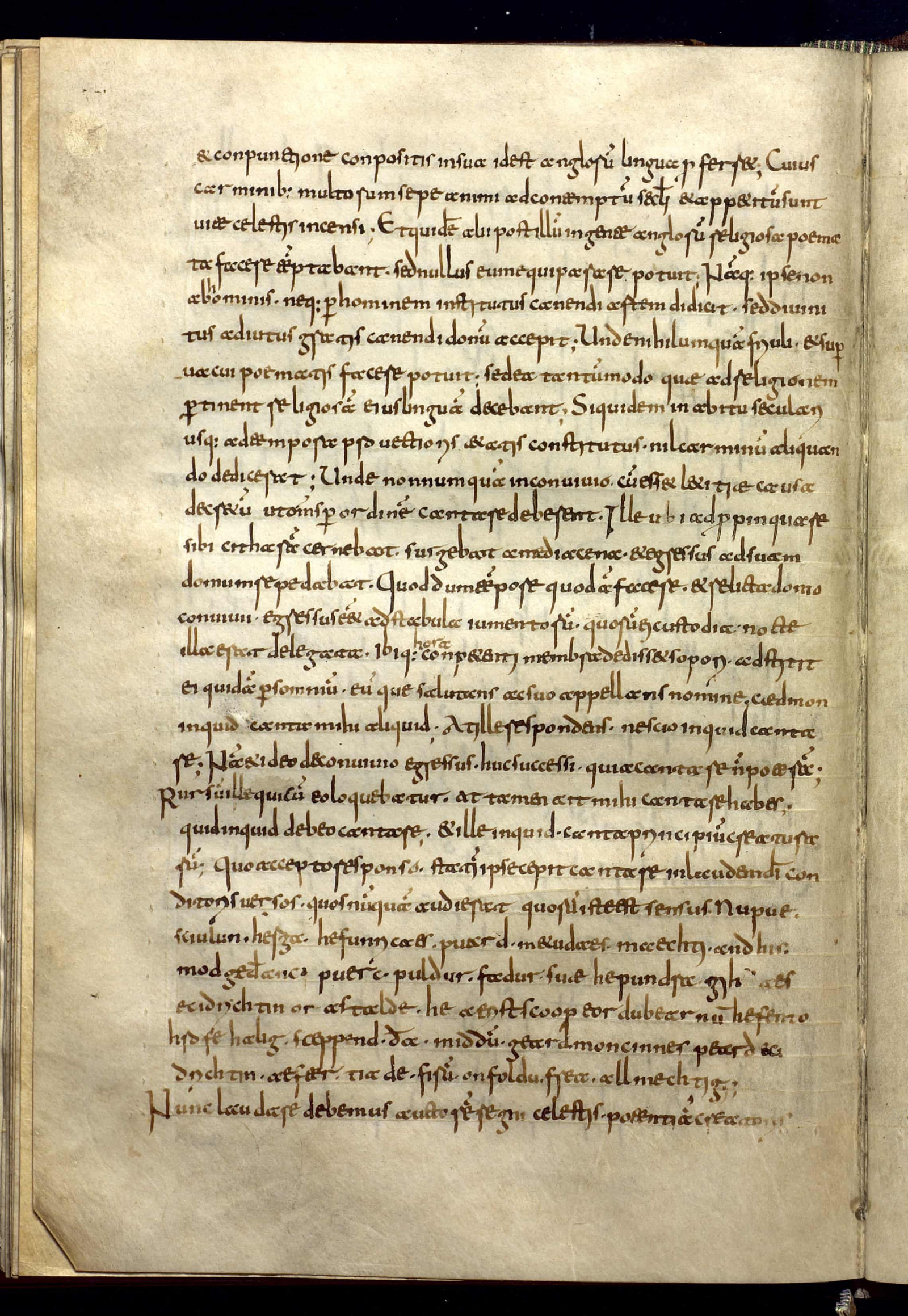
Magnanti meticulously cataloged surviving copies of Bede’s work over four years, repeatedly encountering contradictory records about Rome’s manuscript. Some sources indicated its existence; others claimed it was lost. After contacting the library, staff confirmed it was still stored there. Three months later, Magnanti received digital scans of the entire volume in Dublin.
“Due to the manuscript’s complicated history, previous Bede scholars had not examined it closely,” Magnanti told the Associated Press. The AP detailed how the researchers visited Rome in May 2026 to study the physical manuscript after the digital images had confirmed their discovery months earlier.
New Insights Into Early English Language
Approximately three million Old English words remain extant, predominantly from the 10th and 11th centuries. Caedmon’s Hymn predates most of these by centuries, representing an early phase of English’s written form. Faulkner described it as “a direct link to the formative period of written English.”
Features of the Rome manuscript reveal linguistic experimentation. Each word concludes with a full stop, reflecting how 9th-century scribes were adapting to the concept of word spacing. This punctuation progression gradually fostered the modern appearance of English text.
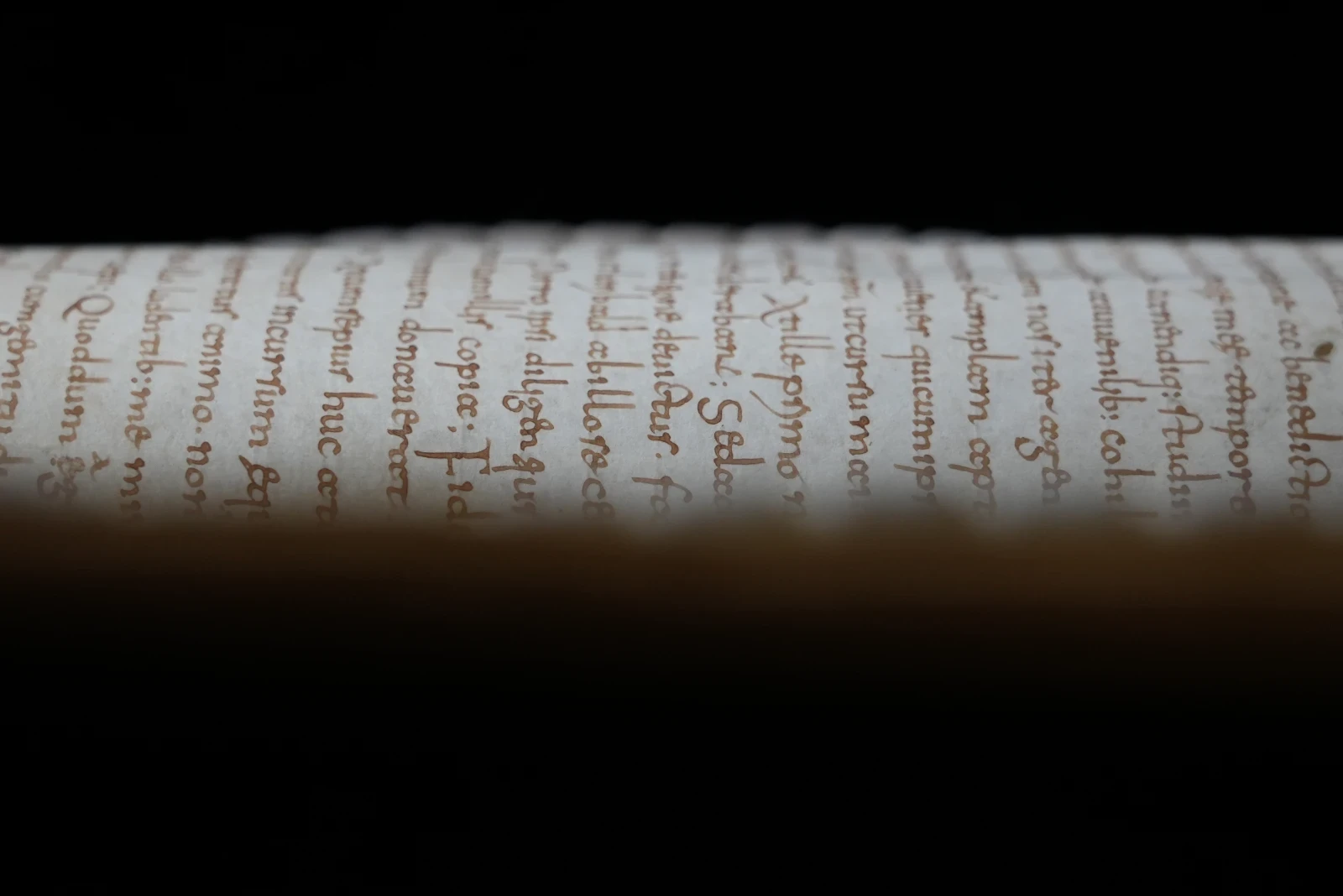
The discovery also challenges previous views about Old English’s geographic reach. Its preservation by a monk far from England, in an Italian abbey, emphasizes early appreciation for English literary heritage. This decision, made over twelve centuries ago, allowed this cultural treasure to endure through conflict, theft, and longtime neglect.
Riccardo Fangarezzi, head archivist at Nonantola Abbey, praised the find as “a genuine ray of sunlight,” highlighting prospects for further Anglo-Italian medieval connections hidden within the abbey’s archive. The Guardian reported that this discovery complements a growing number of Anglo-Nonantolan cultural links previously identified in the abbey’s early catalogues.
Digital Access Sparks New Discoveries
The National Central Library of Rome has digitized the entire Nonantola collection and made it universally accessible online. Andrea Cappa, head of manuscripts and rare books at the library, revealed an ongoing project to digitize materials from Italy’s National Centre for the Study of the Manuscript, which will eventually offer over 40 million images for research.
Valentina Longo, curator of medieval and modern manuscripts at the library, acknowledged that regular digitization efforts led directly to this breakthrough. The hymn, penned by a Northumbrian farmhand, transcribed by an Italian monk, and overlooked for decades in Rome, is now freely viewable by scholars worldwide.
Cappa called the Caedmon find a prime example of “one manuscript sparking countless other discoveries across diverse fields.” The fully digitized Nonantolan archive stands ready, inviting new scholars to explore manuscripts that previous generations may have missed.
- Categories:
- News











0 comments
Sign in to Comment