
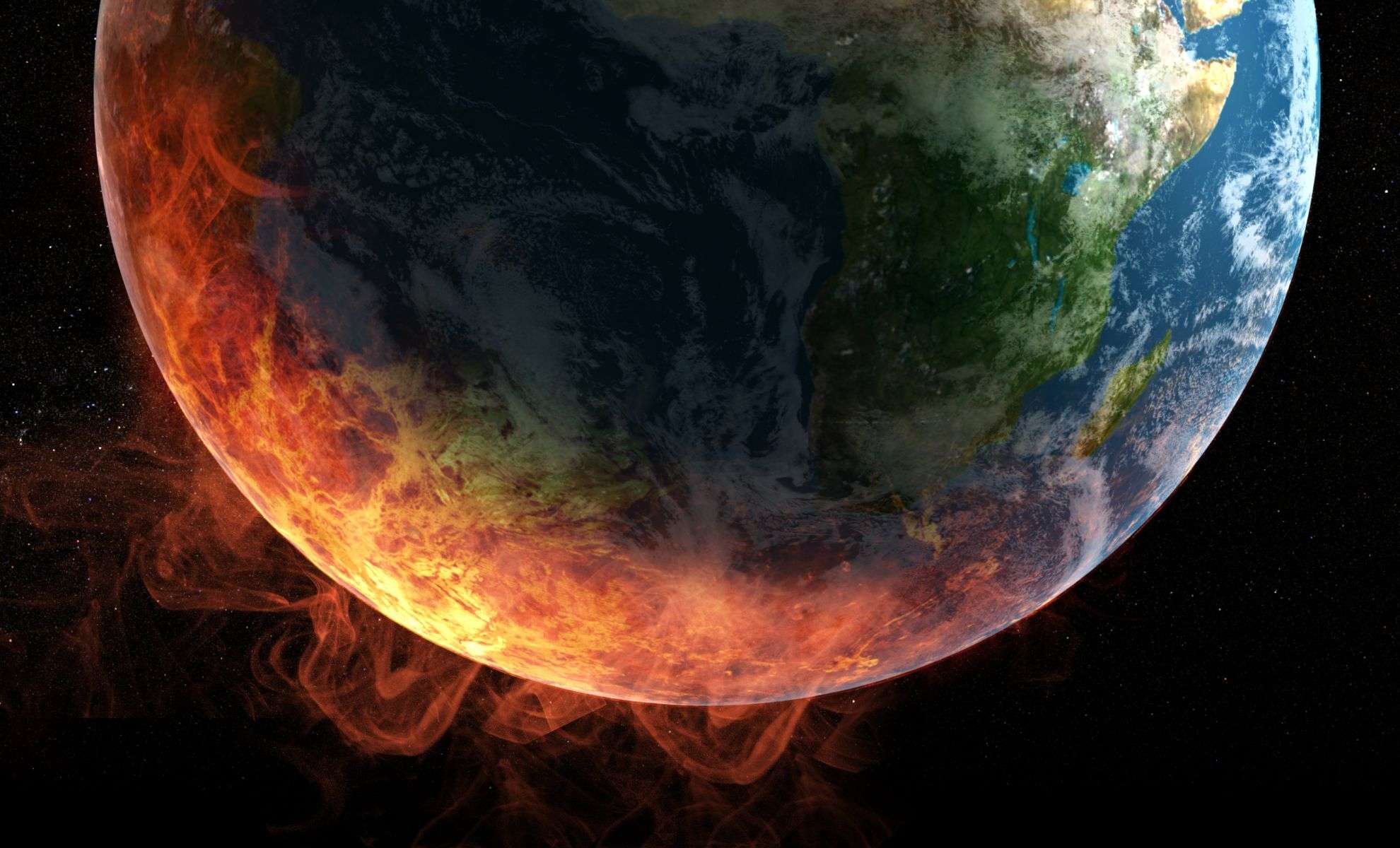
A group of scientists has uncovered what could be the earliest tangible remnants of early Earth, predating the colossal impact that shaped the planet and its satellite, the Moon. Led by researchers from MIT, and collaborating with teams in China, Switzerland, and the U.S., their investigation revealed an unusual chemical fingerprint in ancient rock samples dating back more than 4.5 billion years.
Featured in Nature Geoscience, the research proposes that Earth’s chaotic early formation did not completely erase its original material composition. Instead, pieces of primordial Earth might still be preserved deep down in the planet’s mantle.
The Impact That Sculpted Our Planet
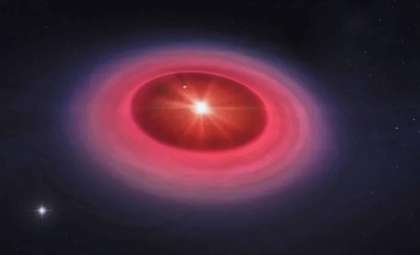
Scientists believe Earth originated from a swirling disk of gas and dust around the early Sun, where particles gradually collided and merged into meteorites and eventually planetary bodies. During its infancy, Earth was likely a molten sphere engulfed in volcanic lava.

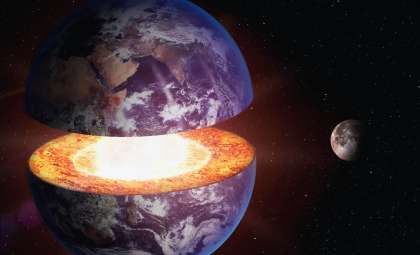
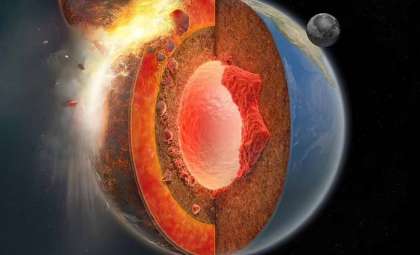
Approximately 100 million years after Earth’s birth, a collision with a Mars-sized body occurred, known as the giant impact. This event created the Moon and drastically restructured Earth’s interior, mixing and melting much of its original materials. Many scientists have assumed this violent encounter wiped out the earliest building blocks of our planet.
Isotopic Evidence Encoded in Ancient Minerals
In this recent publication, the researchers examined fine powdered rock samples sourced from Greenland, Canada, and volcanic layers in Hawaii. These sites are known for harboring geological materials among the oldest and most deeply buried beneath Earth's crust. The study specifically focused on the relative amounts of three isotopes of potassium: potassium-39, potassium-40, and potassium-41.
Using advanced mass spectrometry techniques, the team identified a distinct shortfall in potassium-40, a radioactive isotope that is very rare even in modern Earth’s surface samples. This unusual imbalance had not been observed before in contemporary geological specimens, suggesting these rocks may have avoided the extensive mixing caused by the ancient giant impact.
“This is maybe the first direct evidence that we’ve preserved the proto Earth materials,” said Nicole Nie, planetary scientist at MIT and lead author of the study. Finding a chemical signature from “even before the giant impact,” she noted, is especially surprising given the planet’s long and active geological history.
Insights Beyond Earth and Unanswered Questions
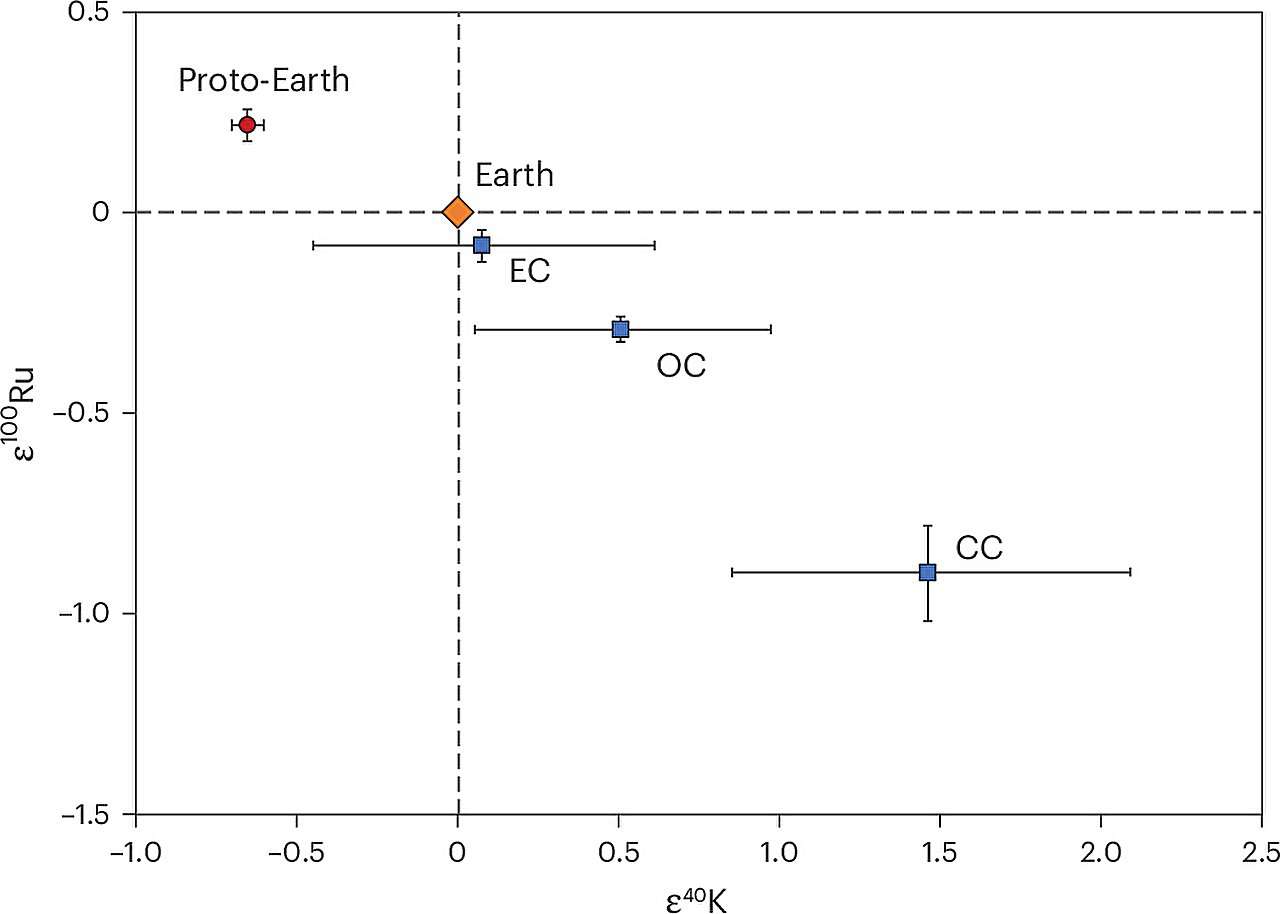
Nicole Nie’s group also analyzed meteorites from across the solar system, discovering that various specimens show different potassium isotope profiles, reflecting the distinct conditions of their formation. Among these was an isotope anomaly absent in Earth’s known composition, highlighting potassium as a key tracer for planetary origin materials.
Remarkably, the same potassium-40 depletion was found in Earth’s ancient rock samples, yet did not match any of the known meteorite isotope signatures. This discrepancy implies that the original constituents of early Earth may not be represented in current meteorite collections. To explore this further, researchers performed detailed computer simulations tracking how potassium-40 levels would change from impacts, mantle convection, and other geological processes over billions of years.
The findings consistently pointed out that Earth’s modern geological materials should contain more potassium-40 than what was seen in these ancient samples, reinforcing that some deep Earth components have remained largely unchanged since the planet’s earliest days.
Uncovering Earth’s Earliest Identity
An international team including researchers from the Chengdu University of Technology, Carnegie Institution for Science, ETH Zurich, and the Scripps Institution of Oceanography has expanded our understanding of Earth’s infancy. Their work introduces a powerful geochemical approach to tracing Earth’s origins and indicates the quest to identify the planet’s primordial materials continues.
Nicole Nie emphasized that previous attempts to reconstruct Earth’s first composition relied heavily on comparisons with meteorites. However, this research challenges that notion. “The current meteorite inventory is not complete,” she remarked, underlining how much remains to be discovered about the matter from which our world first formed.






0 comments
Sign in to Comment