
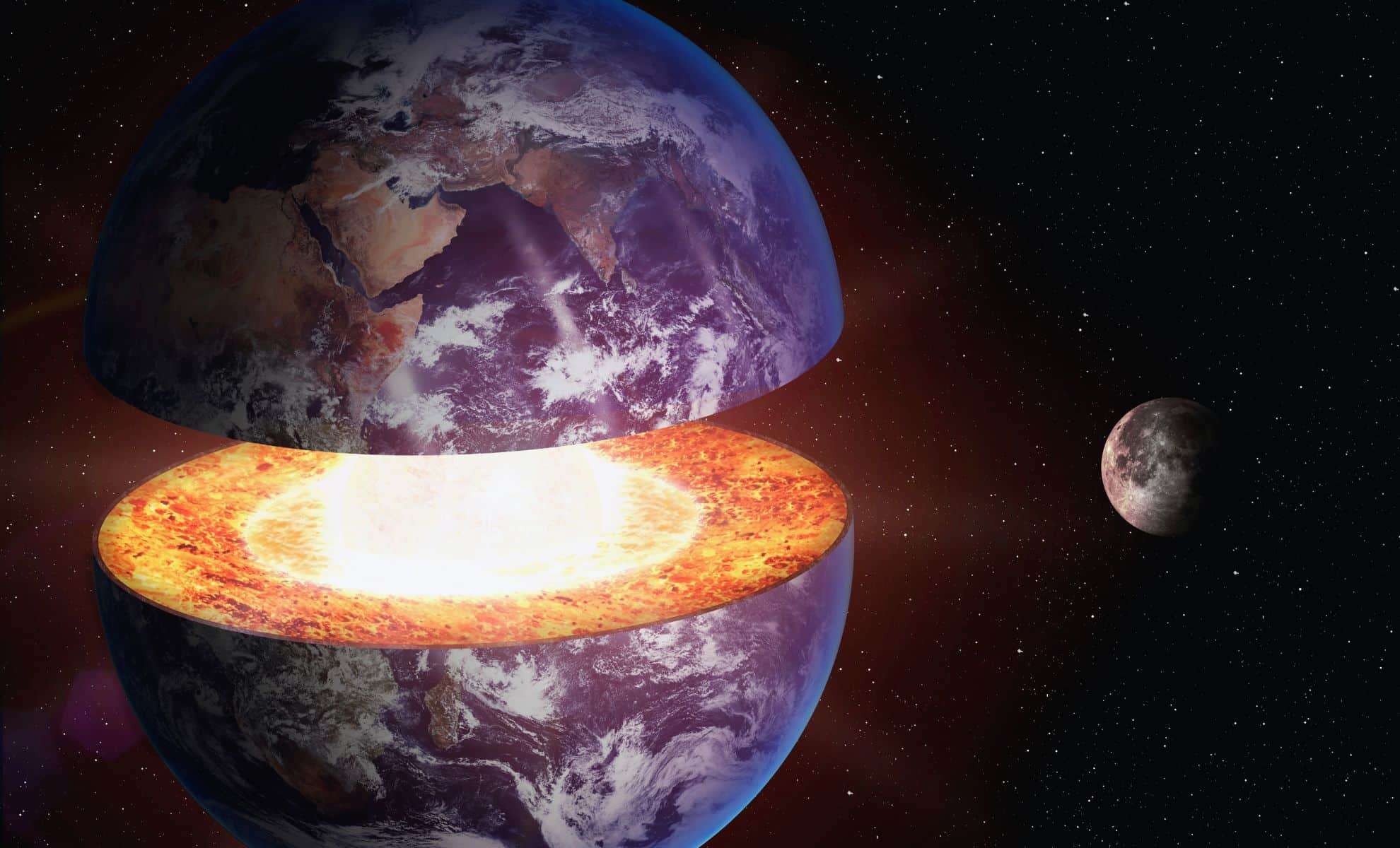
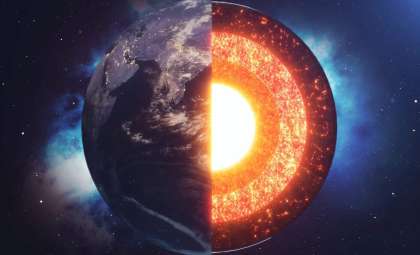
In a remarkable advance, geologists have identified enormous, ancient “fortresses” lying nearly 1,800 miles beneath Earth's surface within the mantle. These immense formations, which are sturdier and older than their adjacent rocks, challenge existing views on the planet's inner structure. Utilizing cutting-edge seismic methodologies, researchers unveiled these findings in a study published in Nature. Stretching beneath Africa and the Pacific, these formations reveal complex internal processes shaping Earth’s dynamic interior.
Unveiling Earth’s Mantle Giants: The ‘Fortresses’ Deep Below
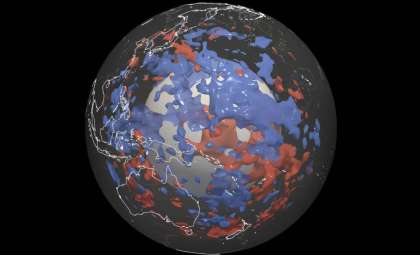
Central to this discovery are the Large Low Seismic Velocity Provinces (LLSVPs), vast, sluggish pockets of heated rock situated at the core-mantle interface. These so-called “fortresses” extend over expanses comparable to entire continents. The African and Pacific LLSVPs are the most significant, each exceeding 3,000 miles in width, with the African structure ascending roughly 600 miles above the surrounding mantle. These formations intrigue scientists because they resist typical mantle convection flows, remaining remarkably stable over time.
Seismic tomography—a technique for imaging Earth’s interior—first detected these “fortresses” in the 1990s. Yet, it was recent research that fully unraveled their distinct properties and geological importance. “Large earthquakes make the whole Earth ring like a bell with different tones,” said Arwen Deuss, a seismologist at Utrecht University. Her multinational team analyzed seismic waves generated by major earthquakes, revealing that these fortresses absorb less energy than expected, confirming their exceptional characteristics.

Demystifying the Seismic Behavior of LLSVPs
The LLSVPs stand out because they slow seismic waves, distinguishing them from the surrounding mantle material. Scientists found that these regions are not only hotter but show differing mechanical traits compared to cooler mantle zones. A critical factor lies in their mineral grain structure: whereas ordinary mantle minerals form tiny crystals, the fortresses contain larger, more oriented crystals.
Laboratory experiments simulating high-pressure conditions have shown this crystal arrangement influences seismic wave transmission. With fewer microscopic grain boundaries, seismic energy experiences less attenuation passing through these zones. “There is less flow in Earth’s mantle than is commonly thought,” Deuss noted, highlighting how these stable, colossal formations challenge prior assumptions about mantle convection.
Changing the Narrative on Earth’s Interior Dynamics
The identification of these massive mantle features compels a revision of Earth’s internal dynamics models. The long-held idea of a uniformly convecting mantle—with heat rising and cooler material sinking—is called into question. These steadfast fortresses indicate a more heterogeneous mantle, where rigid and fluid regions coexist. This insight has wide-ranging implications for understanding geological phenomena, including volcanic activity and tectonic movements.
Moreover, these fortresses may play a critical role in generating mantle plumes—columns of hot rock rising toward the surface, responsible for volcanic hotspots like Hawaii. Edges of the fortresses likely provide the launching sites for such plumes, which can form volcanic island chains and massive igneous provinces linked to past mass extinctions. Additionally, their enduring stability could influence the slow drift of tectonic plates, impacting the formation of continents and mountain ranges over geological timescales.
- Categories:
- News





0 comments
Sign in to Comment