

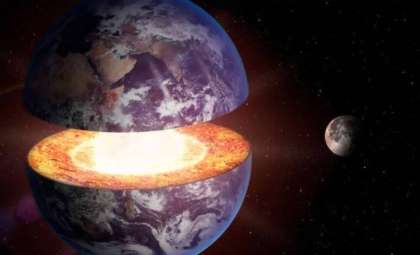
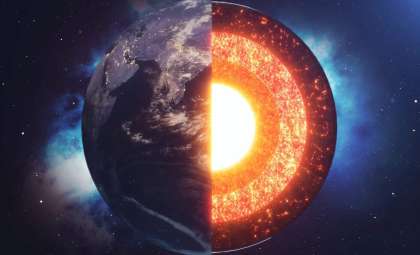
A new studyNature has uncovered strong evidence for a massive ocean concealed roughly 400 miles beneath Earth's crust. This enormous water source resides within ringwoodite, a rare mineral found in the mantle, reshaping our understanding of the planet’s total water reserves. Current estimates suggest the Earth's interior harbors an amount of water comparable to all surface oceans combined, confined within mantle minerals subjected to extreme pressures and temperatures.
Ringwoodite’s Role in Earth’s Subsurface Water Cycle
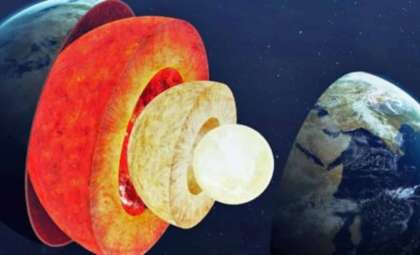
At the heart of this revelation is ringwoodite, a mineral formed under intense pressure in the mantle between depths of 250 to 410 miles. Ringwoodite’s standout feature is its capacity to trap water molecules within its crystal lattice. Co-author Steve Jacobsen noted, “Geological events on the surface, like earthquakes and volcanic eruptions, reflect the dynamic processes happening far beneath us.” He added, “This evidence points to a complete Earth-wide water cycle, providing answers about the enormous amount of liquid water present on our planet’s surface. Scientists have long sought this elusive deep water.” This finding highlights that water continuously cycles not only on the surface but deep through the Earth's interior.
Subsurface Melting Linked to Release of Deep Water
Co-author Brandon Schmandt emphasized the rarity of mantle rock melting at such profound depths: “Typically, mantle melting occurs within the upper 50 miles, so observing it at these depths is extraordinary.” He further explained, “If a significant quantity of H2O exists in the transition zone, melting should happen where mantle material moves into deeper layers, which aligns with our findings.” This deep melting is triggered as ringwoodite undergoes transformations under immense pressure, releasing water. Jacobsen commented, “Although this sample's representativeness of the Earth’s mantle remains uncertain, we now have evidence of extensive melting beneath North America at depths matching ringwoodite’s dehydration, consistent with my laboratory experiments.”

Exceptional Water Storage Capabilities of Ringwoodite
Jacobsen explained, “Ringwoodite’s crystal structure uniquely attracts hydrogen atoms, allowing it to retain water.” Experiments simulating mantle conditions demonstrate that ringwoodite can contain more than one percent of its weight in water, stored as hydroxyl groups embedded in its crystalline framework. This trapped water affects mantle rock properties, influencing numerous geological phenomena.
Seismic Data Illuminates Mantle Dynamics and Subduction Water Release
Using seismic observations from the USArray across North America, researchers have gained unprecedented insight into the Earth's subsurface. Schmandt said, “The seismic evidence reveals melting likely caused by subduction — the descent of surface mantle into deeper regions.” This melting coincides with water liberation from ringwoodite, reinforcing the notion that water profoundly impacts deep mantle circulation and tectonic activity.
- Categories:
- News




0 comments
Sign in to Comment