
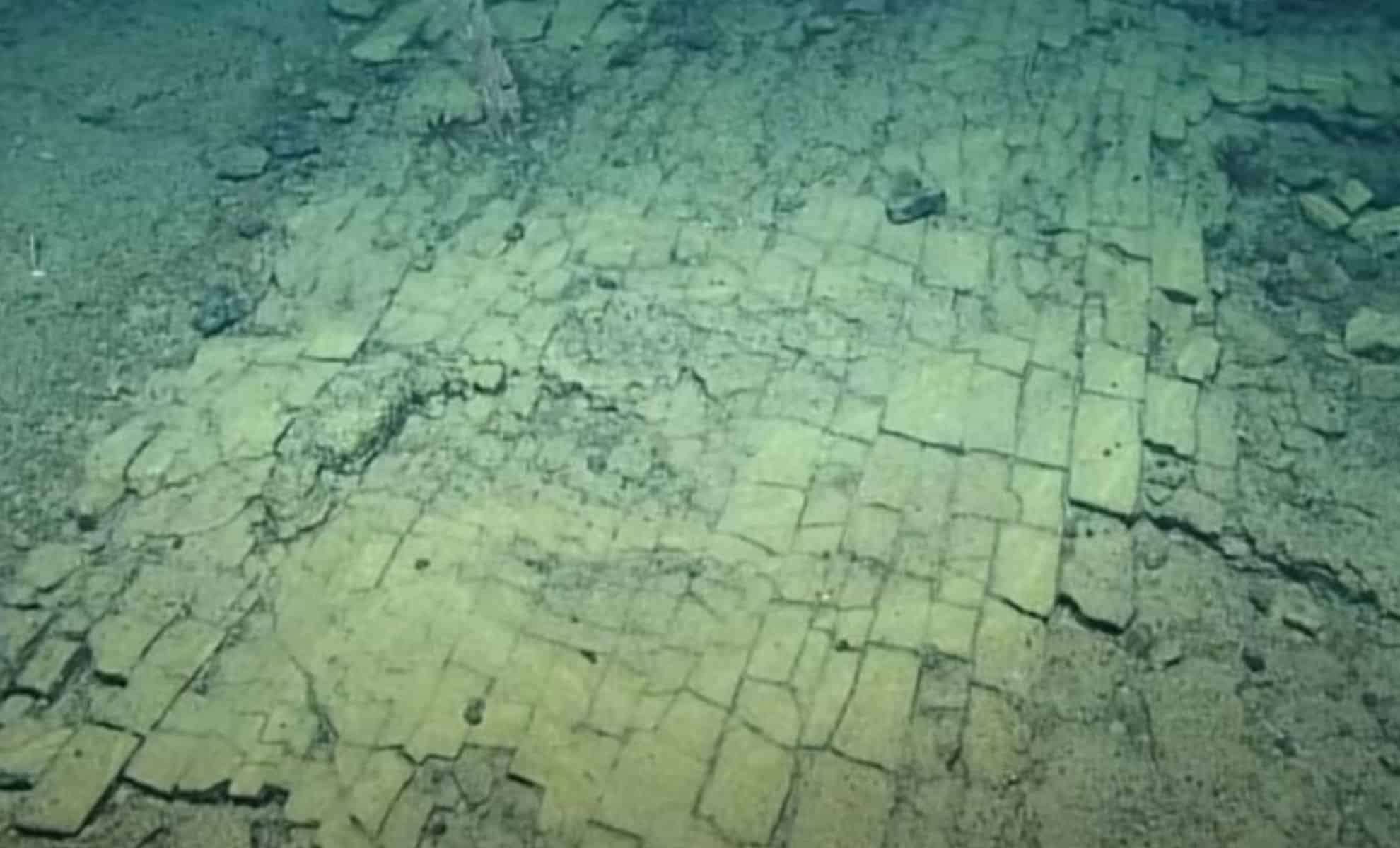
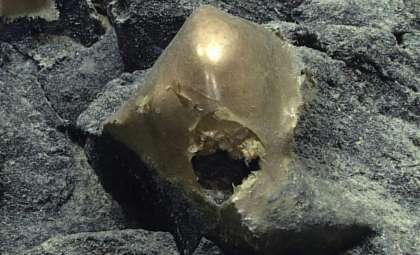
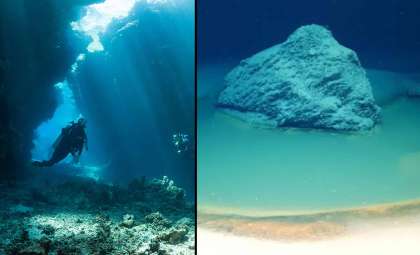
During a remarkable 2022 deep-sea expedition, scientists from the Ocean Exploration Trust on the E/V Nautilus encountered an astonishing and puzzling geological structure at the floor of the Pacific Ocean. While conducting the NA138 mission at the Liliʻuokalani Ridge within the Papahānaumokuākea Marine National Monument, the crew came across what looked like an ancient, desiccated lake bed, strikingly similar to a yellow brick road. Situated roughly 1,000 meters below the ocean’s surface, this formation was streamed live to the global audience via the Nautilus Live platform, allowing viewers worldwide to witness this intriguing discovery.
A Surprising Geological Find in the Pacific Depths
The Liliʻuokalani Ridge, located north of the Hawaiian Islands within the Papahānaumokuākea Marine National Monument, holds immense ecological and geological importance. With only about 3% of this underwater landscape charted, each new revelation adds crucial insights into Earth’s marine realms. On this voyage, while mapping the seabed, researchers aboard the Nautilus identified what seemed to be a dry, ancient lake bottom resembling a pathway paved with “yellow bricks.”
Covering an area close to 500 square meters, the structure is composed of volcanic rock fractured into rectangular shapes mimicking bricks. This remarkable feature has captivated and mystified scientists alike. Upon first sight, the surface looked like a long-lost road, provoking lighthearted radio exchanges among the crew, such as “It’s the road to Atlantis!” and “The yellow brick road?” This captivating natural curiosity has ignited excitement within the scientific community, eager to uncover its origins.

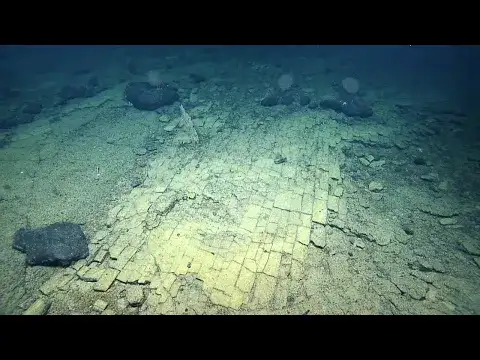
Decoding the Formation of the 'Yellow Brick Road'
Dr. Tim Ziegler, collection manager at Museums Victoria Research Institute, suggests these almost perfect 90-degree fractures in the volcanic rock are caused by thermal stresses arising from repeated volcanic activities in the vicinity. These temperature fluctuations likely induced the rock to crack into prism-like blocks resembling a brick pavement.
Dr. Ziegler stated, “The unique 90-degree fractures are likely related to heating and cooling stress from multiple eruptions at this baked margin.” The interplay of cooling and solidification over time formed this pattern naturally, mimicking man-made brickwork but entirely a geological phenomenon.
Moreover, this striking discovery highlights ongoing geological processes under the ocean within the Papahānaumokuākea Marine National Monument, a protected region vital for its diverse marine life and ecological importance. It reflects the powerful forces shaping our planet’s underwater landscapes.
Exploring the Ocean’s Hidden Geological Treasures
Although located nearly 1,000 meters below the ocean surface, the formation appears remarkably arid. Researchers aboard the Nautilus noted the ground had an almost “baked crust” texture, as if it could be lifted like a hard shell, deepening the mystery of its origin. The site’s resemblance to an aged dry lake bed points to ancient geological phenomena long vanished.
This extraordinary geological structure offers scientists a unique window into the unexplored ocean floor, an environment still largely unknown. The discoveries made during the NA138 expedition contribute to a broader initiative aimed at mapping uncharted sections of the Papahānaumokuākea Marine National Monument, one of the globe’s best-preserved marine habitats.
As research continues on this distinctive formation, experts hope to gain fresh insights into volcanic mechanisms, ecosystems adapted to extreme environments, and the likelihood of discovering further underwater geological marvels.
- Categories:
- News





0 comments
Sign in to Comment