
Researchers have verified the existence of an enormous water reservoir concealed within the Earth’s mantle, transforming our knowledge of the planet’s inner workings and hydrological processes. First detailed in a landmark paper published in Science and recently featured by The Brighter Side of News, this finding offers a revolutionary outlook on Earth’s internal dynamics.
Unveiling the Mantle Transition Zone’s Hidden Water Vault
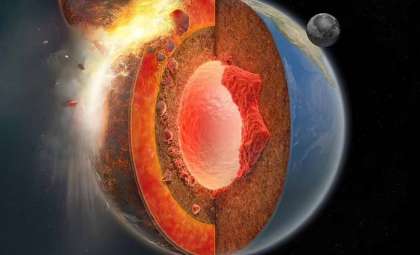
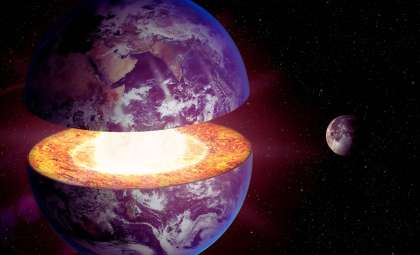
Situated nearly 400 miles beneath the Earth’s crust, scientists uncovered a massive underground water store, not as liquid but chemically bound within a high-pressure mineral called ringwoodite. This discovery emerged from combined efforts involving seismic wave analysis, controlled lab experiments, and mineralogical research, estimating a water volume that could surpass all of Earth's surface oceans combined by a factor of three.
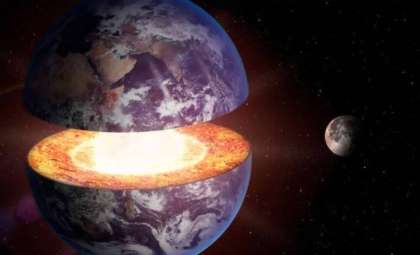
This concealed water body resides in the so-called mantle transition zone, an interface between the Earth’s upper and lower mantle characterized by extreme pressure and heat. Unlike traditional oceans, the water here is trapped within the lattice of ringwoodite, a rare mineral formed deep within the planet. Geophysicist Steven D. Jacobsen described it as, “Ringwoodite behaves like a sponge, absorbing water. Its crystal structure uniquely attracts hydrogen and securely stores water.” This property enables ringwoodite to house immense quantities of water, potentially redefining our perception of Earth’s interior composition.

What Distinguishes Ringwoodite and Its Water-Storing Capacity
Ringwoodite represents a high-pressure form of the abundant mantle mineral olivine, naturally occurring deep below Earth’s crust or in meteorite impact sites. Formed between 520 and 660 kilometers beneath Earth’s surface, ringwoodite’s crystal structure can incorporate hydroxyl groups, effectively storing water within a solid matrix.
Support for this came not only from experimental data but also from rare natural specimens. In 2014, scientists located a minute ringwoodite inclusion trapped inside a diamond retrieved from the deep mantle, which astonishingly contained water molecules. This was the first direct evidence of water in the transition zone, corroborating Jacobsen’s laboratory findings where experiments demonstrated ringwoodite could hold approximately 1.5% of its mass as water.
Though the percentage may appear minimal, considering the massive scale of the transition zone, this translates to a volume on the scale of Earth's oceans—possibly even exceeding them. Such findings propose that Earth’s internal water storage has existed since the planet’s formation, challenging prevailing ideas that water was delivered mainly by icy comets.
Reevaluating the Earth’s Water Cycle with Deep Mantle Water
This breakthrough compels scientists to reconsider the traditional water cycle of Earth, long believed to encompass only surface oceans, atmosphere, and surface reservoirs. The discovery of significant water stores deep within the mantle points toward a whole-Earth water cycle, with water circulating between Earth’s interior and surface across vast geological timescales.
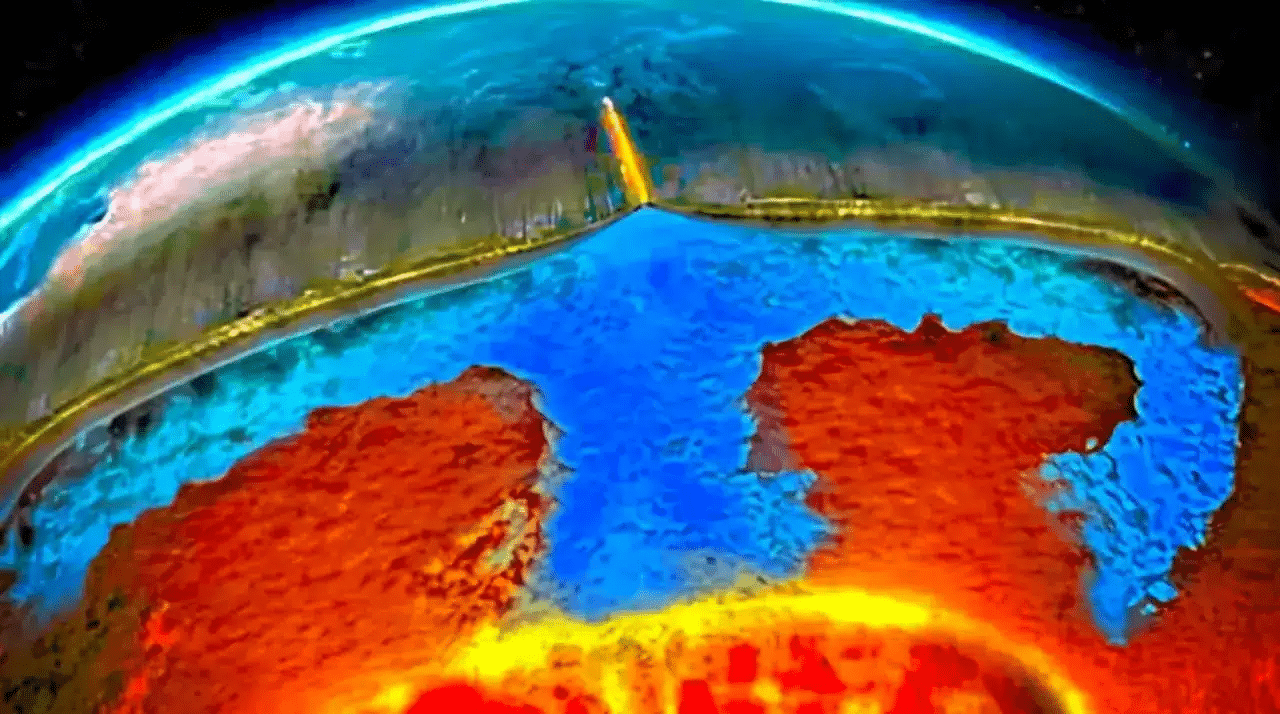
Oceanic plates subducting into the mantle transport water-rich crust downward, where mineral transformations release water into the transition zone. Conversely, some of this water reemerges through volcanic eruptions, mantle plumes, or metamorphic processes, forming a deep internal water exchange system.
Jacobsen remarked, “I think we are finally witnessing evidence for a whole-Earth water cycle.” This paradigm significantly broadens our understanding of Earth’s hydration, indicating the planet’s water supply extends well beyond surface sources into its deep interior.
Revealing the Water Through Seismology and Advanced Modelling
The identification of this subterranean water was achieved through cutting-edge seismic imaging and supercomputer simulations. By studying the trajectory of earthquake waves passing through the mantle, researchers pinpointed irregularities in wave velocity and path suggestive of materials rich in hydrogen or chemically bound water.
These seismic slow zones were compared against high-pressure laboratory tests involving synthesized ringwoodite. Scientists recreated mantle-like conditions beyond 20 gigapascals and temperatures above 1200°C, confirming ringwoodite’s capacity to retain water under such extreme environments.
The 2014 Science article, named “Dehydration Melting at the Top of the Lower Mantle”, firmly established the measurable presence of this hidden water, demonstrated through global seismic patterns. This discovery has transitioned from theory to observable reality.
Additional Subterranean Water Reserves Below Earth’s Crust
Ringwoodite is one part of a complex picture. Other minerals such as serpentine, mica, and chlorite also carry water within their crystal lattices, releasing it during metamorphic reactions and contributing to mantle hydration.
Deep aquifers several kilometers underground contain ancient water stored in porous rock, some dating back millions of years. Micro-scale fluid inclusions—tiny trapped water pockets within minerals—also account for a notable fraction of Earth’s underground water content.
Tectonic processes remain crucial to this system. Subduction zones convey seawater into the mantle, while volcanic activity expels water vapor to the surface. Additionally, mantle plumes may transport water from deep inside the planet toward the crust, maintaining the internal water cycle.
- Categories:
- News

0 comments
Sign in to Comment