
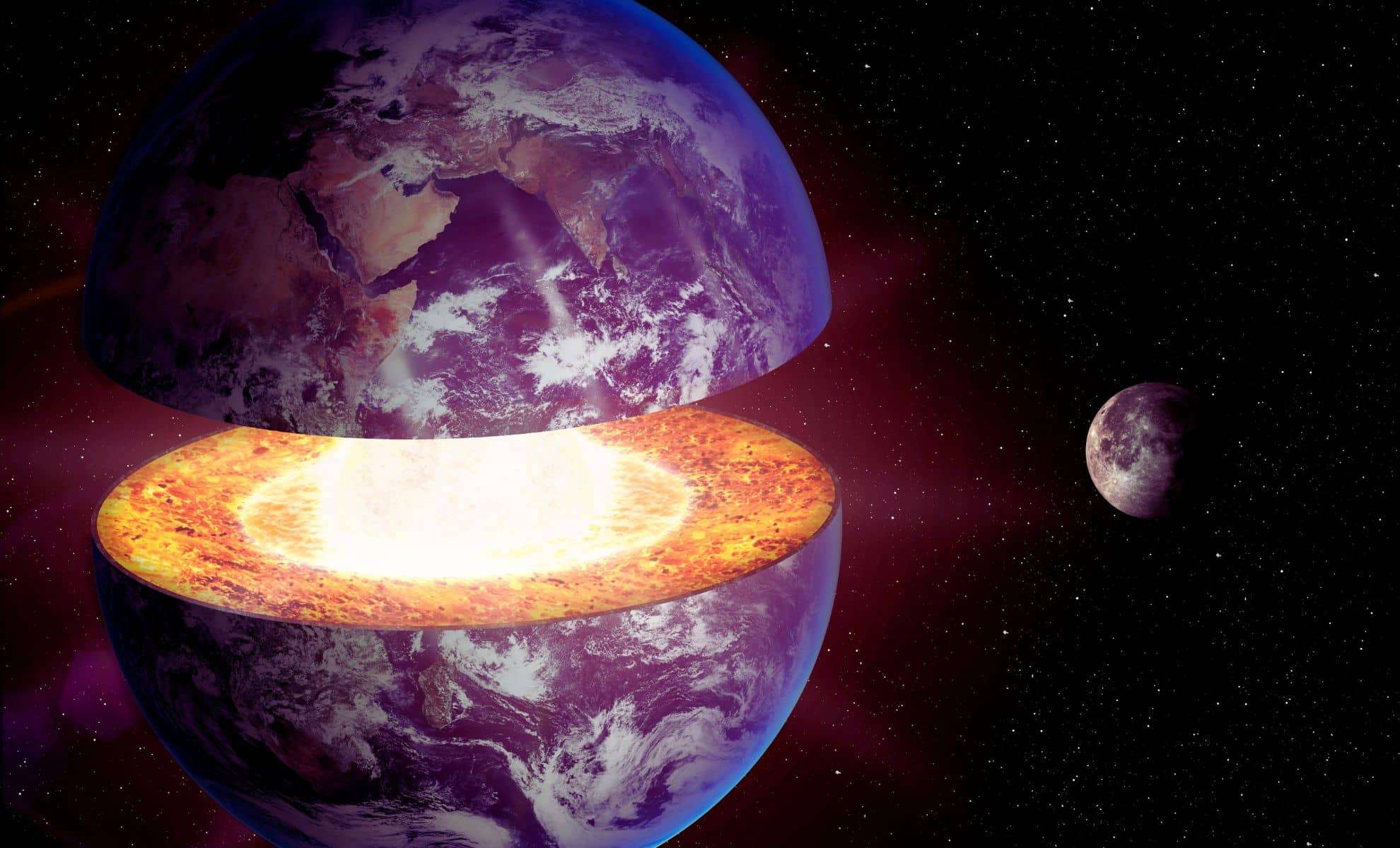
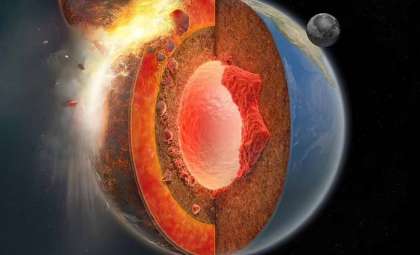
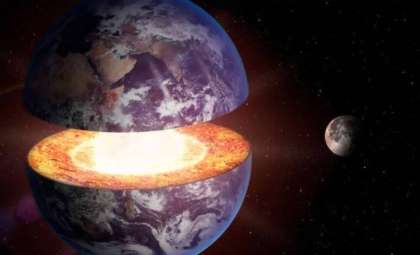
A groundbreaking investigation published in Communications Earth & Environment has brought to light a striking revelation: the solid rock far beneath Earth’s surface is more mobile than previously believed. Researchers have verified that the mantle’s D" layer, located roughly 1,700 miles underground, undergoes a slow solid-state flow. This finding overturns longstanding views on Earth’s internal makeup and highlights how these slowly deforming rocks influence tectonic shifts, volcanic eruptions, and even the planet’s magnetic field.
Motohiko Murakami and his colleagues at ETH Zurich performed innovative experiments recreating the extreme pressures and temperatures found in the lower mantle. Their research helps explain puzzling seismic wave behaviors and offers fresh perspectives on Earth’s interior mechanisms. Combining advanced simulations with lab-based high-pressure tests, they showed that post-perovskite minerals in the D" layer can arrange themselves and flow subtly over geological durations—an insight vital to decoding Earth's dynamic inner workings.
Unraveling the Secrets of the D” Layer
The D" layer, situated deep within the Earth’s mantle, has been a subject of scientific curiosity for decades. This zone is notable for a sudden increase in seismic wave velocities, a phenomenon that has defied full explanation. Earlier theories suggested unusual mineral properties might be responsible, but concrete mechanisms remained uncertain until now.

Utilizing cutting-edge tools such as diamond anvil cells and X-ray diffraction, Murakami’s team demonstrated that rocks here can flow in a solid state, resembling the behavior of viscous fluids when subjected to extreme conditions. By applying intense heat and pressure to magnesium germanate crystals, they replicated D" layer environments and discovered that post-perovskite minerals organize themselves in a way that enables gradual deformation over vast time spans. This explains the anomalous seismic wave speeds and deepens understanding of mantle characteristics.
Reflecting on the significance of these findings, Murakami stated, “This discovery completes a crucial part of the Earth science puzzle.” Years of dedication have culminated in a clearer appreciation of the Earth’s interior dynamics.
Post-Perovskite: Unlocking Mantle Behavior
Identifying post-perovskite as the key solid within the D" layer marks a major advance in mantle research. This mineral form emerges from perovskite under the intense pressures characteristic of the lowermost mantle, initially discovered in 2004. Yet, it was through the recent experiments that the full impact of its crystal structure came into focus.
When post-perovskite crystals become aligned, they exhibit much greater stiffness along specific orientations, resulting in faster seismic wave transmission. Murakami’s group replicated the mantle’s harsh environment to observe this mineral orientation and documented how the solid material slowly deforms, effectively flowing despite retaining solidity. This solid-state movement challenges previous assumptions that rocks were essentially immovable at such depths.
Understanding the coordinated behavior of post-perovskite crystals unlocks new insights into how heat and matter circulate deep within Earth. These currents are essential for driving surface phenomena like continental drift, earthquakes, and volcanic activity.
Seismic Wave Patterns Offer Clues to Tectonic Forces
This research crucially explains variations in seismic waves—vital tools for probing Earth’s inner structure. As seismic waves traverse different layers, their speed changes reveal information about the materials they encounter. The acceleration of waves passing through the D" layer had long been puzzling scientists.
The team’s results confirm that the orientation of post-perovskite minerals can increase seismic wave velocities by up to seven percent. This aligns with global seismic data and confirms the dynamic nature of deep mantle flow. Such mantle currents fuel tectonic plate motion, shaping Earth’s surface features over millions of years.
The arrangement of these minerals may also influence the positioning and intensity of geological hotspots, subduction zones, and mountain-building events. A more precise understanding of seismic wave propagation enhances our ability to anticipate events like earthquakes and eruptions.
Connecting Mantle Movements to Earth’s Magnetic Shield
A surprising aspect of this new insight is its linkage to the generation of Earth’s magnetic field. The slow shifting of solid rock within the D" layer possibly impacts the geodynamo process responsible for Earth’s magnetism. Heat transfer mediated by mantle motion plays a vital role in sustaining this magnetic shield.
Recent simulations suggest that the orientation of post-perovskite minerals guides rising mantle plumes transporting heat upward toward the Earth's crust. These plumes, interacting with the surface, form volcanic hotspots. Additionally, the solid-state flow in the deep mantle may be behind long-term magnetic field variations recorded over the past 200 million years. This connection broadens our understanding of both Earth’s deep interior and surface geophysical phenomena.
- Categories:
- News




0 comments
Sign in to Comment