

For a long time, fitness buffs aimed to hold planks for two minutes or more, associating prolonged holds with stronger midsections. However, a 2025 study examining plank endurance and back pain challenges this view. The research revealed that simply holding the plank longer didn’t reduce back pain risk or severity. Interestingly, some individuals with back pain maintained plank positions longer than those without issues. Experts now agree that performing shorter, well-executed planks is more beneficial than struggling through extended durations.
Leading spine expert Dr. Stuart McGill advocates 10-second plank intervals as a superior approach. His recommended routine involves holding the plank for 10 seconds, resting briefly, then repeating several times. Similarly, Dr. Edward Phillips from Harvard Medical School highlights, according to Harvard Health, that maintaining a plank for up to a minute often corresponds with lower back pain occurrences.
Additionally, specialists from NYU Langone’s Sports Performance Center and the American Council on Exercise suggest that holding a plank beyond 40 to 60 seconds provides no further strength benefits and may increase injury risk. This evolving consensus is changing how trainers recommend one of the most popular core exercises worldwide.


The key to effectiveness lies in form rather than duration. A plank is an isometric exercise focused on teaching core muscle stabilization of the spine. Once these muscles fatigue, posture deteriorates, causing the lower back to sag or hips to rise, forcing the shoulders, neck, and spinal structures to compensate. At this stage, the exercise loses its strengthening impact and increases the likelihood of injury.
Certified personal trainer Kendra Madigan, quoted in Prevention, advises: “When your form breaks, come out of the position so it doesn’t place stress on your shoulders, back, or other parts of your body.” Essentially, the plank should end when proper form can no longer be sustained, not based on a timer.
Research Supporting Brief Planks
Electromyography (EMG) analyses demonstrate planks engage the rectus abdominis, transverse abdominis, and obliques more effectively than crunches. However, this muscle activation relies on maximal contraction, which can only be maintained briefly. As fatigue develops, the nervous system recruits ligaments and spinal joints to maintain the position, undermining the strengthening effect and raising overload risk.
The 2025 research, detailed by Prevention, offers important insights. It showed that some individuals with back pain outperformed those without in plank duration, concluding that “longer plank times may not indicate lower risk or severity of back pain.” Simply holding a plank for two minutes does not necessarily reflect a healthy spine—it might reveal ineffective compensation strategies. This fits biomechanical understanding: when the hold exceeds muscle endurance, it becomes a test of joint limits, not core strength.
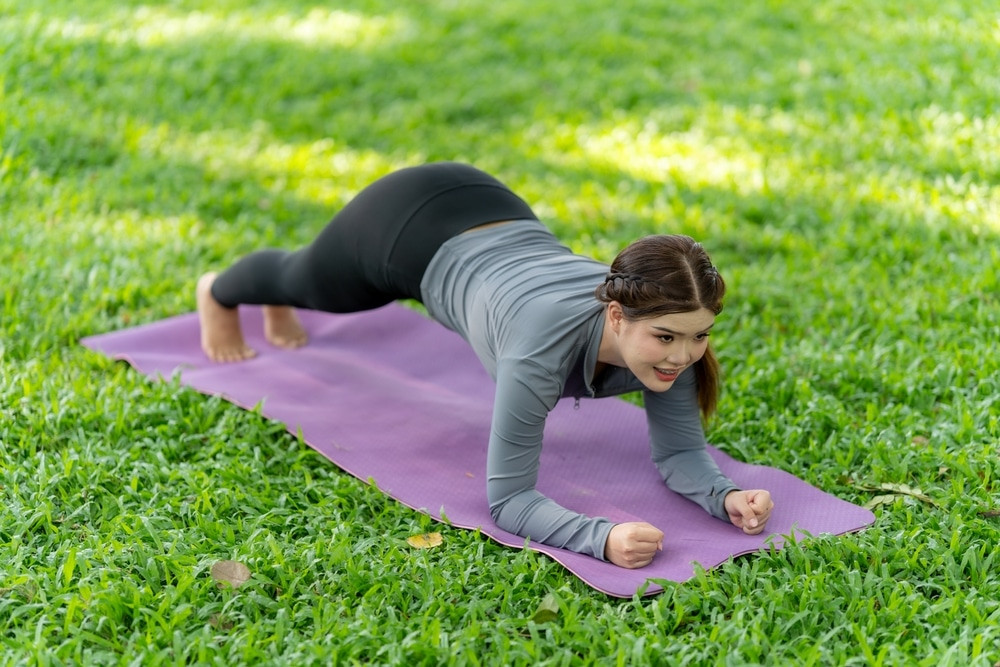
Fitness expert Dan John summarizes the concept with this guideline: “Two minutes max; beyond that, it loses value.” Longer holds transition the plank from a stability exercise to a mental endurance challenge, often risking back injury.
Defining Proper Plank Technique
Maintaining impeccable form is essential for maximizing plank benefits. The body should form a straight line from head to heels, with elbows positioned directly beneath the shoulders. The core needs to be tightly engaged, along with active contraction of glutes and quadriceps. Keep your eyes fixed a few inches ahead on the floor to maintain a neutral neck, and breathe steadily to avoid breath-holding, which can contribute to losing form.

When hips drop or the lower back caves, the core disengages, transferring strain to the spine’s passive tissues and shoulders, where injury risk rises. That’s why experts from Harvard Medical School stress that the plank’s value depends on consistent alignment. Performing a well-formed 20-second plank builds more spinal stability than a 90-second plank with poor posture.
Plank Misconceptions That Persist
Despite these clear findings, some myths remain widespread. The most persistent is that holding a plank longer is always beneficial. Research shows that after about one minute, benefits plateau. Extending plank time to three minutes doesn’t double strength gains; it merely reinforces improper form under fatigue.
Another misconception is that planking spot-reduces belly fat or sculpts a six-pack. As an isometric exercise, the plank increases muscle endurance without joint movement; it doesn’t burn many calories or cause the muscle growth needed for a defined midsection. Visible abdominal muscles require low body fat, achievable through diet and higher-intensity workouts, not prolonged static planks.
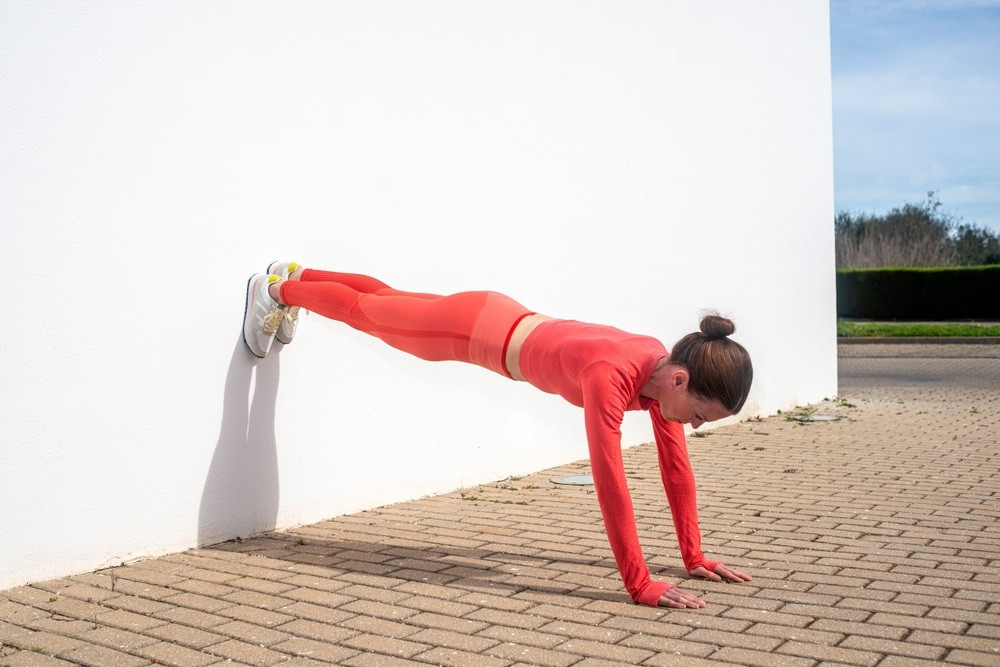
A further myth is that the plank is a universal remedy for back pain. While holding a plank well for up to 60 seconds correlates with less back discomfort, the link isn’t straightforward. The 2025 study confirms that endurance alone doesn’t equate to back resilience.
Efficient Plank Strategies for All Fitness Levels
Research suggests practical approaches, such as McGill’s 10-second interval method: perform a plank at full effort for 10 seconds, rest 5 to 10 seconds, and repeat three to six times. This technique enhances endurance while protecting the spine and makes planks accessible for beginners.
For those preferring a single hold, determine a personal maximum by stopping as soon as your form deteriorates. Use this duration as a baseline, gradually increasing by 5 to 10 seconds each week until you can hold between 40 and 60 seconds with perfect form. Practice planks three to four times weekly, resting at least one day between sessions. Once a 60-second hold becomes comfortable, progress by introducing variations like raising a foot, side planks, or dynamic movements rather than simply extending hold time.
The 2025 findings reinforce the shared expert recommendation: prioritize stopping immediately when form breaks to ensure safe, effective planking and protect spinal health.
- Categories:
- News













0 comments
Sign in to Comment