
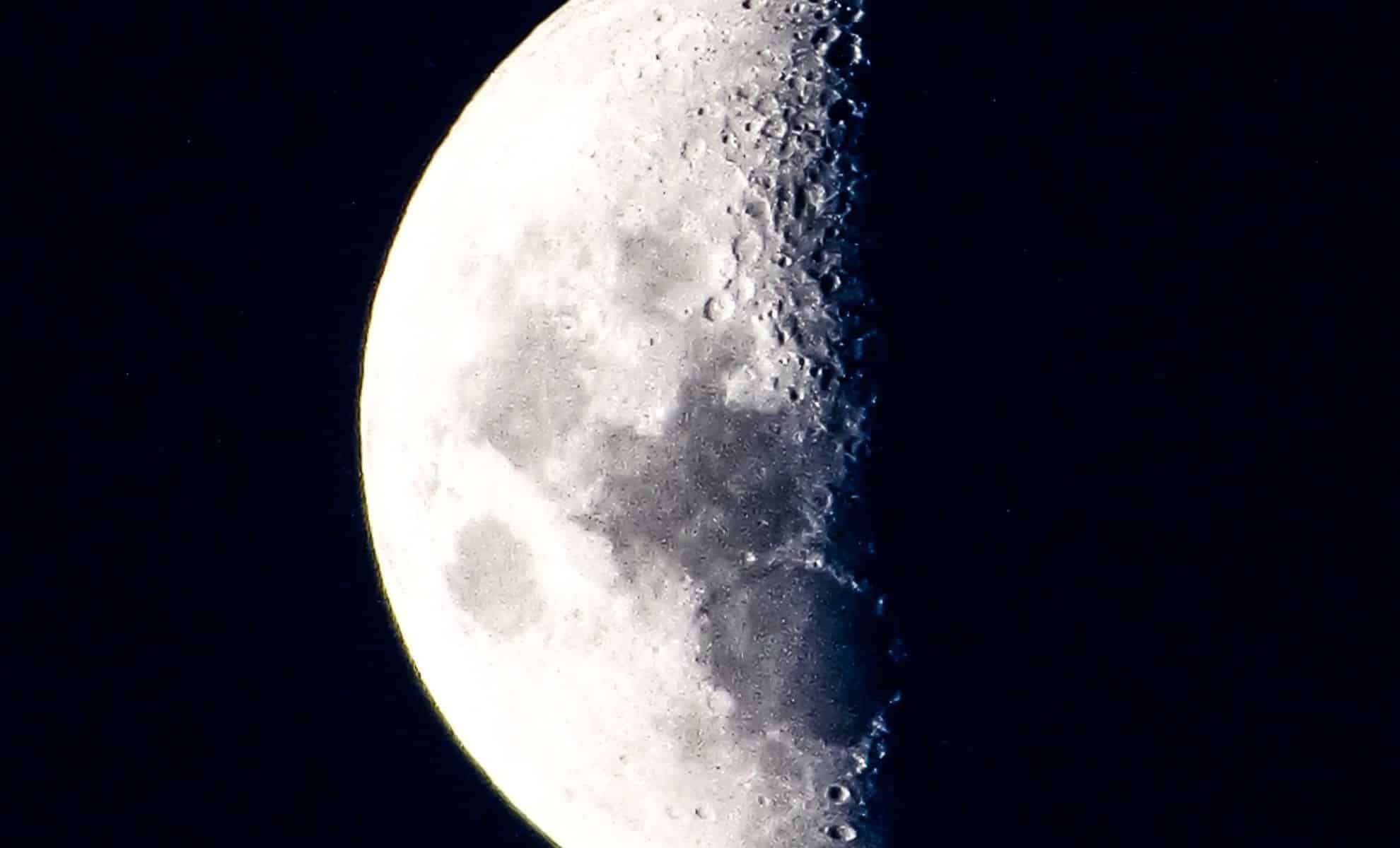
Researchers have finally answered a long-standing question about the Moon’s inner composition, establishing that its central core is not liquid but a solid iron-like sphere. This revelation deepens our comprehension of the Moon’s geological history and sheds light on the origins and evolution of its magnetic field, which plays a crucial role in understanding early lunar activity and its influence within our Solar System.
Decoding the Moon’s Interior From Earth
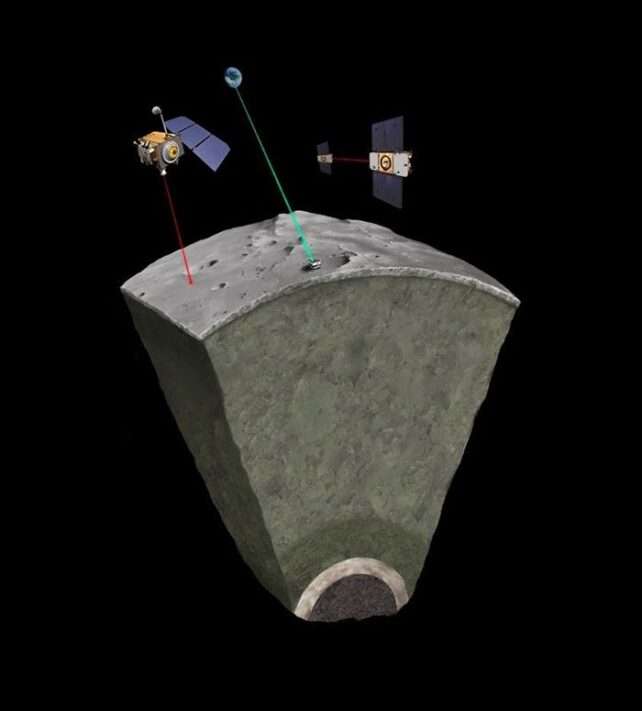
Arthur Briaud and his team at the French National Centre for Scientific Research combined lunar observations beyond traditional seismic data gathered from the Apollo missions. While these missions recorded essential seismic events, they lacked the resolution to definitively characterize the Moon’s core state. To overcome this, the team fused results from lunar laser-ranging experiments and spacecraft data.
Their methodology focused on monitoring the Moon’s deformations due to Earth’s gravity, minute shifts in its orbital distance, and comparing its internal density to known materials.

Dynamic Activity Within the Moon’s Mantle
The researchers’ models also revealed evidence of material overturning deep in the lunar mantle, a process where denser elements sink inward while lighter ones rise upward. This mechanism may clarify unusual chemical distributions observed in the Moon’s volcanic areas.
Results indicate that the Moon’s core comprises an outer liquid shell encasing a solid inner core, reflecting a structure analogous to Earth’s. The liquid outer core likely extends to a radius near 362 kilometers (225 miles), while the solid core measures about 258 kilometers (160 miles)—approximately 15% of the Moon’s overall radius.
The solid core’s density is close to 7,822 kg/m³, very similar to solid iron, suggesting that the Moon’s internal movements bear strong resemblance to Earth’s core dynamics.
Validating Prior Evidence with Cutting-Edge Methods
This finding aligns with earlier work from 2011, led by Renee Weber at the NASA Marshall Space Flight Center. Using refined seismology on Apollo-era data, Weber’s team proposed a solid core radius of approximately 240 kilometers and a density around 8,000 kg/m³.
Understanding the Moon’s core is pivotal beyond structure; the satellite once had a powerful magnetic field that waned roughly 3.2 billion years ago. These magnetic properties are linked to core dynamics and convection.
As plans advance for renewed human exploration, scientists anticipate deploying state-of-the-art seismic arrays on future missions. These instruments could directly affirm models that predict a steadfast, iron-rich lunar interior.
- Categories:
- News






0 comments
Sign in to Comment