
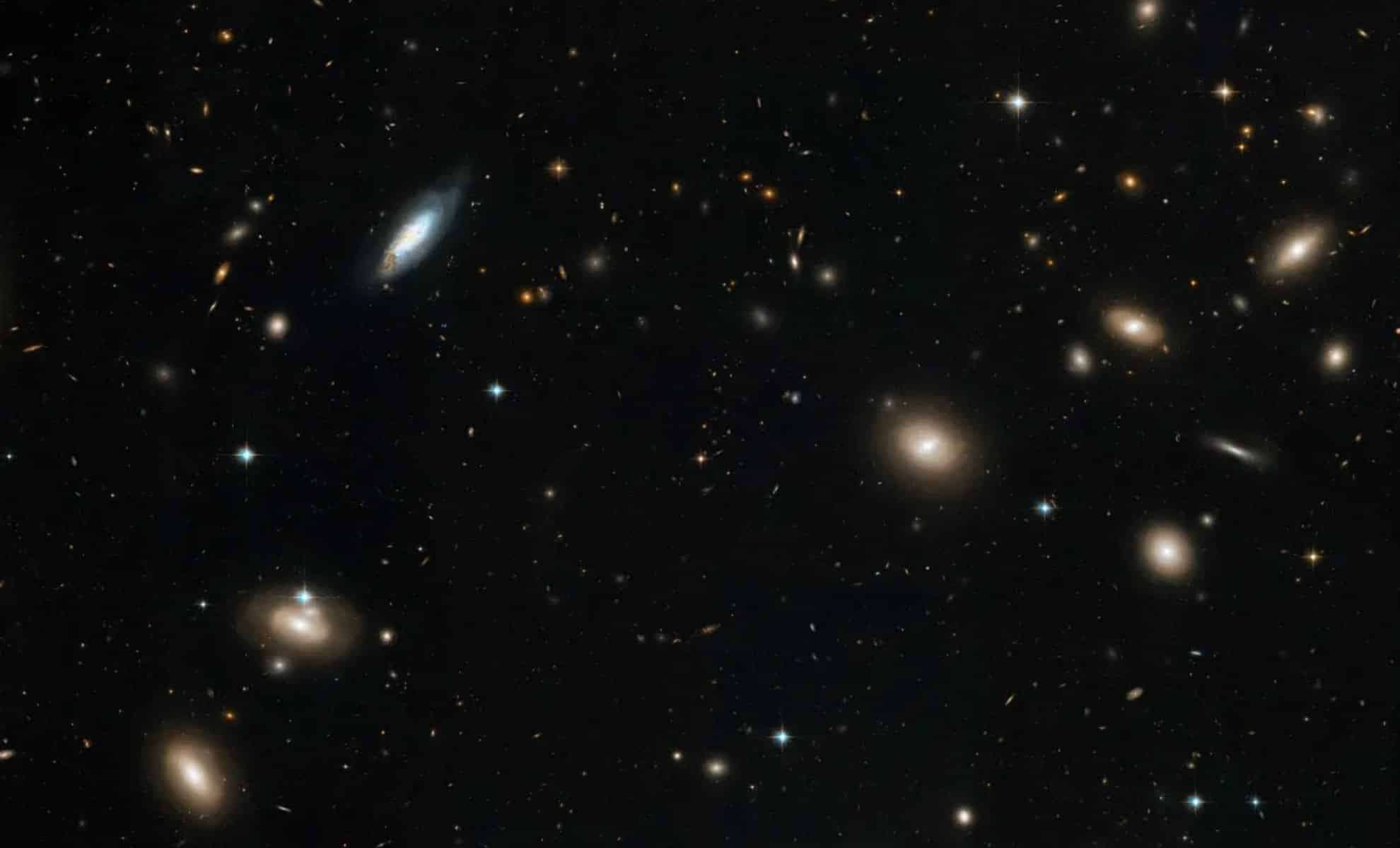
A recent paper posted on arXiv challenges the long-standing assumption that dark matter remains unchanged over the history of the cosmos. Traditionally understood as a stable and passive component shaping galaxies and large-scale structures, dark matter is now suggested to have oscillating properties that evolve over time. This novel perspective could help address persistent puzzles in cosmology, such as the well-known Hubble tension.
Unpacking the Hubble Tension: A Persistent Astrophysical Challenge
The Hubble tension describes the ongoing disagreement between two primary measurements of the Universe’s expansion rate, the Hubble constant. Data from the cosmic microwave background (CMB)—the relic radiation from the Big Bang—indicate a slower rate, whereas observations of nearby galaxies suggest the Universe is expanding more rapidly. This inconsistency has fueled debates and calls for new physics beyond the conventional cosmological framework. The new hypothesis introduces an evolving nature of dark matter, where a fraction exhibits oscillating characteristics in its equation of state, potentially harmonizing these discordant observations. This approach departs from prior theories that focused mostly on dynamic dark energy or modifications to gravity.
What Does an Evolving Dark Matter Mean?
Dark matter has typically been characterized as cold, stable particles that neither emit nor absorb light and maintain constant properties. The emerging theory argues that about 15% of dark matter might possess an oscillatory equation of state, meaning that its pressure-to-density relationship changes periodically over cosmic time. This draws parallels to neutrinos, which undergo mass oscillations even though they interact weakly with other particles. If certain dark matter particles have similar fluctuating behaviors, it could drastically affect the timeline and mechanics of cosmic structure formation. The other 85% of dark matter would retain the conventional cold and stable behavior, ensuring that known cosmological successes remain intact.

Broader Implications and Prospects for Research
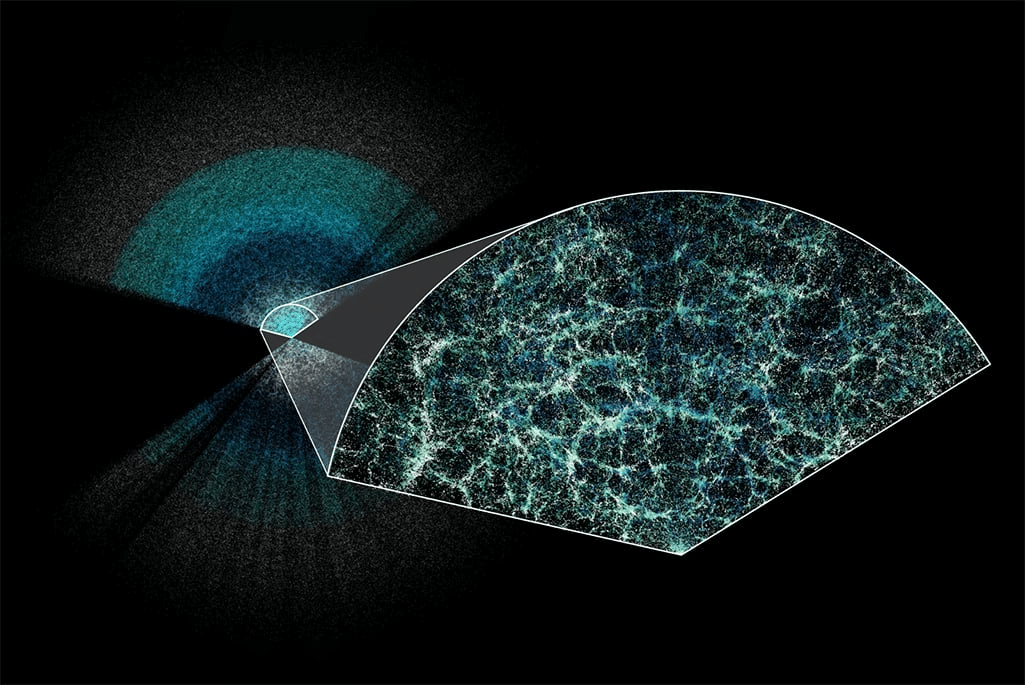
The concept of evolving dark matter provides a novel pathway to address discrepancies in cosmological measurements without dismissing the foundational role of dark matter. It may offer insight into why current models falter in accurately describing cosmic expansion and hint at new particle physics phenomena. Still, the researchers acknowledge that their framework is exploratory and does not yet constrain the specific characteristics or identity of the proposed oscillatory dark matter particles. Upcoming observational efforts, especially from extensive surveys such as the DESI (Dark Energy Spectroscopic Instrument), will be key in validating or refuting these ideas. Such discoveries could significantly transform our comprehension of cosmic history and destiny.
The Promise and Challenges of an Evolving Dark Matter Hypothesis
Despite its appeal, the evolving dark matter hypothesis faces hurdles. Current support is indirect, emerging from refined fits to cosmological data rather than from direct detection of dark matter particles. The ongoing absence of direct dark matter observations presents a key challenge within physics, and introducing oscillations adds complexity to an already enigmatic subject. Nevertheless, this innovative idea invites scientists to broaden their conceptual models and stay open to new possibilities as cosmology benefits from an influx of high-precision data.
- Categories:
- News







0 comments
Sign in to Comment