
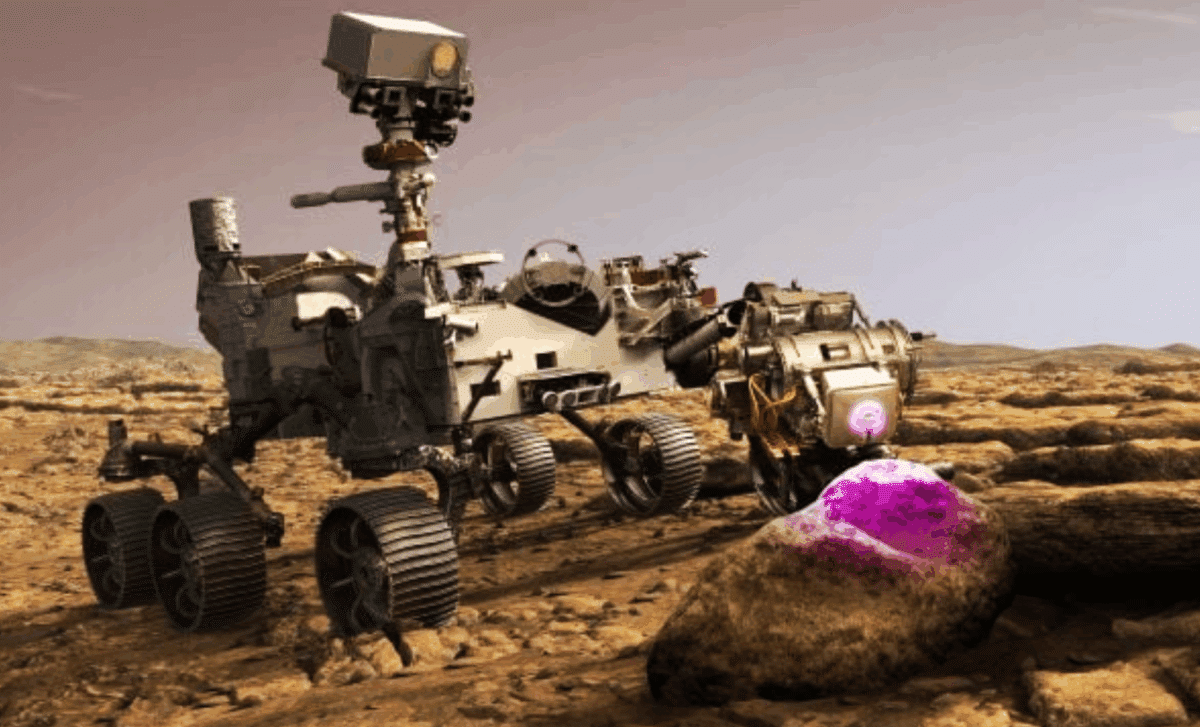
NASA’s Perseverance rover has uncovered remarkable insights about the Martian past, revealing that Jezero Crater went through multiple distinct stages of water activity. This discovery points to environments that could have been suitable for life on the Red Planet across different eras. By employing sophisticated mineralogical techniques, researchers have mapped out a timeline of changing water conditions that might have supported microbial organisms. The findings, detailed in the Journal of Geophysical Research: Planets, highlight Mars’ dynamic environmental evolution.
Tracing Jezero Crater’s Changing Mineral Landscape
Perseverance’s mission on Mars continues to yield vital clues about the planet’s watery history, particularly in Jezero Crater. Scientists applied an advanced analysis approach called the Mineral Identification by Stoichiometry (MIST) algorithm to examine mineral samples collected by the rover. This cutting-edge method, which analyzes X-ray data from Perseverance’s Planetary Instrument for X-ray Lithochemistry (PIXL), identified 24 unique minerals that reveal the crater’s complex chemical evolution.
Eleanor Moreland, a graduate student at Rice University and the study’s lead author, explained that “the minerals detected using MIST indicate multiple, separate episodes of fluid interactions,” suggesting varied water environments existed throughout Jezero’s history. Each watery phase had distinct chemical compositions and temperature ranges, shaping how minerals formed. This work strengthens the understanding that Jezero experienced a sequence of water-related processes rather than a single event, creating diverse habitats potentially hospitable to life.

The study appears in the Journal of Geophysical Research: Planets and advances knowledge of Mars’ geochemical past. Moreland’s team highlights that the mineral record points to a transition from intense, hot, acidic fluids to milder neutral and alkaline waters, conditions increasingly favorable to sustaining life. This progressive sequence significantly impacts the assessment of Mars’ habitability over time.
Intense, Acidic Origins: The Early Martian Environment
The earliest water activities captured by Perseverance data indicate a harsh environment dominated by hot, acidic waters in Jezero Crater. Minerals such as greenalite and hisingerite formed during this phase, reflecting powerful chemical alteration of volcanic rocks under extreme conditions. These minerals correspond to some of the oldest geological evidence uncovered in the research.
Co-author Kirsten Siebach, assistant professor of Earth, Environmental, and Planetary Sciences at Rice University, comments,
“These hot, acidic conditions would be the most challenging for life.” While these extreme environments might seem inhospitable, Earth offers examples of organisms that thrive in similarly harsh conditions. “On Earth, life can persist even in extreme environments like the acidic pools of water at Yellowstone,” Siebach added, highlighting that while these conditions would challenge life, they do not entirely rule out its possibility.
Transition to Neutral Waters: A More Hospitable Era
Subsequent water activity in Jezero Crater shifted towards more moderate, neutral conditions that would have been much more favorable for microbial organisms. During this interval, minerals including minnesotaite and clinoptilolite began to develop, signaling a cooler and chemically balanced aquatic environment. Such minerals usually indicate settings more supportive of biological activity compared to acidic waters.
This phase signals a meaningful transition in Jezero’s habitability, suggesting that relatively stable, life-supporting environments could have persisted for significant periods within the crater.
Alkaline Waters: Jezero’s Most Life-Friendly Period
The most recent phase of water presence at Jezero Crater appears to have been characterized by cooler, alkaline conditions closely resembling Earth’s habitable aquatic environments. The detection of sepiolite, a mineral typically associated with alkaline waters on Earth, points to widespread and sustained water activity during this time.
“The minerals tell us that Jezero experienced a shift from harsher, hot, acidic fluids to more neutral and alkaline ones over time — conditions we think of as increasingly supportive of life,” Moreland said.
This mineral evidence hints that the final stage of water presence created the most promising setting for potential microbial ecosystems to have thrived on Mars.
- Categories:
- News







0 comments
Sign in to Comment