

Within the core of CERN’s Large Hadron Collider (LHC), a groundbreaking experiment has unveiled a phenomenon resembling the ancient dream of alchemy. Researchers succeeded in converting lead into gold, though the transformation was fleeting and unlike the mythical versions of the past. This achievement provides fresh insights into nuclear physics and the behavior of particles under extraordinary conditions.
A Milestone in Particle Collision Research
Situated near Geneva, Switzerland, the LHC is renowned for delivering pivotal breakthroughs in particle physics. Here, atoms are accelerated to near-light speeds and smashed together, generating extreme environments where novel forms of matter briefly arise. In a recent set of collisions involving lead ions, scientists caught sight of a transient appearance of gold nuclei.
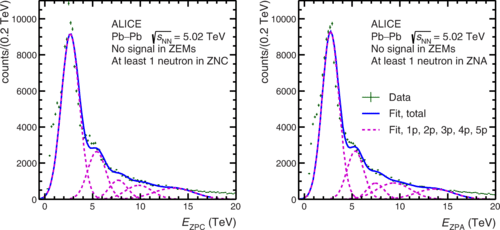
Members of the ALICE (A Large Ion Collider Experiment) collaboration meticulously recorded and analyzed these rare occurrences. From 2015 through 2018, they identified numerous unusual electromagnetic interactions that produced approximately 86 billion gold nuclei.

Although the total mass was infinitesimal—merely 29 trillionths of a gram—the implications for nuclear science are profound. The comprehensive study, published in Physical Review C on May 7, deepens our understanding of particle dynamics in extreme contexts.
Decoding the Lead-to-Gold Conversion
To understand the rapid conversion of lead to gold, it’s essential to explore the underlying physics. Lead atoms, each containing 82 protons, were hurled near the speed of light so their nuclei could interact under extreme energy conditions. During collisions, the electromagnetic fields emitted powerful energy bursts that set off nuclear changes.
One remarkable result was a lead nucleus losing three protons, effectively transforming it into gold, which has 79 protons. While gold stood out due to its uniqueness, other elements such as thallium and mercury also formed, albeit in larger amounts.
The Ephemeral Nature of the Synthetic Gold
Despite its creation, the synthetic gold atoms lasted for only about one microsecond before breaking apart. These fleeting gold nuclei quickly interacted with the LHC’s surroundings or decayed into smaller particles, making their existence extremely transient.
Even though the mass and lifespan of this gold were negligible, the experiment offers valuable revelations about nuclear transmutation — the process of converting one chemical element into another. Previously a theoretical concept, this transformation was empirically observed through high-energy collisions in the LHC, enriching our grasp of particle physics under intense circumstances.
Expanding Particle Accelerator Capabilities
While this method is impractical for producing gold commercially, the experiment showcases the incredible precision and potential of modern particle accelerators in probing nuclear phenomena. The ALICE collaboration’s success in identifying and studying these extraordinary nuclear events marks a pivotal advance, offering scientists refined tools to investigate matter’s fundamental components.
Marco van Leeuwen, spokesperson for ALICE, remarked, “Our detectors impressively manage head-on collisions that generate thousands of particles, whilst remaining sensitive to infrequent collisions producing just a few particles, enabling exploration of rare electromagnetic ‘nuclear transmutation processes.’” This discovery paves the way for future explorations in nuclear physics and high-precision particle collision experiments.
- Categories:
- News










0 comments
Sign in to Comment