
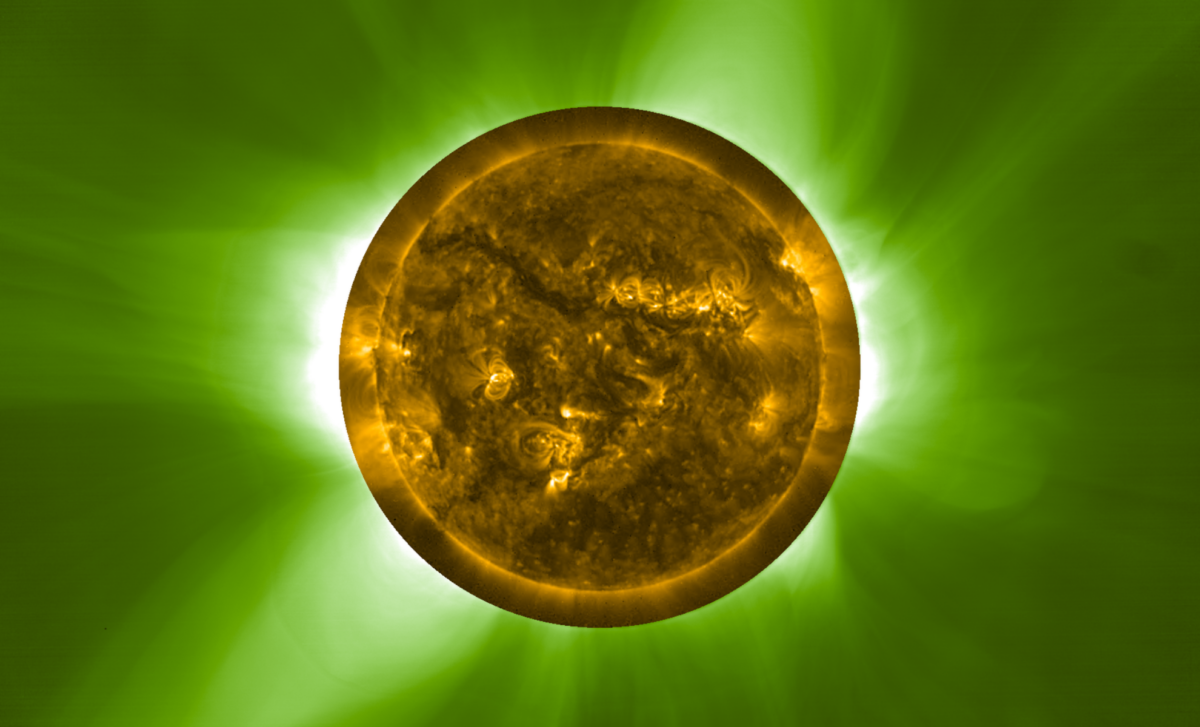
Recent data from the European Space Agency’s Proba-3 spacecraft has uncovered that the solar wind—a constant flow of charged particles streaming from the Sun—travels significantly faster than scientists had anticipated. Earlier assumptions placed the velocity of slow solar wind near the Sun’s surface at approximately 60 miles per second. However, new measurements reveal these winds can surge to speeds reaching 300 miles per second, which is up to four times faster than prior estimates. This startling revelation promises to reshape our approach to studying space weather and enhances our insight into solar dynamics.
Advancing Our Understanding of Solar Wind Dynamics
Solar wind research has been a focal point for many years, but many aspects, especially close to the Sun, have remained elusive. This continuous stream of charged particles released by the Sun has profound influences, ranging from space weather phenomena to geomagnetic disturbances on our planet. Traditionally, it was understood that solar wind falls into two categories: the fast wind emerging from coronal holes moving at about 480 miles per second, and the slower wind traveling at around 60 miles per second.
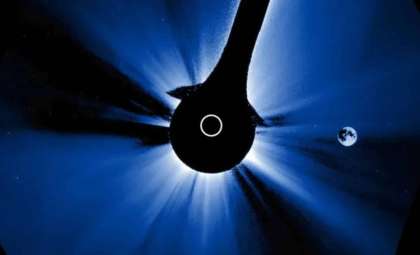
Data from Proba-3, recently detailed in The Astrophysical Journal Letters, is challenging this conventional view. By employing an innovative method that mimics solar eclipses, Proba-3 obtained detailed images of the Sun’s corona—an area difficult to observe due to the Sun’s brilliance. This technique enabled researchers to monitor the movement of slow solar wind much closer to the Sun’s surface than previously possible.

Lead researcher Andrei Zhukov from the Royal Observatory of Belgium stated, “Within the inner corona, a region notoriously hard to observe, we detected slow solar wind bursts moving at speeds three to four times greater than we expected.” These findings not only answer longstanding questions about the Sun’s atmosphere but also prompt new inquiries into what powers solar wind acceleration.
Proba-3: Pioneering Solar Limb Observation
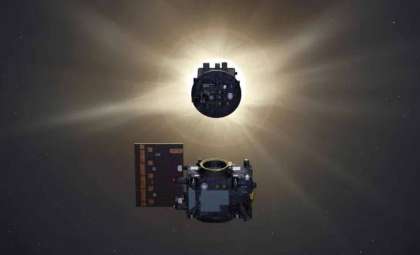
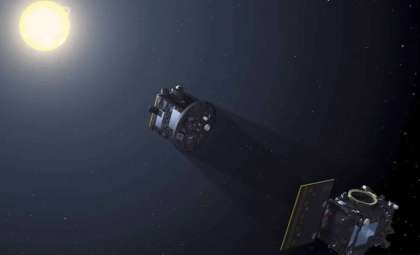
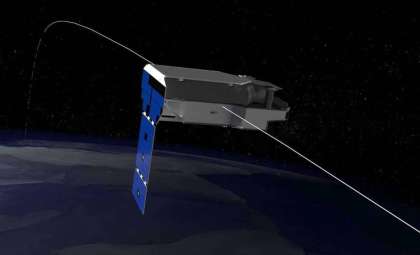
The Proba-3 mission marks a significant stride forward in the realm of solar study. Unlike conventional telescopes, which struggle to capture the corona's faint light against the Sun’s intense brightness, Proba-3 uses a duo of satellites to recreate the effect of a solar eclipse. One satellite blocks the Sun’s direct light, acting as an occulter, while the other closely observes the dim corona. This groundbreaking configuration has gathered immense data on the Sun’s outer atmosphere, revealing aspects that were previously obscured.
Since its December 2024 launch, Proba-3 has orchestrated 57 artificial eclipses, amassing over 250 hours of high-definition footage. This treasure trove provides an unparalleled perspective on the Sun’s corona, critical for understanding how solar wind forms. The spacecraft's capability to monitor solar wind acceleration near the Sun sheds new light on the origins of these particles and their interactions with the solar magnetic environment.
ESA’s Proba-3 project scientist, Joe Zander, shared his enthusiasm regarding the mission’s discoveries:
“We can track how solar wind speeds up close to the Sun, we see it all over Proba-3’s field of view, and we have already seen speeds and accelerations that surprised us.” These early discoveries, Zander emphasizes, are just the beginning: “This first dataset is just the beginning of the much longer journey to fully understand what’s happening.”
Impacts on Space Weather Forecasting
The revelation that slow solar wind accelerates much more rapidly near the Sun could have far-reaching impacts on space weather understanding. Solar wind directly affects geomagnetic storms, which pose risks to satellites, communication networks, and power grids on Earth. Better comprehension of how solar wind speeds change close to the Sun may enhance predictive models, improving preparation times for disruptive solar phenomena.
The unexpectedly rapid acceleration also encourages further investigation into the Sun’s corona processes. Researchers believe that this phenomenon may be tied to intricate magnetic field interactions with solar wind plasma, which were not previously fully appreciated. As Zander noted, “This first dataset is just the beginning of the much longer journey to fully understand what’s happening,” indicating that many more insights are anticipated as Proba-3 continues operations.
- Categories:
- News


0 comments
Sign in to Comment