
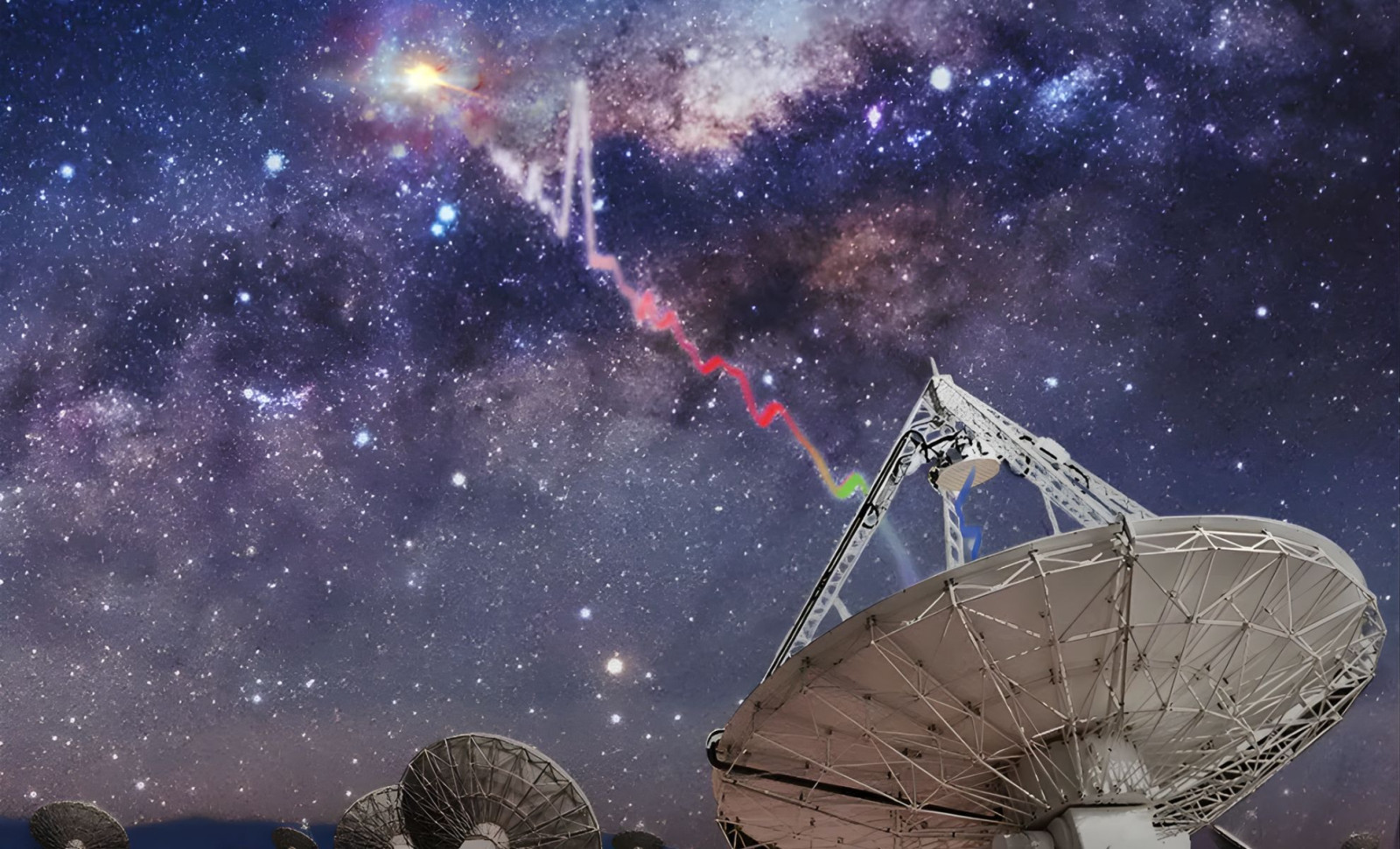
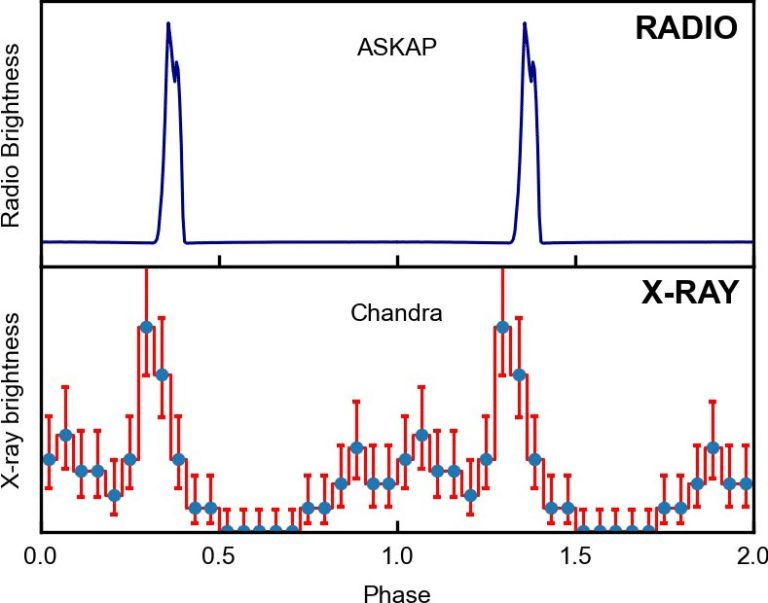
Scientists have uncovered a strange entity within our galaxy that releases powerful pulses of radio and X-ray radiation at a remarkably steady interval of 44 minutes. This source, designated ASKAP J1832-0911, is the first known object to produce simultaneous emissions in both of these high-energy ranges, challenging existing classifications of cosmic objects.
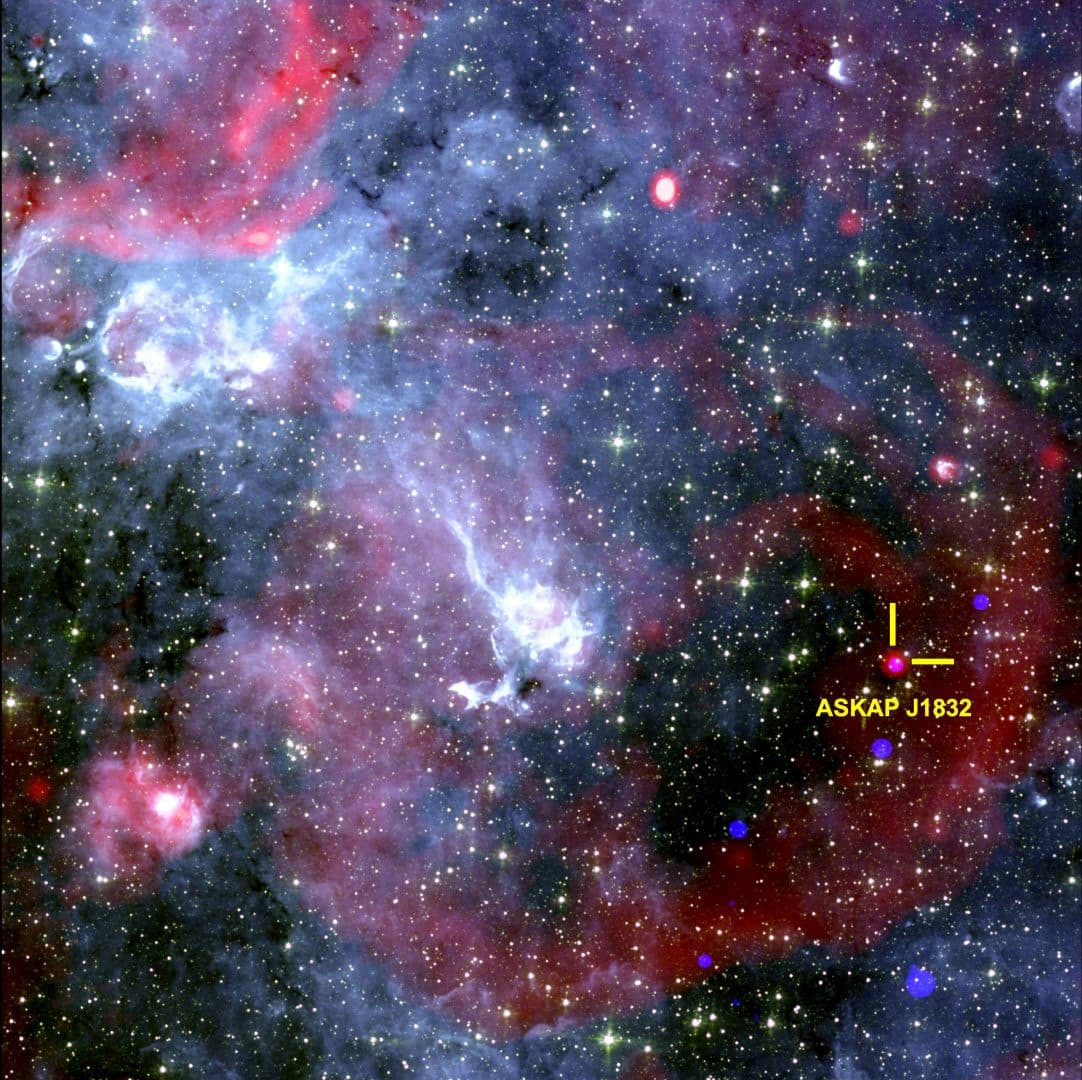
Situated roughly 15,000 light-years away in the Milky Way, the source fits into the rare category of long-period transients (LPTs), though it exhibits unprecedented characteristics. Led by the International Centre for Radio Astronomy Research (ICRAR), this finding could significantly advance our understanding of extreme astrophysical phenomena and the life cycles of stellar remnants.
Consistent Pulses from an Unusual Cosmic Phenomenon
LPTs were only defined as a class in 2022, with about ten known cases worldwide. Yet ASKAP J1832-0911 stands apart. As outlined in a NASA press announcement, it is the first LPT to display powerful X-ray bursts alongside radio signals, indicating that previous models focusing solely on radio emission may have overlooked critical features.

“Discovering that ASKAP J1832-0911 was emitting X-rays felt like finding a needle in a haystack,” said Dr. Ziteng (Andy) Wang, lead author of the study and researcher at Curtin University’s ICRAR node. “The ASKAP radio telescope has a wide field view of the night sky, while Chandra observes only a fraction of it. So, it was fortunate that Chandra observed the same area of the night sky at the same time.”
Challenging Established Astrophysics Models
The object's peculiar emissions put pressure on existing theories. One hypothesis suggests it might be a magnetar, a neutron star with incredibly intense magnetic fields. Alternatively, it could belong to a binary system featuring a strongly magnetized white dwarf. However, as Dr. Wang explains, these scenarios do not fully account for the observed precise periodicity, energy output, and dual-band signals.
“This source defies all previously known categories,” he emphasized. The research, originally published in Nature, compels experts to revisit potential mechanisms behind sustained and rhythmic high-energy pulses. Professor Nanda Rea, from Spain’s Institute of Space Science and co-author of the publication, stated:
“Finding one such object hints at the existence of many more. The discovery of its transient X-ray emission opens fresh insights into their mysterious nature.”
The detection of X-ray bursts offers a new avenue to identify similar phenomena, potentially revealing a larger hidden population of LPTs.
A Fortuitous Moment in Collaborative Observation
This remarkable discovery underscores the power of international collaboration in astronomy. Utilizing insights from the Australia Telescope National Facility (ATNF), the global research effort combined data from specialized instruments, including South Africa’s MeerKAT radio array and NASA’s Spitzer Space Telescope.
Timing was critical: Chandra wasn’t originally targeting ASKAP J1832-0911 but serendipitously recorded its emission during a pulse, confirming the simultaneous dual-frequency bursts that had never been observed before.
- Categories:
- News









0 comments
Sign in to Comment