
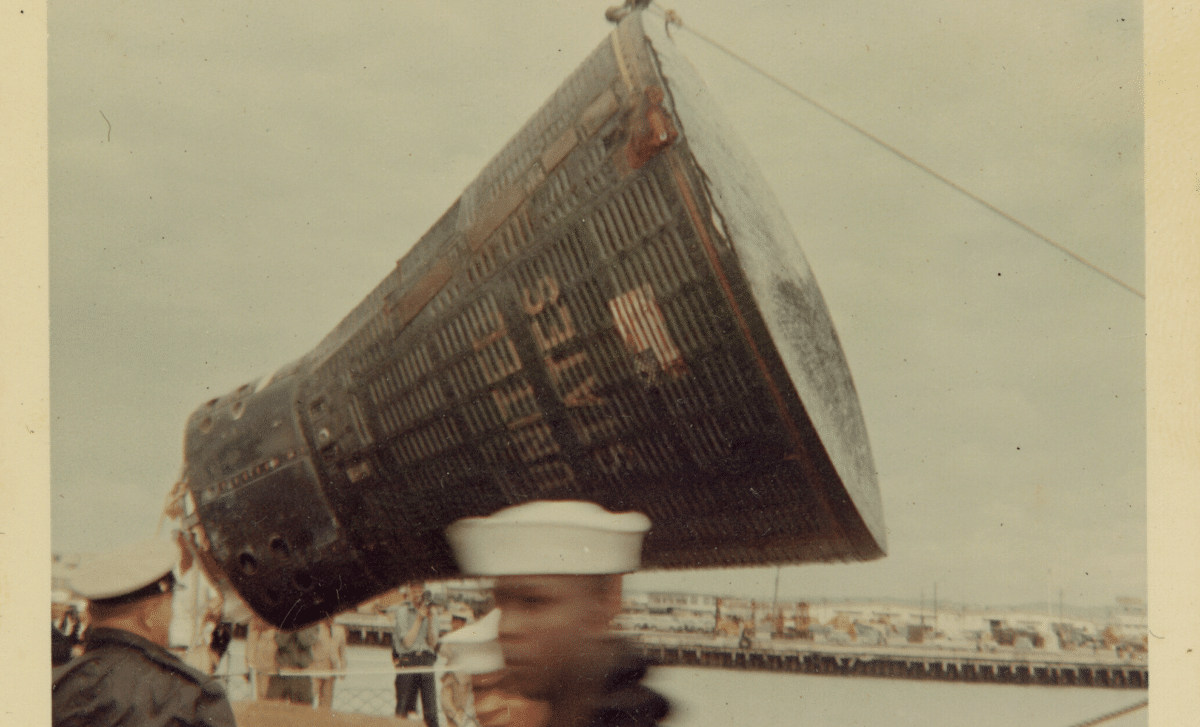
Recently uncovered photographs capturing astronaut Neil Armstrong following the critical emergency during the Gemini 8 mission have been released to the public. These previously unseen snapshots, contributed to the Armstrong Air and Space Museum in Ohio, provide a fresh look at Armstrong’s courage and composure during a defining episode in space exploration. Taken by Ron McQueeney, an Army veteran and skilled photographer who was integral in documenting the mission’s aftermath in 1966, these images had remained out of public view for over sixty years.
The Gemini 8 Incident: A Test of Steadfast Resolve
The Gemini 8 mission aimed to accomplish the space program’s first-ever docking of two spacecraft in orbit. However, soon after achieving this, the combined vehicles began to spin uncontrollably, endangering astronauts Neil Armstrong and David Scott.
Armstrong’s rapid decision-making and expert handling of the spacecraft’s thrusters halted the dangerous rotation. His actions thwarted what could have been a catastrophic disaster, even though it depleted critical fuel reserves required for re-entry to Earth.

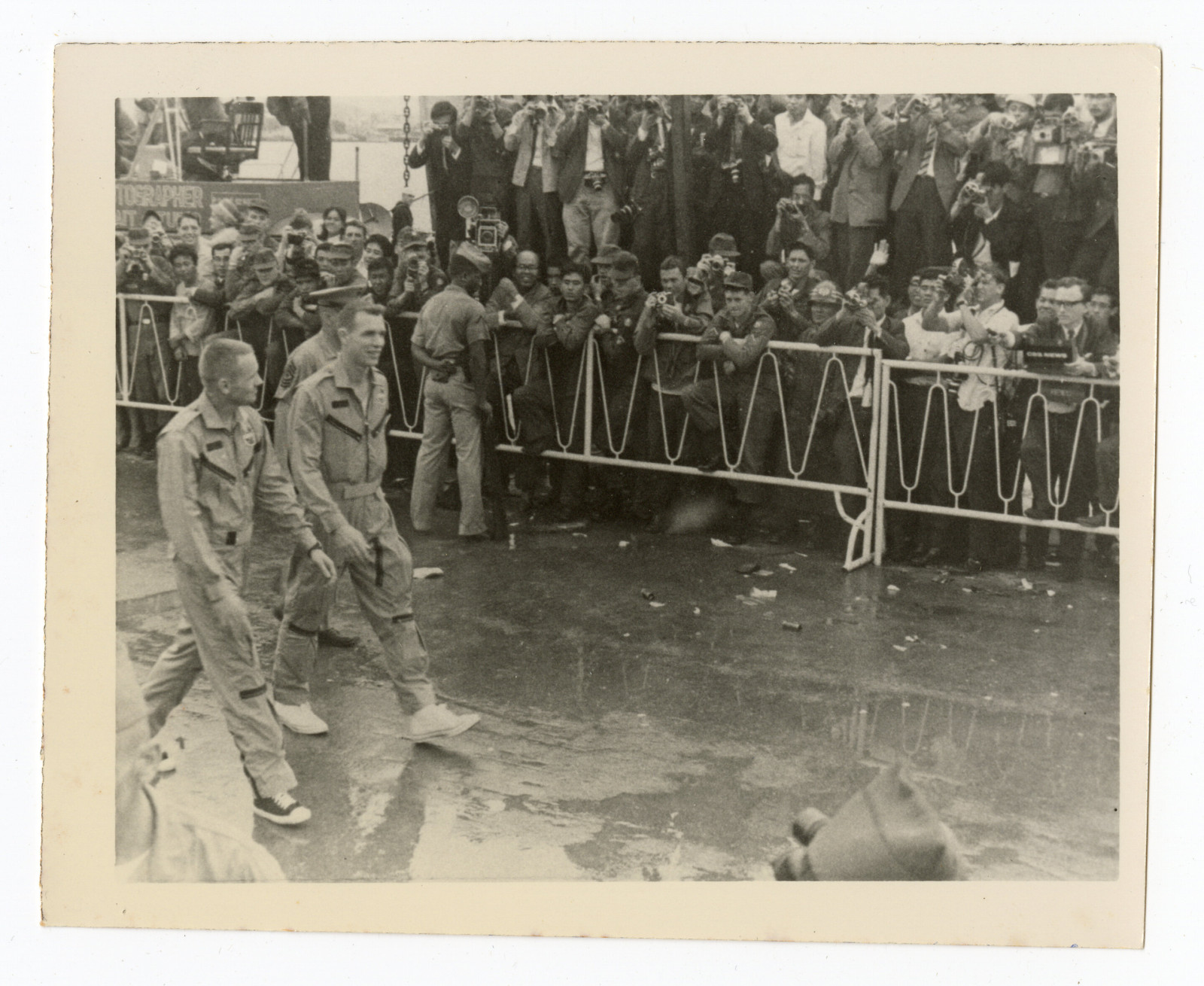
With the mission cut short, Armstrong and Scott safely splashed down in the Pacific Ocean approximately ten hours post-launch. The newly revealed photos, shared by The Associated Press, capture Armstrong’s steady and composed demeanor in the aftermath of this harrowing event.
Unearthing a Unique Perspective on the Mission’s Aftermath
Before this discovery, very few visuals existed chronicling the Gemini 8 mission’s emergency conclusion. The sudden nature of the splashdown, combined with scarce media presence, meant limited photographic records. NASA enlisted Ron McQueeney to assist with recovery, and he managed to capture these extraordinary moments showing Armstrong and Scott aboard the USS Leonard F. Mason in Okinawa, Japan.
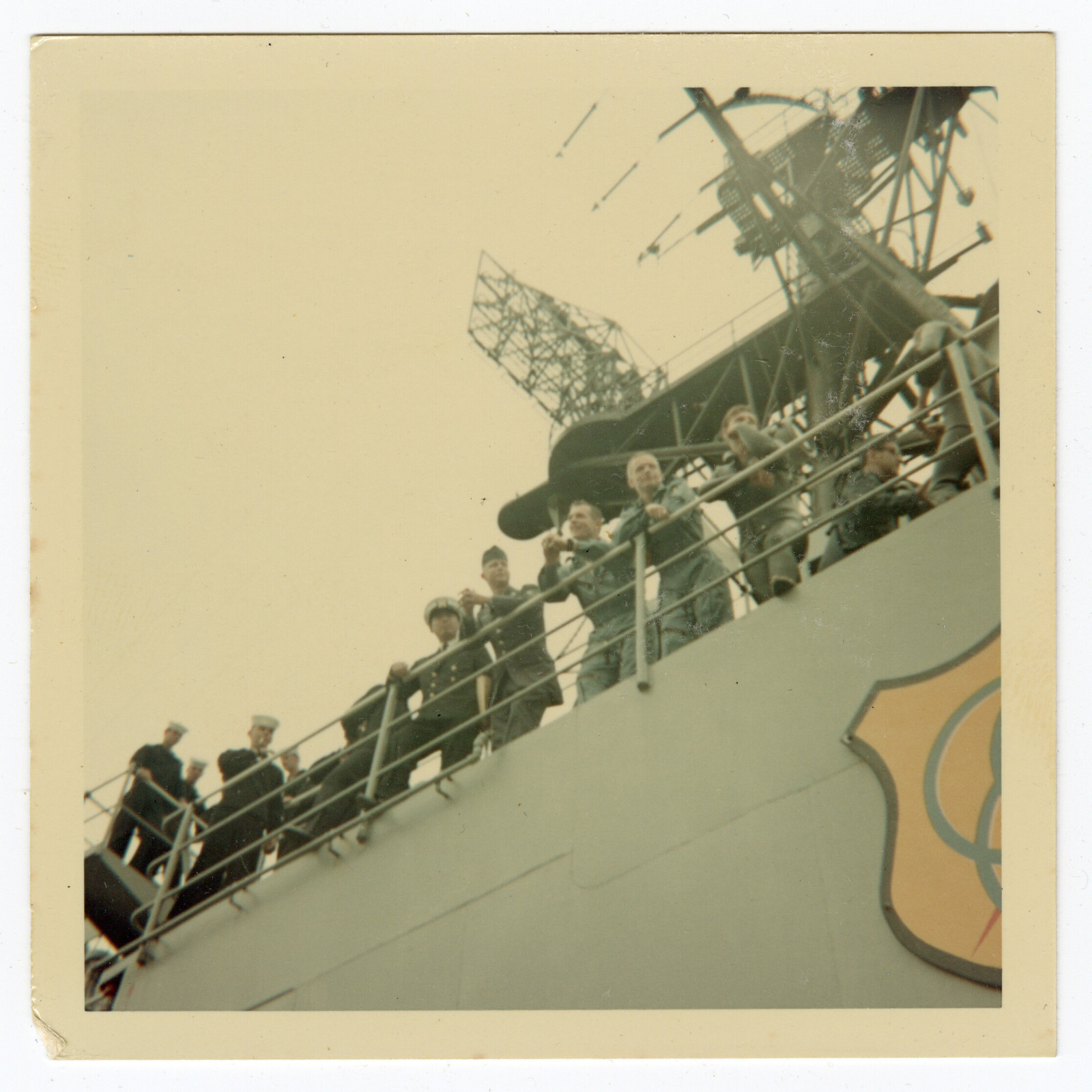
Being released to the public for the first time, these photos add a relatable dimension to the historic mission’s conclusion. Armstrong and Scott are seen interacting warmly with crew members, their calm professionalism shining through despite having recently faced a life-threatening challenge.
The Value of Everyday Visual Records
Dante Centuori, executive director of the Armstrong Air and Space Museum, emphasized the importance of these images, stating,
“Sometimes, an incredible event can actually be documented by some of the most ordinary means.”
These straightforward but meaningful photographs preserve a memorable moment that might have slipped into obscurity without McQueeney’s dedication. Beyond their historical significance, the pictures humanize the space journey, reminding us that behind every pioneering achievement are individuals who faced extraordinary pressures. Thanks to these images, the public gains a deeper appreciation for the personal side of space history involving Armstrong, Scott, and their support teams.
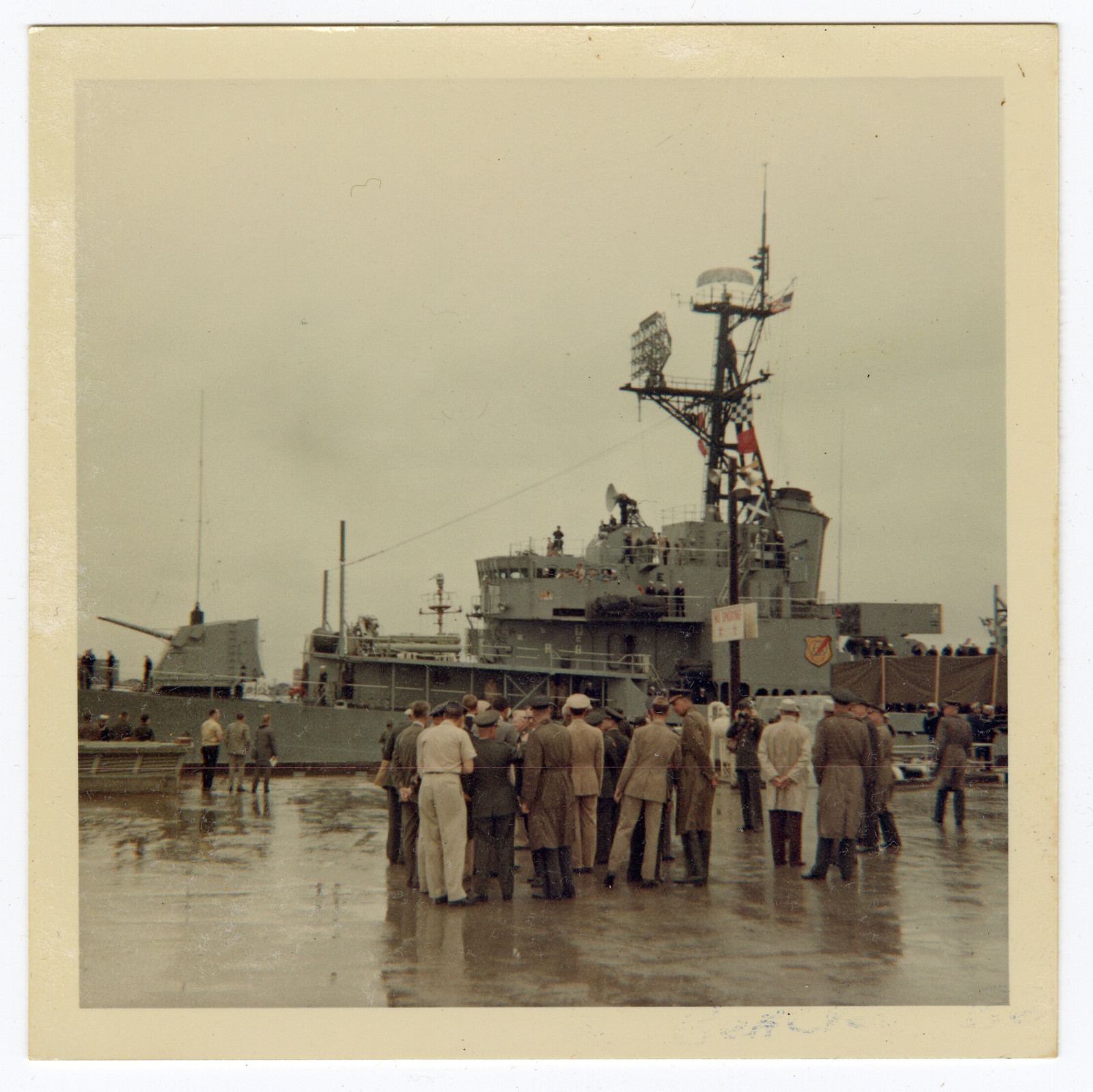
The Human Emotion Captured in New Photos
The most striking feature of these newly surfaced photos is the evident smiles on Armstrong and Scott’s faces. Despite recently surviving a perilous crisis, both astronauts exude calmness and relief, reflecting their professionalism. As Robert Poole, science historian at the University of Lancashire, remarked, “The obvious thing that sticks out to me is that they are very happy to be alive.”
This touching glimpse into the human side of spaceflight underscores the intense pressures faced by astronauts like Armstrong and Scott during NASA’s early missions. Their ability to maintain composure in critical moments contributed to their success and paved the way for Armstrong’s historic leadership on Apollo 11, culminating in humanity’s first moon landing.
Reflecting on the Perils of Space Missions
The images of Armstrong and Scott post-Gemini 8 also remind us of the immense complexities involved in space travel. Emily Margolis, curator at the National Air and Space Museum, expressed this succinctly:
“Seeing people launch to space frequently can suggest that it’s easy, but it’s very hard. And it requires a lot of resources and attention.”
The Gemini 8 emergency and unplanned landing underscore how even minor malfunctions or unexpected conditions can threaten astronauts’ safety. These freshly revealed photographs not only highlight the dangers of space exploration but also celebrate the meticulous preparation and dedication that early astronauts and support teams invested in every mission.
- Categories:
- News












0 comments
Sign in to Comment