

During a routine scan of the skies above Texas, a high-resolution satellite unexpectedly recorded an object moving at incredible speed, visible in a spectrum of colors across the captured frames. This remarkable sighting, later discovered by a Google Earth user, is among the clearest orbital catches of its kind. The focus was not on Earth itself but on what experts believe to be a Starlink satellite, unintentionally photographed by another satellite’s camera
An Uncommon Orbital Event Over Texas
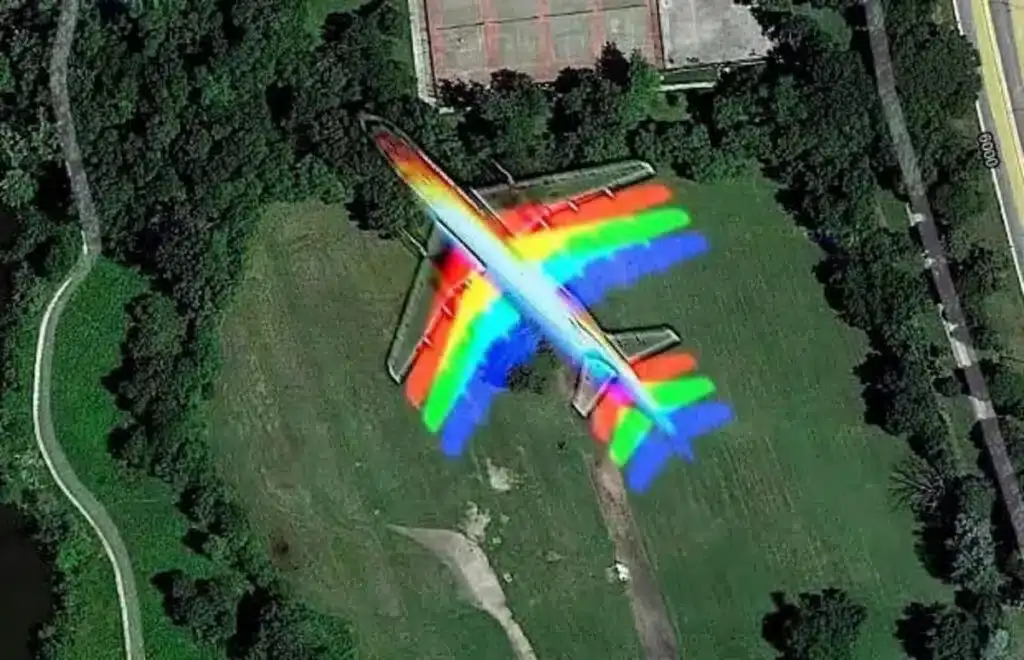
A user exploring Google Earth first noticed this image taken over Texas. Unlike typical satellite imagery featuring aircraft or weather patterns, this image stood out due to a luminous, multi-colored object streaking through the frame, now thought to be a Starlink satellite.
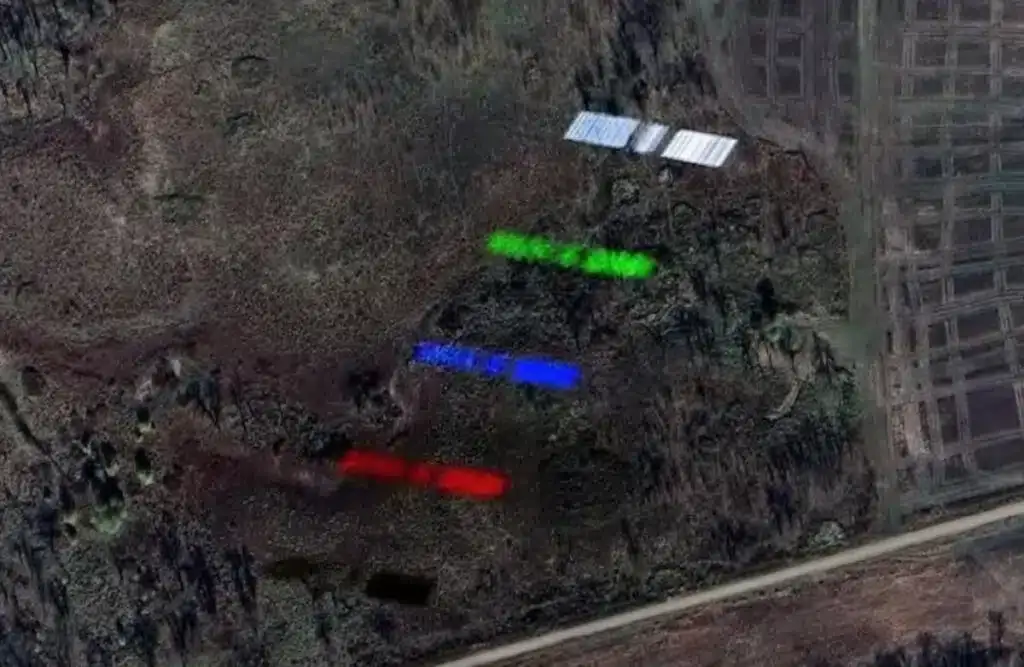
This photo was captured by the Pléiades satellite, run by Airbus Defence & Space, a provider of detailed Earth imagery to platforms such as Google Earth. Pléiades satellites acquire multiple images in various spectral bands—red, green, blue, panchromatic, and near-infrared—combining them into a comprehensive composite. Here, the rapid motion of the satellite created distinct misaligned colorful trails between exposures, making it readily noticeable.

A Rare Glimpse of a Fully Deployed Starlink Satellite
The colorful streak indicates an object traveling at speeds exceeding 27,000 kilometers per hour, consistent with the velocity of low Earth orbit satellites. Unlike commercial planes, which typically travel between 600 and 900 kilometers per hour and appear aligned across spectral layers, this satellite’s speed caused visible shifts between each captured band.
This rapid transit provided one of the most distinct orbital photos of a fully operational Starlink satellite. With two extended solar panels, an individual Starlink satellite spans roughly 30 meters across. Such detailed orbital views of deployed Starlinks are rare, as most images available show these units only during or just after launch. Capturing one during a standard imaging pass presents a highly unusual opportunity.
Was Another Satellite Responsible?
Some speculation suggested a Chinese satellite could have been present at the same time. However, orbital trajectory data, image features, and the dominance of Starlink satellites in low Earth orbit strongly support the conclusion that the object was indeed a Starlink satellite.
Currently, over 7,000 Starlink satellites operate in space, forming the largest portion of the world’s more than 10,000 active satellites. Orbiting around 550 kilometers above Earth, these satellites sit just below the 600 to 800 kilometers altitude typical for high-resolution imaging satellites like Pléiades. As the number of satellites in low Earth orbit rises rapidly, such incidental satellite overlaps are likely to become more frequent.
The Growing Challenge of Satellite Overlaps
This occurrence offers not only a rare look at a Starlink in full deployment but also highlights mounting issues for Earth observation. According to Futura Sciences, as orbital traffic increases, incidents of image contamination from fast-moving, reflective satellites are expected to rise, posing a concern for scientists.
Observatories have already encountered frequent disruptions caused by sunlight glinting off satellite constellations. Even the Hubble Space Telescope has seen its observations affected. Large-scale satellite projects such as OneWeb, Amazon’s Project Kuiper, and China’s Guowang promise to escalate the pace of orbiting satellites, transforming the visual environment of near-Earth space dramatically.
Though capturing a Starlink satellite during routine Earth imaging remains a rare event today, the surge of thousands more satellites set for launch means such sightings could soon become a normal feature in our orbital imagery.
- Categories:
- News











0 comments
Sign in to Comment