
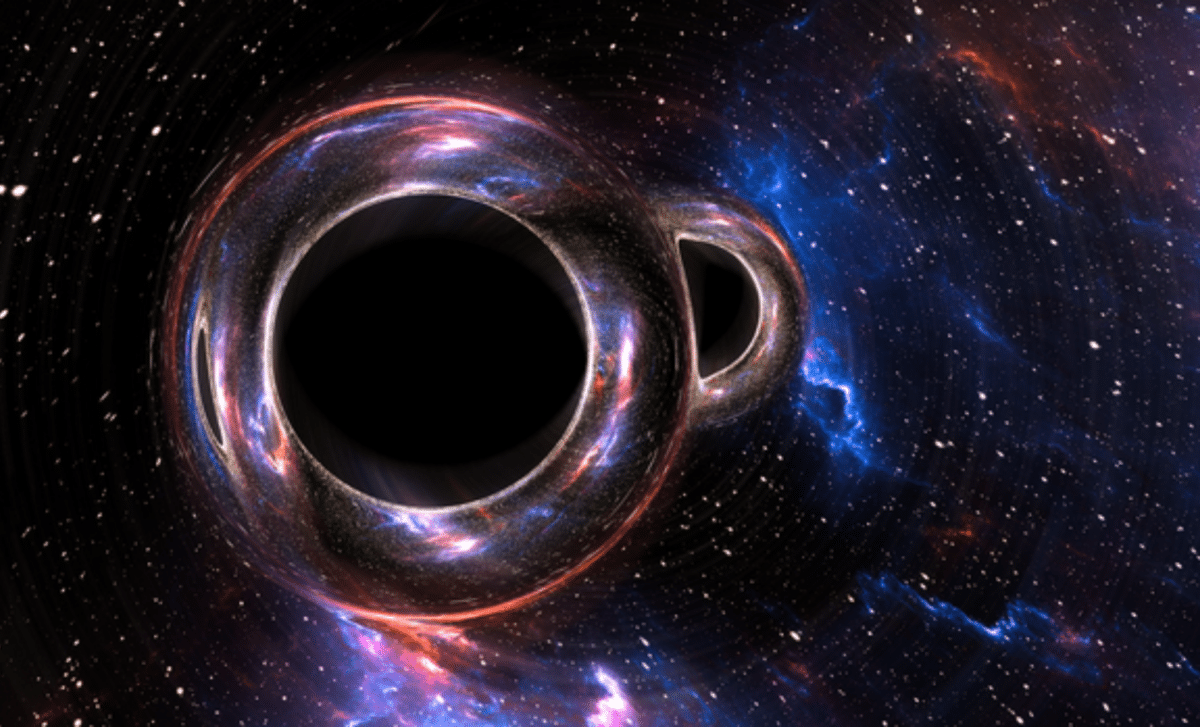
Far beyond our reach, in the vast expanses of space, collisions between black holes and neutron stars generate imperceptible ripples that travel through the fabric of spacetime. These waves, known as gravitational waves, have only recently been captured by scientists, unlocking insights into the universe’s most extreme and violent episodes. What was once merely theoretical is now a powerful observational tool, with hundreds of these waves recorded, each revealing events dating back billions of years.
Recent findings, detailed in Astrophysical Journal Letters, represent the most significant achievement to date in gravitational-wave research. The Gravitational-Wave Transient Catalog 4.0 (GWTC-4) released by the LIGO-Virgo-KAGRA (LVK) team has more than doubled previous detections by adding 128 new gravitational-wave events. This substantial expansion enriches our understanding of black hole formation, cosmic expansion, and the fundamental nature of spacetime.
Enhanced Detection Methods Reveal Unprecedented Gravitational-Wave Data
Gravitational waves have become pivotal to exploring cosmic phenomena by capturing the tiny distortions created by massive celestial mergers. Breakthroughs at observatories like LIGO and Virgo have driven this progress. Nergis Mavalvala, a member of LVK and Dean at MIT, notes, “Our ability to conduct groundbreaking science with this catalog stems from major advances in detector sensitivity and analytic techniques.” These enhancements have unveiled numerous previously hidden cosmic events, greatly expanding astrophysical knowledge.

The GWTC-4 dataset marks a major step forward in gravitational-wave astronomy. Stephen Fairhurst, representing the LIGO Scientific Collaboration, states, “The field has grown dramatically over the last decade, evolving from the initial detection to cataloging hundreds of black hole collisions.” The influx of 128 new candidate signals paves the way for deeper insights into the life cycle of black holes, the universe’s growth, and offers rigorous tests of Einstein’s general relativity.
Exploring New Horizons in Black Hole Science
The expanded catalog introduces diverse discoveries about black hole pairings and their origins. Daniel Williams from the University of Glasgow emphasizes, “Our findings show we’re venturing into uncharted ‘parameter space’ with an array of black hole types we’ve never observed before.” This includes massive, fast-spinning black holes forming unique binary systems. These exceptional cases provide fertile ground to explore the extreme boundaries of astrophysics.
A highlight of the latest research is the identification of a black hole duo exhibiting a previously unseen mix of traits. LVK collaborator Jack Heinzel remarks, “Our collection spans black holes exceeding 100 solar masses to those only a few times that size. Spins vary widely, from rapid rotations to virtually none.” This variety offers new directions to investigate the mechanisms behind black hole development and transformation.
The Chaotic Ballet of Black Hole Collisions
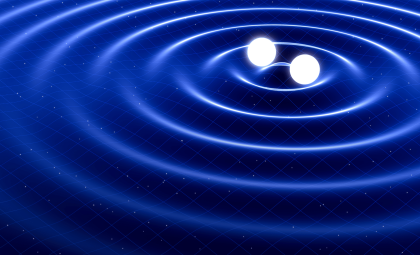
Gravitational waves originate when dense bodies such as black holes or neutron stars orbit each other and eventually merge, sending spacetime ripples across the cosmos. This cosmic “dance” of merging entities is unpredictable—sometimes generating multiple detections in a single day, other times going quiet for extended periods. Amanda Baylor, a graduate researcher at the University of Wisconsin, explains, “Gravitational-wave arrivals are completely random—you might detect five in one day or wait weeks for a single event. The universe operates without a schedule.”
Despite this randomness, detection rates are climbing steadily thanks to advances in instruments and data processing. Each new signal enriches our understanding of black hole behavior and the underlying structure of spacetime. The recent diverse set of recorded mergers underscores the immense promise of gravitational-wave astronomy.
Gravitational Waves: A Window into Einstein’s Theory
The observation of gravitational waves also allows scientists to scrutinize Albert Einstein’s general relativity in extreme environments. Aaron Zimmerman, an LVK researcher and physics professor at the University of Texas, highlights, “Black holes exemplify the most extraordinary and challenging predictions of general relativity.” The collision-induced distortions in spacetime offer a rare opportunity to test the theory’s limits.
One of the clearest gravitational-wave signals detected, GW230814_230901, enabled unprecedented precision in testing Einstein’s theory. While the findings strongly supported general relativity, the analysis also revealed difficulties inherent in measuring such extreme phenomena. Zimmerman adds, “Testing physics under the harshest conditions gives us our best chance to discover where our understanding might break down.”
Refining Cosmic Expansion Rates Using Gravitational Waves
Beyond black hole physics, gravitational waves provide a novel approach to tackling a major cosmological puzzle: determining the universe’s expansion speed. By estimating the distance to merging black holes from their gravitational signals, researchers gain an independent measure of the Hubble constant, which has sparked debate from differing traditional methods. Rachel Gray from the University of Glasgow says, “Merging black holes let us pinpoint their distance without relying on conventional astronomical techniques.”
This alternative distance measurement holds promise for resolving discrepancies in calculating cosmic expansion. With a growing catalog of detections, the accuracy of these estimates will improve, offering clearer insights into the universe’s history and trajectory.
A Glimpse Into the Future of Gravitational-Wave Exploration
Every new gravitational-wave discovery brings us closer to unraveling the universe’s deepest enigmas. Caltech’s Lucy Thomas observes, “Each detection adds a vital puzzle piece to our cosmic understanding, achieving what was impossible a decade ago.” As observational capabilities advance and new data pours in, gravitational-wave astronomy is poised for many more transformative revelations about spacetime, black hole origins, and the cosmos itself.
- Categories:
- News



0 comments
Sign in to Comment