
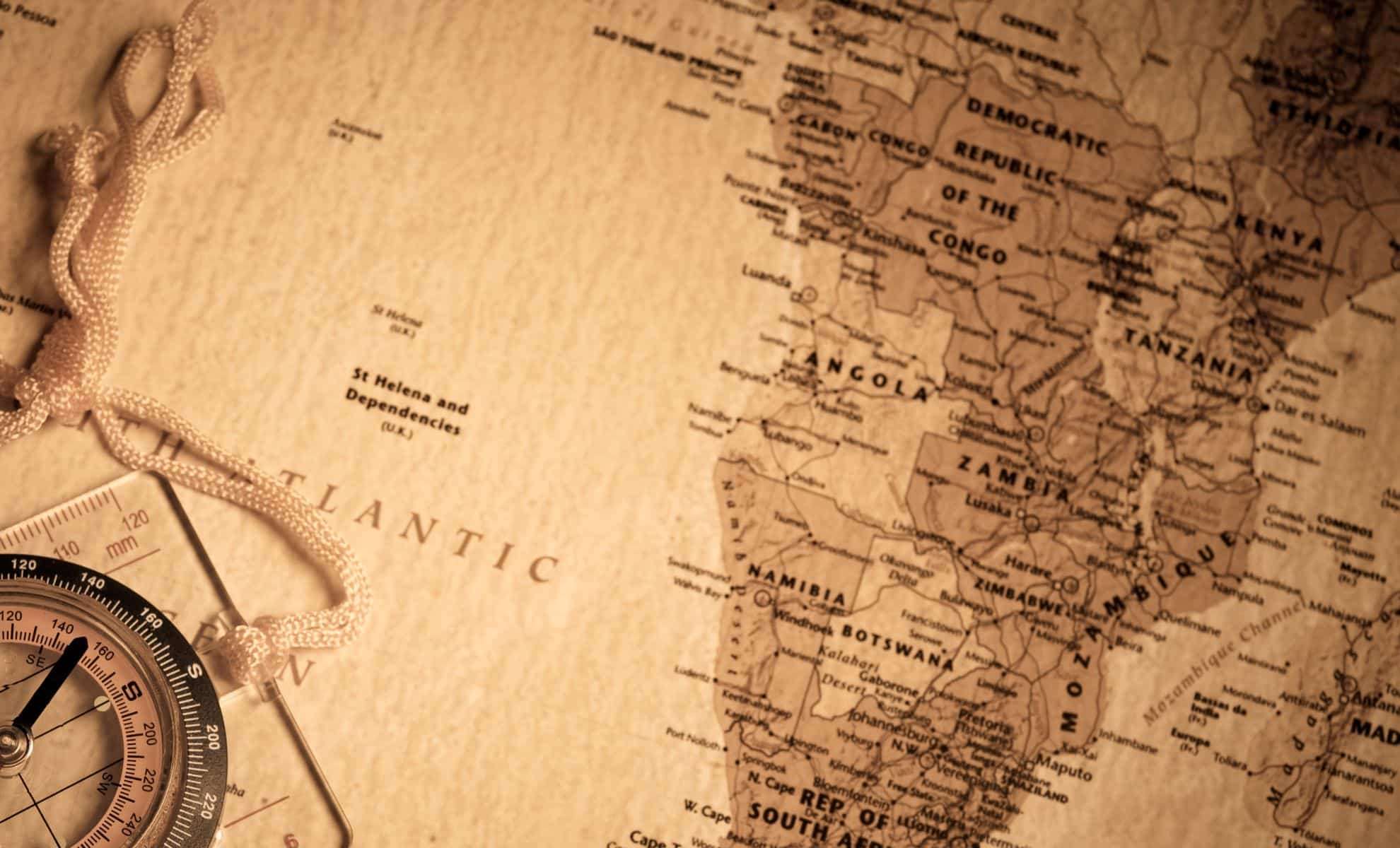
For more than 500 years, the Mercator projection has dominated global maps, influencing how we view the world’s continents. Designed by Gerardus Mercator in 1569 to support maritime navigation, this map prioritizes directional accuracy but greatly distorts the size of landmasses, especially near the poles.
Now, the African Union (AU) is spearheading an effort to update this outdated depiction and emphasize a more truthful representation of Africa’s scale. This campaign has gained notable attention, including an interactive feature from The Washington Post published in August 2025.
Addressing the Geographic Imbalance
Representing all 55 African countries, the AU has launched an initiative to replace the Mercator map with a model that fairly portrays Earth’s sizes—primarily advocating for the Equal Earth projection. Supported by advocacy groups like Speak Up Africa and Africa No Filter, the movement known as Correct the Map promotes this 2018 projection, which restores equatorial continents such as Africa and South America to their rightful proportions.

Selma Malika Haddadi, the AU Commission’s Deputy Chair, explained to Reuters how the Mercator map inflates areas near the poles while compressing equatorial regions, making Greenland look bigger than Africa, although Africa is actually about 14 times larger.
Campaigners emphasize that this distortion goes beyond geography—it impacts global perspectives and symbolic significance. According to the Correct the Map initiative, Africa’s misrepresentation reflects a distorted view embedded in the world’s collective consciousness.
Distortion’s Impact on Power and Perception
The Mercator projection doesn’t just skew land sizes; it reinforces outdated power dynamics by making North America and Europe appear much larger than their actual proportions, while Africa’s vastness is understated despite being the world’s second-largest continent. Moky Makura, who directs Africa No Filter, has called the map’s influence “the world’s longest misinformation and disinformation campaign.”
Experts point out that every cartographic method carries inherent biases. The long-standing dominance of the Mercator projection in education and global institutions has ingrained a warped worldview in multiple generations. In today’s digital era, the persistence of Mercator-based views on platforms like Google Maps further perpetuates this imbalance.
Equal Earth Projection: Toward Fairer Mapping
Contrary to the Mercator projection, the Equal Earth map prioritizes proportional accuracy of land areas. It builds upon the Robinson projection by enlarging equatorial territories, ensuring continents like Africa appear closer to their actual sizes. Although this approach slightly compromises shape details near the poles, it offers a more balanced and truthful planetary view.
The African Union is actively advancing the Equal Earth projection’s adoption as the main cartographic resource in African schools. Fara Ndiaye, co-founder of Speak Up Africa, highlighted ongoing efforts to embed the Equal Earth map into educational curricula continent-wide.
Changing the World’s Perspective Through Maps
While global institutions like the United Nations and major technology companies have not fully transitioned away from the Mercator projection, alternatives such as National Geographic’s adoption of the Winkel Tripel projection demonstrate viable replacements already in use.
The Correct the Map campaign outlines its mission as not only correcting geographical inaccuracies, but also reshaping how Africa’s significance is perceived internationally. They stress that precise map projections are crucial for education, geography, and fostering a genuine appreciation of Africa’s influence on the world stage.
Although all flat maps inevitably introduce some form of distortion, the Equal Earth initiative is a determined step toward righting centuries of misrepresentation and balancing perspectives.
- Categories:
- News








0 comments
Sign in to Comment