
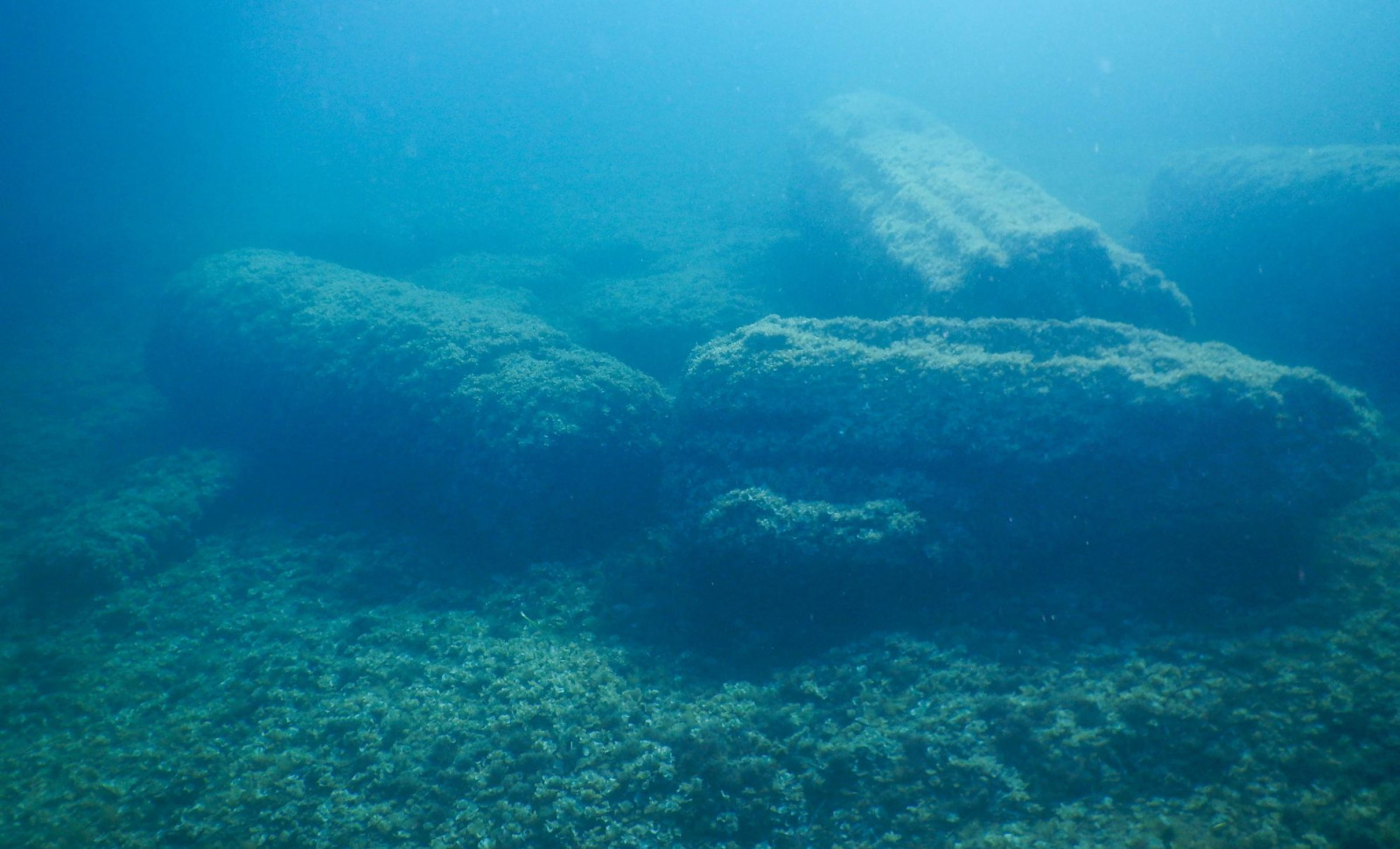
A colossal stone formation hidden beneath the Sea of Galilee is puzzling archaeologists due to its immense scale and uncertain history. Weighing upwards of 60,000 tons, this cone-shaped structure may date back to ancient times, potentially linked to early Bronze Age societies.
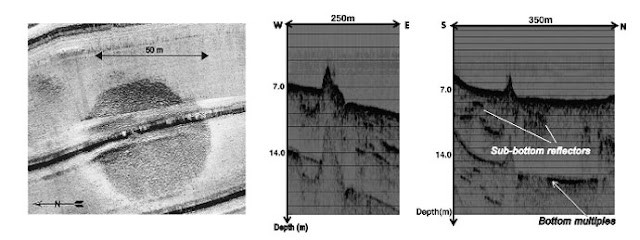
The finding emerged from a geophysical survey led by Israeli scientists initially investigating sediment layers on the lakebed. Their sonar scans revealed a massive assemblage of stones projecting from an otherwise flat underwater terrain.
Discoveries like these are significant because they indicate complex construction activity in regions and eras with limited archaeological data. They also prompt intriguing questions: how did this structure submerge underwater, and what was its original function?

Enormous Stone Formation Visible Beneath the Surface
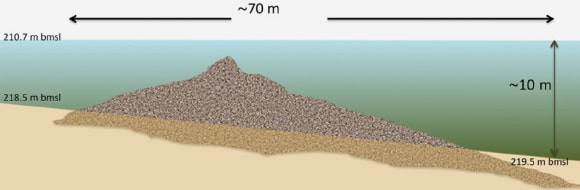
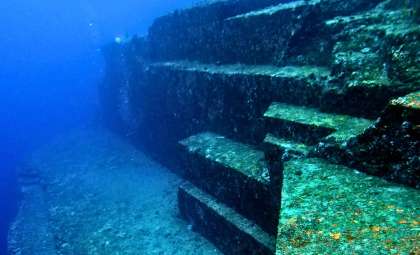
This monument spans approximately 70 meters wide and rises about 12 meters high, making it a prominent feature even below water and sediment layers. A study published in the International Journal of Nautical Archaeology explains it consists of basalt stones arranged into a distinctive cone shape, suggesting intentional construction.
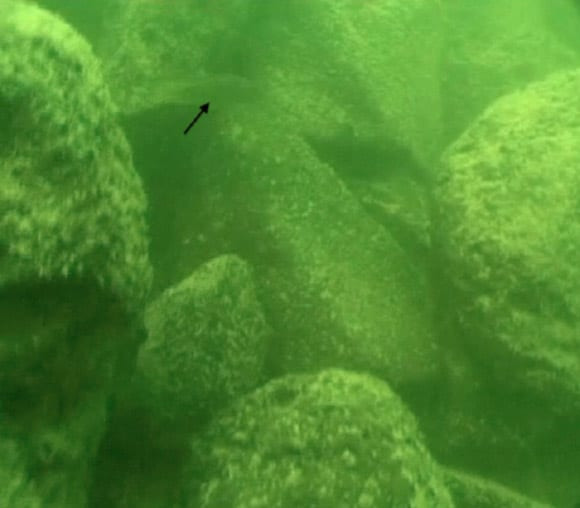
“Detailed scuba inspections indicated that the formation is composed of basalt rocks up to 1 meter (3.2 feet) in length lacking an obvious construction pattern,” the researchers noted.
They also observed that the basalt boulders have their natural surfaces intact, showing no signs of cutting or sculpting. No distinct walls or inner layouts could be identified. Nevertheless, sonar imaging highlighted a sharply outlined formation emerging from the otherwise unbroken lake floor. The weight estimate of over 60,000 tons confirms it as an engineering feat.
Potential Early Bronze Age Connection
Evidence suggests this edifice may have served ritualistic or funerary functions. Dr. Yitzhak Paz from Ben-Gurion University compares it to early burial mounds found in Europe, possibly dating it to the early Bronze Age. He remarked:
“It’s the most powerful and fortified town in this region and, as a matter of fact, in the whole of Israel.” He added that, “there may be a connection to the nearby ancient city of Beit Yerah,” even if researchers aren’t ready to define it yet.
Originally Constructed on Dry Land Before Submersion
Findings indicate that the structure was originally built on land rather than underwater. According to Professor Shmuel Marco from Tel Aviv University, the basalt stones were likely transported from more than one mile away and assembled methodically.
Currently, the base is covered by about 2 to 3 meters of sediment that accumulated over time. Using a sedimentation rate of 1 to 4 millimeters per year, the team estimates the monument could be between 2,000 and 12,000 years old, according to their report.
The monument’s underwater placement might be the result of tectonic shifts in this geologically active area. The Sea of Galilee lies along a dynamic fault zone, where earth movements could have altered the landscape across millennia. Future underwater excavations are planned to further explore how this gigantic structure came to be submerged.
- Categories:
- Science


0 comments
Sign in to Comment