
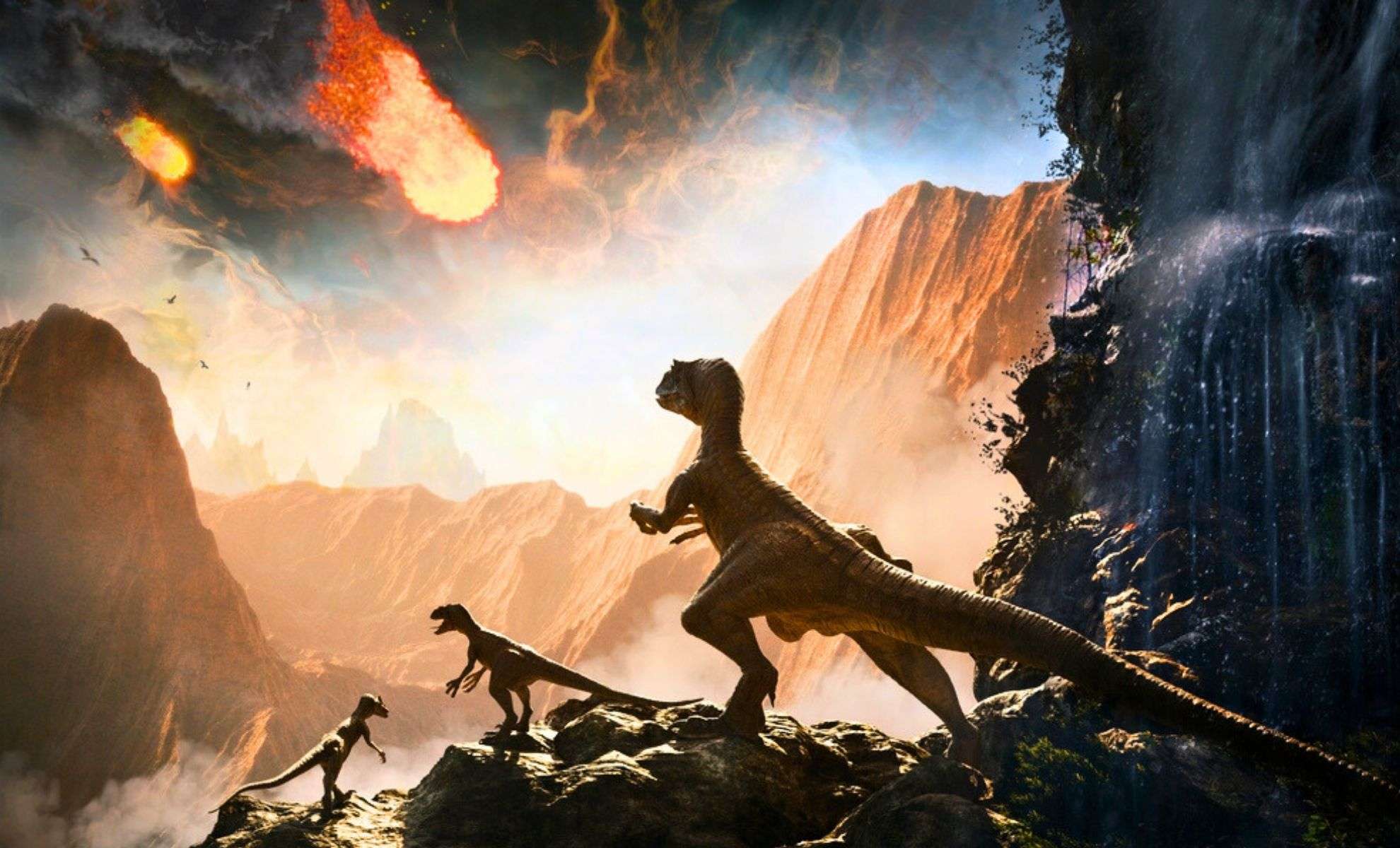
Amid the dry plateaus of northwestern New Mexico, a groundbreaking find challenges the longstanding belief that dinosaurs were already in decline when the asteroid struck. Fossils retrieved from the Naashoibito Member—a geological formation within the San Juan Basin—reveal that dinosaurs in this locale were flourishing right up to the last moments before their extinction.
The asteroid impact that marked the end of the Cretaceous Period, approximately 66 million years ago, is often linked to an abrupt ecological disaster. Yet scientists have debated whether non-avian dinosaurs were already experiencing a decline caused by environmental changes and decreasing biodiversity prior to this event.
This uncertainty has largely resulted from fossil evidence predominantly sourced from the northern Great Plains—areas like Montana, the Dakotas, and parts of Canada—where most late Cretaceous discoveries have been made. The fresh evidence emerging from the American Southwest introduces vital geographic and environmental context to the discussion.

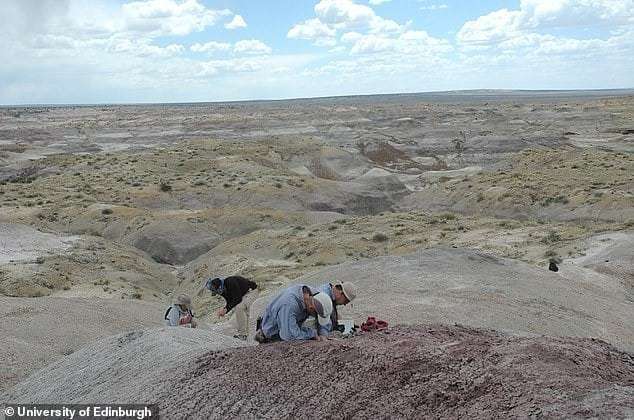
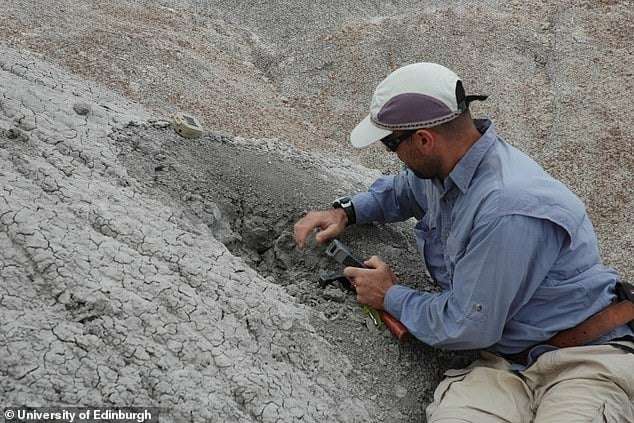
After more than a decade of excavation led by teams from the University of Edinburgh, New Mexico State University, and Baylor University, it was found that a variety of dinosaurs—including the iconic Tyrannosaurus rex, the colossal Alamosaurus, and less familiar species such as Ojoceratops and Ojoraptorosaurus—inhabited New Mexico right until shortly before the asteroid collision. Employing precise radiometric dating and magnetostratigraphy, researchers pinpointed the fossils’ age to between 66.4 and 66 million years ago, placing them within 300,000 years of the Chicxulub impact, a minuscule span on the geological timeline.
The methodology utilized for this dating represents a notable advancement. The scientists applied detrital sanidine 40Ar/39Ar geochronology, a technique that dates volcanic minerals found with the fossils. Published on October 23, 2025, in Science, these findings reveal that New Mexico’s dinosaur fossils are contemporaneous with those from Montana’s renowned Hell Creek Formation, previously deemed the definitive source for late Cretaceous dinosaur data.
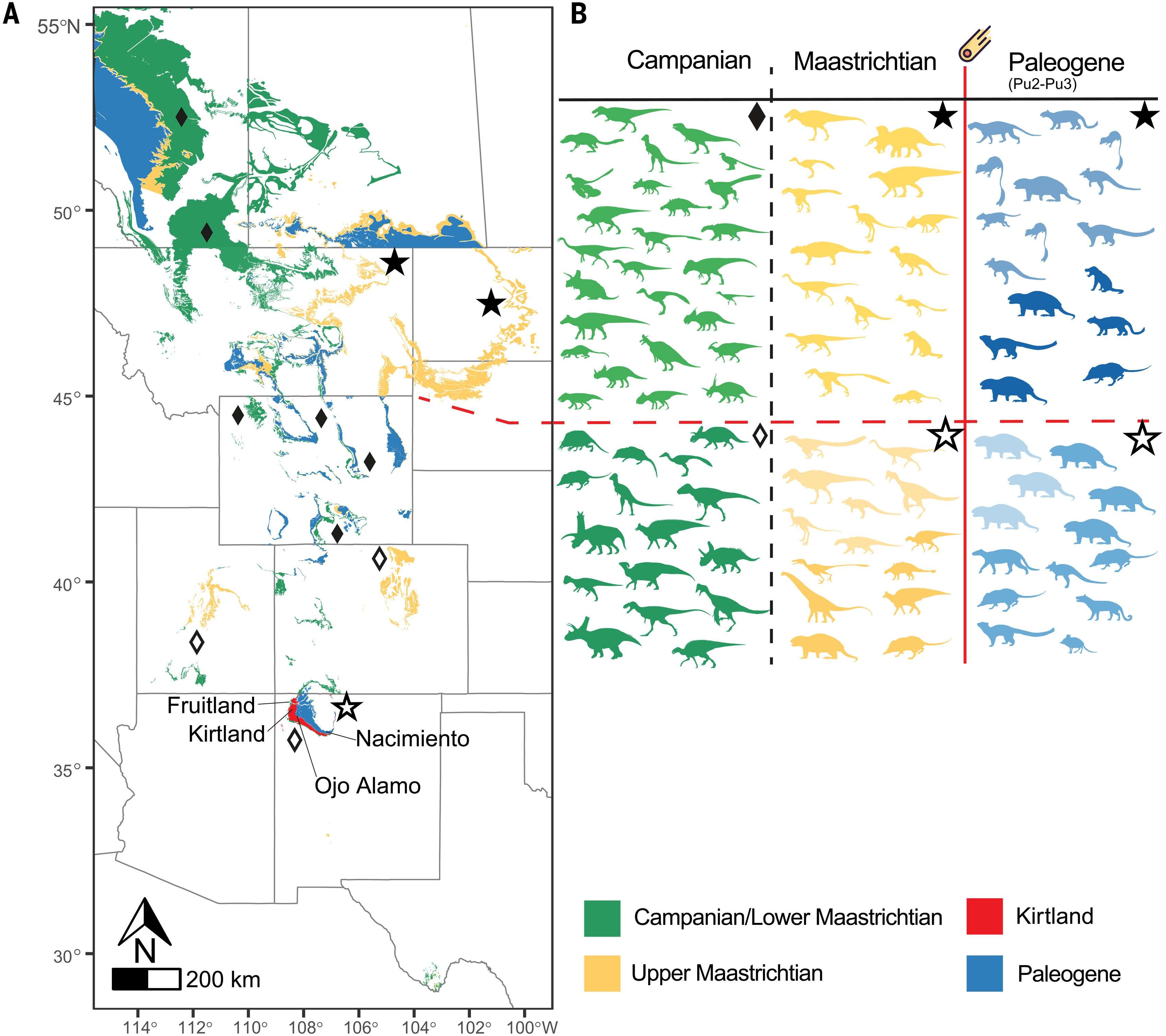
However, in contrast to Hell Creek—where large plant-eaters like Triceratops and Edmontosaurus prevail—the Naashoibito Member displays a distinct community makeup, highlighting the regional variability in dinosaur ecosystems near the end of the Cretaceous.
This biogeographical difference could be more than an intriguing detail. It implies that late Cretaceous North American dinosaurs were dispersed across various environmental zones rather than forming a single homogenous group. “Species diversity remained robust and relatively stable until the very end,” explained paleontologist Steve Brusatte, a co-author of the study, during a chat with the Daily Mail. “Distinct dinosaur populations lived in the northern and southern regions when the asteroid struck—illustrating their resilience as they adapted to different habitats.”
Ecological models presented in the research support these conclusions. Through multivariate analyses combined with data from fossil-rich sites across North America, the investigators identified distinct bioprovinces in the northern and southern territories—each marked by unique species assemblages. In New Mexico, warmer climates and varied vegetation likely fostered gigantism in sauropods like Alamosaurus, a long-necked herbivore rivaling today’s blue whale in length. These dinosaurs may have been especially suited to the subtropical environment, unlike their counterparts in the north that inhabited cooler, temperate zones.
For years, paleontologists have grappled with differing hypotheses about dinosaur extinction. Some research, such as a noted 2021 study in Nature Communications, has suggested a slow and gradual decline driven by climate shifts and ecological pressures. Meanwhile, other investigations, including a 2020 paper in PNAS, argue that the asteroid was primarily responsible for a rapid extinction, with minimal pre-impact deterioration. This latest research bolsters the latter perspective, providing solid fossil evidence that disputes the gradual fade theory.
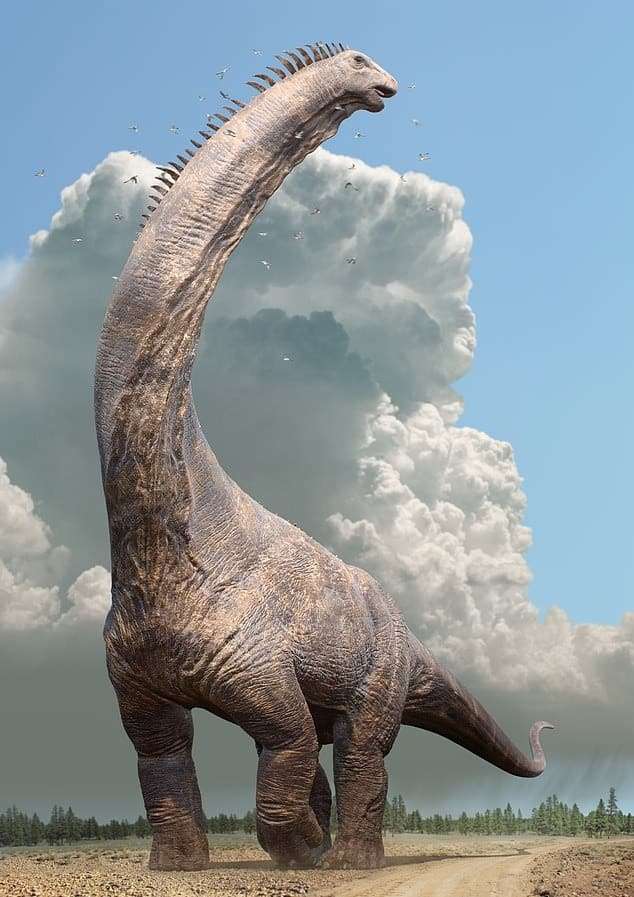
Yet the tale is not solely one of richness and adaptation; it also involves catastrophe. Even at a distance of 1,500 miles from the Yucatán Peninsula, within the San Juan Basin, the immediate consequences of the asteroid strike would have been devastating. Shockwaves, intense heat bursts, and widespread airborne debris would have ignited wildfires and shrouded the planet in darkness. As Brusatte described it, “You would witness a blinding flash… the terrain would shake violently… and the atmosphere would become oven-hot.”
These cataclysmic conditions precipitated rapid ecosystem collapse—not merely from the initial explosion, but also from the ensuing nuclear winter. Photosynthesis ceased, food webs unraveled, and in mere weeks, the dinosaur era came to an abrupt halt.
- Categories:
- Science





0 comments
Sign in to Comment