
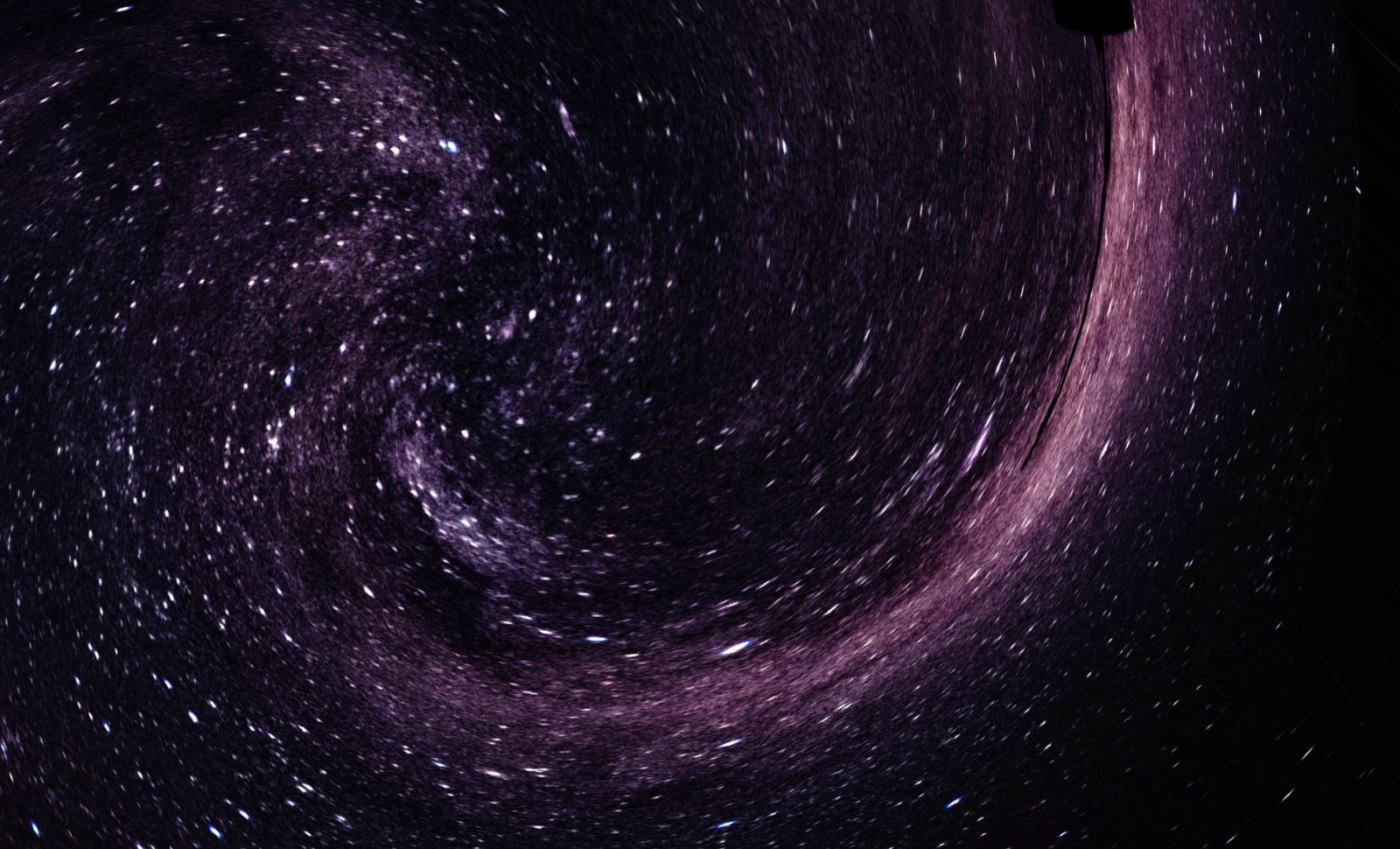
Astronomers have uncovered a colossal rotating cosmic filament that extends over 5.5 million light-years and contains hundreds of galaxies. Situated about 140 million light-years from Earth, this immense filament features a chain of hydrogen-rich galaxies and exhibits a rare overall spin, shedding light on galaxy evolution and the architecture of the cosmic web.
The breakthrough, led by researchers at the University of Oxford, challenges current theories about galactic rotation and formation, particularly concerning the influence of the cosmic web. The filament's rotation alongside the individual spins of its galaxies provides new clues about the dynamics shaping the Universe.
The Universe’s Structural Framework
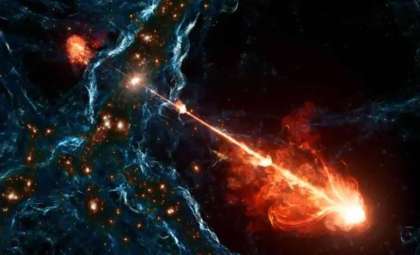
Cosmic filaments are enormous formations that act as the Universe’s large-scale scaffolding. These vast arrays of dark matter and galaxies serve as conduits for gas and angular momentum, critical for galaxy birth and development. Within this newly identified filament, 14 hydrogen-abundant galaxies are precisely aligned along a thin corridor, embedded within a larger framework comprising over 280 galaxies.

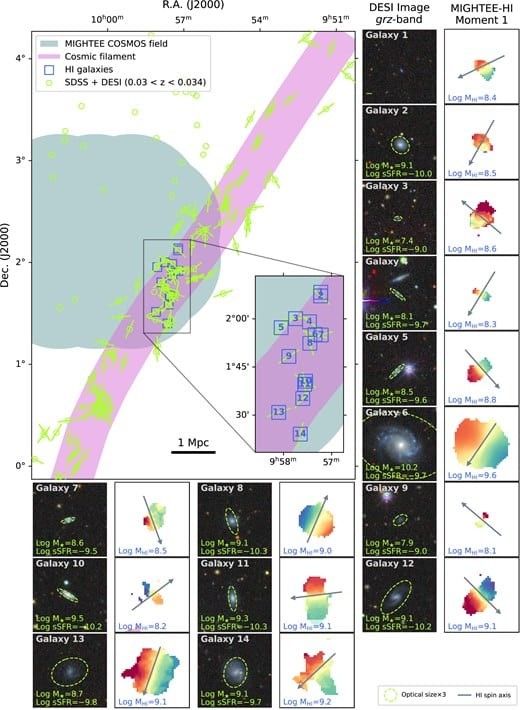
As detailed in the Monthly Notices of the Royal Astronomical Society, this structure channels gas flows that fuel star formation in its galaxies. These galaxies remain in a developmental phase, actively accumulating gas and creating new stars.
A Unique Dual Rotational Pattern
The most striking aspect of this finding is the simultaneous rotation of both the filament and its constituent galaxies. Each galaxy spins around its own axis, while the filament itself also rotates. Lyla Jung, co-leading the research, compares it to a "teacups ride at an amusement park," where every teacup spins independently as the entire ride turns.
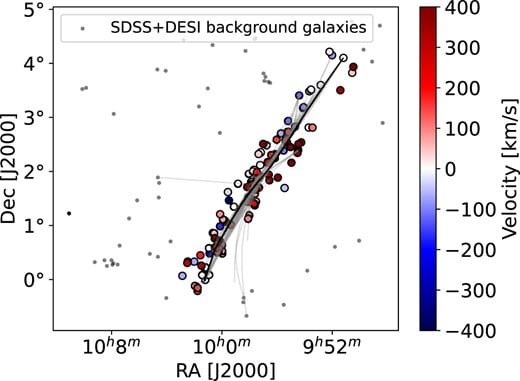
Velocity measurements confirm galaxies on opposite sides of the filament move in reverse directions, verifying the rotation of the whole formation. The spin speed of the filament is estimated to be about 110 kilometers per second.
Filaments as Cosmic Evolution Archives
This filament identified by the Oxford group functions as a "time capsule," recording the historic cosmic flows and momentum transfers influencing galaxy spins over billions of years. These flows are crucial in shaping galactic form and rotational properties.
The prevalence of hydrogen-rich galaxies within the filament offers valuable insight into how gas impacts galaxy development. This structure’s "dynamically cold" condition indicates it is in an early evolutionary phase, enabling observations of the delicate balance between gas inflows, star creation, and galaxy growth mechanisms.
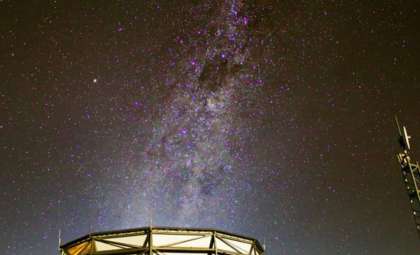
The discovery was made possible through the South African MeerKAT radio telescope, which provided detailed structural data, alongside optical information from the Sloan Digital Sky Survey.
- Categories:
- Space






0 comments
Sign in to Comment