
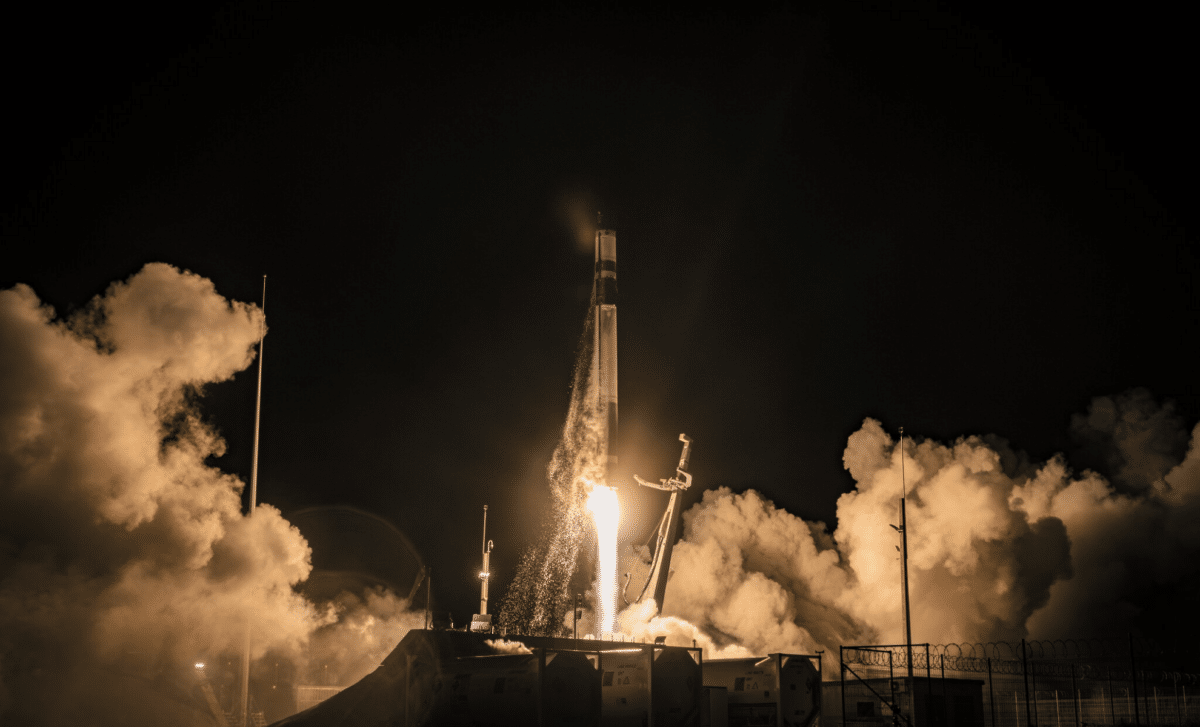
Rocket Lab has successfully placed a Japanese Earth-observation satellite into orbit earlier this week, marking an important advancement in Japan’s environmental and infrastructure surveillance capabilities. The mission, named Viva La Strix, deployed a sophisticated radar satellite developed by Synspective, a leader in synthetic aperture radar (SAR) technology. (Source: Rocket Lab)
Accurate Launch from New Zealand Paves Way for Enhanced Earth Monitoring
On May 22 at 5:33 a.m. EDT (9:33 p.m. local time in New Zealand), Rocket Lab’s Electron rocket lifted off from the New Zealand launch facility, ferrying one of Synspective’s Strix series satellites into space. The launch was executed with precision, successfully placing the satellite into low Earth orbit at an altitude near 355 miles (572 kilometers). Rocket Lab confirmed the mission met all objectives by safely deploying the satellite to commence its service.
The Strix satellite, named after a genus of owls, incorporates advanced radar imaging that can capture Earth’s surface through cloud cover and during nighttime. This ability makes it an invaluable asset for continuous monitoring, especially where optical satellites might struggle due to poor visibility or darkness.

Constellation deployment made simple with Electron: frequent launches, proven reliability, and precision on orbit 🛰️✨
— Rocket Lab (@RocketLab) May 22, 2026
Mission success once again for @synspective on Electron's 88th launch. Nine missions complete and 18 more to go to finish Synspective's SAR constellation by… pic.twitter.com/wf51yo9wmY
Growing Japan’s Synthetic Aperture Radar Satellite Network
As detailed by Rocket Lab, “Synspective is expanding their synthetic aperture radar (SAR) constellation over Japan, providing essential data for urban development, infrastructure upkeep, and emergency disaster response.” Friday’s mission marked Synspective’s ninth satellite launch using Rocket Lab’s Electron vehicles, with numerous launches planned in the coming years.
Reported by Space.com, the SAR constellation aims to aid urban planners and disaster relief teams through frequent, detailed imagery. By monitoring urban changes, infrastructure health, and areas impacted by disasters, Synspective’s radar network seeks to accelerate response times and improve critical decision-making.
Electron Rocket: Reliable Delivery System for Small Satellites
Standing 59 feet (18 meters) tall, Rocket Lab’s Electron rocket is designed to carry small payloads into orbit. Since its first flight in May 2017, Electron has completed 78 successful launches. It has been Synspective’s exclusive launcher since 2020, with 18 additional missions secured through 2030.
Beyond orbital launches, Rocket Lab has also flown a suborbital version named HASTE for testing hypersonic technology in space conditions. This adaptability makes Rocket Lab a valuable partner for both commercial ventures and government space programs worldwide.
The Strategic Value of SAR in Japan’s Development and Safety
SAR technology offers unparalleled capabilities for tracking urban growth, construction progress, and vital infrastructure. Unlike optical sensors, SAR operates regardless of weather or lighting conditions, ensuring a consistent flow of actionable data. Imagery from Synspective’s Strix satellites will significantly support Japan’s urban planning initiatives and disaster preparedness efforts, enhancing public safety and operational efficiency.
The satellite’s name, Strix, draws inspiration from owls, symbolizing its capacity to peer through obstacles and darkness. This mission underscores the importance of continuous surveillance, positioning Synspective as a key contributor to Japan’s Earth observation capabilities through their expanding radar satellite constellation.
- Categories:
- News










0 comments
Sign in to Comment