
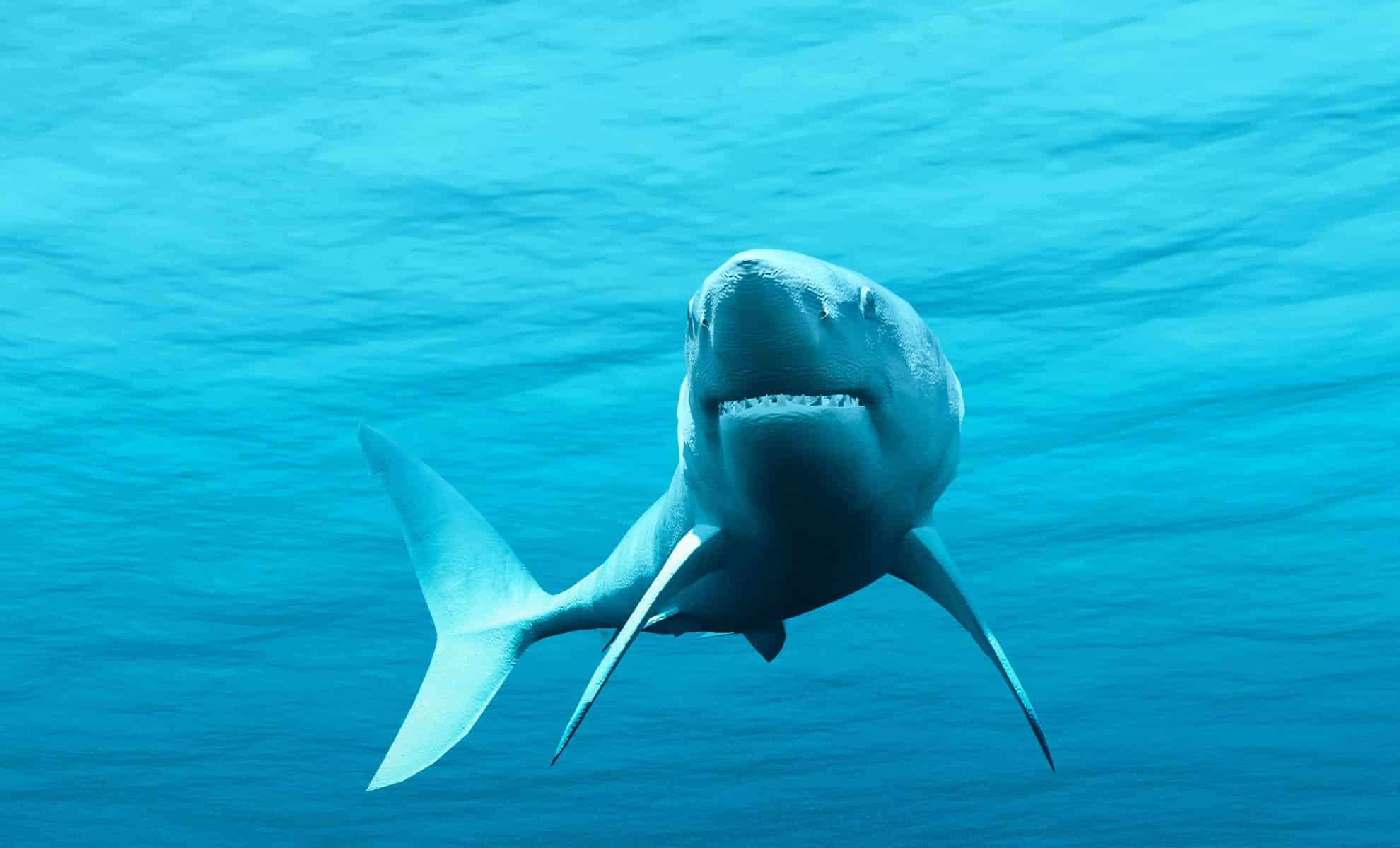
Sharks rank among the ocean's top hunters, yet they display an enigmatic reaction when flipped upside down known as tonic immobility. In this state, sharks become motionless as if entranced. While this phenomenon is observed in other animals like possums and rabbits as a defensive strategy, its purpose in sharks remains unclear.
Tonic Immobility: A Fascinating yet Unsolved Behavior
A recent investigation delved into why sharks, rays, and their relatives exhibit tonic immobility. When inverted, these creatures cease movement and their muscles relax, appearing temporarily paralyzed. This “playing dead” tactic helps many animals evade predators. Yet, when scientists examined 13 shark, ray, and chimaera species, not all showed this reaction. Some became immobile while others did not respond.
Although common in some species, the reason behind tonic immobility in sharks remains a puzzle. Multiple hypotheses have emerged, but none have been conclusively proven.

Challenging Popular Hypotheses
The leading theory proposes that tonic immobility acts as a defense mechanism, helping sharks avoid predation by simulating death. However, this idea weakens when considering shark predators like orcas. These whales exploit tonic immobility by flipping sharks to access their energy-rich livers, often killing them.
Another suggestion relates to reproduction. Mating males sometimes flip females, leading scientists to theorize tonic immobility might minimize resistance during copulation. Still, the study found no notable difference in this behavior between male and female sharks, casting doubt on this explanation.
A third idea is that tonic immobility might stem from sensory overload, causing sharks to shut down when overwhelmed. This concept remains speculative and untested in sharks.
An Evolutionary Vestige?
Researchers propose that tonic immobility might be a plesiomorphic trait, an inherited ancient feature from shark ancestors. While many shark, ray, and chimaera species have lost this trait, some retain it simply because it doesn’t hinder survival enough to be phased out.
The study also notes that this ability has been independently lost at least five times among sharks. For instance, smaller reef sharks and bottom-dwelling rays navigating tight coral habitats could suffer if immobilized, making tonic immobility disadvantageous for them.
Rather than a beneficial survival trait, tonic immobility could be an evolutionary remnant—a once-useful feature now largely obsolete for today's sharks.
- Categories:
- News








0 comments
Sign in to Comment