

Researchers have recently documented a spectacular atmospheric occurrence over the Himalayan region, capturing over 100 instances of red sprite lightning through stunning photographs and video recordings. This rare display, detailed in a study published in Advances in Atmospheric Sciences, emerged during a storm spanning northern India and Tibet. Astrophotographers Angel An and Shuchang Dong observed these elusive upper-atmospheric light bursts, marking a breakthrough in the observation of transient luminous events (TLEs). This discovery sheds light on the complex electrical interactions occurring between Earth’s surface and its ionosphere, offering fresh avenues for atmospheric science.
The dramatic visual evidence and accompanying data from this storm present an opportunity to deepen our understanding of how thunderstorms in high-altitude areas like the Himalayas influence both regional and global atmospheric conditions. These observations are not only awe-inspiring but also crucial for advancing knowledge of storm-related electrical phenomena in some of the planet’s most elevated and remote locations.
Decoding the Nature of Red Sprite Lightning
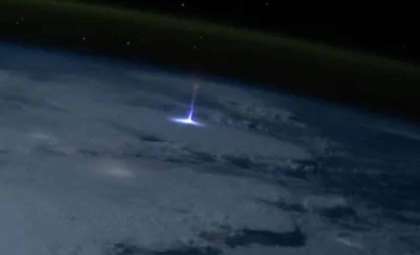
Red sprites are elusive lightning forms occurring at altitudes between 40 and 55 miles above Earth, well beyond normal thundercloud tops. Unlike conventional lightning flashes near the ground, these sprites manifest much higher in the atmosphere, sparked by powerful lightning discharges that unleash substantial electrical energy.

Professor Gaopeng Lu from the University of Science and Technology of China explained, “This event stood out remarkably. Analysis of the primary lightning strikes revealed that the sprites originated from high-peak-current positive cloud-to-ground lightning within a vast mesoscale convective system.” These intense strikes create massive electric fields that excite nitrogen molecules, causing them to emit a red glow and form structures reminiscent of jellyfish or towering columns. Though fleeting, these brilliant displays add to the intrigue surrounding their scientific study.
By investigating video footage alongside fixed star positions, the team achieved timing accuracy to within a single second for each sprite event. This precision enabled researchers to directly link individual red sprites to the exact lightning strikes that generated them, enriching our grasp of the triggers behind these unusual sprites.
How the Himalayas Influence Sprite Occurrence
The Himalayan Mountains, with their soaring heights and severe weather patterns, likely enhance the conditions necessary for red sprite generation. The study indicates that the region’s topography, which forces air currents skyward and features thinning atmosphere with altitude, fosters an environment conducive to sprite formation. Professor Lu emphasized this geographic impact, noting, “Thunderstorms in the Himalayan area have the capacity to produce some of Earth’s most intricate and powerful upper-atmosphere electrical discharges.”
Due to the lower air density at these elevations, electrical energy from storms can more effectively interact with the ionosphere, facilitating sprite creation. The configuration of the Himalayan Plateau reduces the height threshold for electrical discharges, making it easier for sprites to emerge here compared to other regions. The conjunction of high-altitude storms and the distinct geography of the Himalayan range positions this locale as a prime natural laboratory to study complex atmospheric electrical effects and their influence on climate and atmospheric chemistry.
Significance of Red Sprites for Atmospheric Science
Beyond their stunning visuals, red sprite lightning holds critical implications for atmospheric research. These transient luminous events, which also include phenomena like elves, blue jets, and gigantic jets, serve as windows into energy and particle flows between Earth’s surface and the ionosphere. Sprites transfer energy and electric charge layers within milliseconds, potentially affecting ozone layer chemistry and global electrical circuits.
Their rare and natural occurrence provides an invaluable platform for scientists to investigate atmospheric processes beyond laboratory capabilities. Results from this Himalayan-focused study add to mounting evidence linking TLEs to broader issues such as climate variability, weather system behavior, and global atmospheric electricity. Understanding these events deepens insight into how weather, climate chemistry, and Earth’s electrical environment interconnect.
Citizen Scientists: Expanding Our View of the Skies
This research underlines the growing contribution of citizen scientists to the field of atmospheric phenomena. The approach used by the team—aligning star patterns with recorded footage—can be replicated by hobbyists using readily available cameras and clear skies. Such involvement enables laypeople to help gather vital data, especially from remote areas like the Himalayas.
Amateur astrophotographers and storm enthusiasts are now empowered to create extensive datasets, improving research depth and accuracy on red sprites and other transient luminous events. By broadening the network of observers, scientists can attain a more in-depth understanding of these rare upper-atmosphere phenomena. The Himalayan observations serve as a testament that cutting-edge discoveries often emerge from non-traditional sources—and that increasing global participation enriches scientific progress.
- Categories:
- News





0 comments
Sign in to Comment