
A groundbreaking study published in the Proceedings of the National Academy of Sciences sheds new light on the RNA world hypothesis, a prominent theory explaining life's emergence on Earth.
RNA World Hypothesis: Could Life Have Begun with RNA?
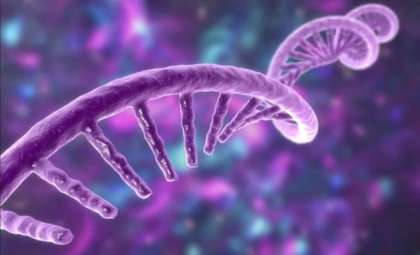
The question of how life first arose on our planet has long puzzled scientists. Among the leading explanations stands the RNA world hypothesis, which suggests that life started with ribonucleic acid (RNA)—a molecule capable of encoding genetic information and driving chemical processes—before the evolution of DNA or proteins. One major obstacle has been figuring out how these complex molecules could self-assemble under the hostile early Earth environments.
Now, researchers led by Yuta Hirakawa from Tohoku University in Japan, in partnership with the Foundation for Applied Molecular Evolution in Florida, may have uncovered a crucial missing link. Their experiments indicate that key RNA components can spontaneously form under geological conditions featuring borates and basalt, without human manipulation. Published on December 15 in the Proceedings of the National Academy of Sciences, their findings suggest that the molecular precursors for life might have emerged naturally and efficiently on early Earth.

This discovery implies that Earth's particular mix of chemical elements, thermal activity, and impact history potentially offered a streamlined path for life’s origin. Additionally, it hints at similar processes having occurred on other worlds such as Mars.
Experiment Details: Mimicking Early Earth’s Environment
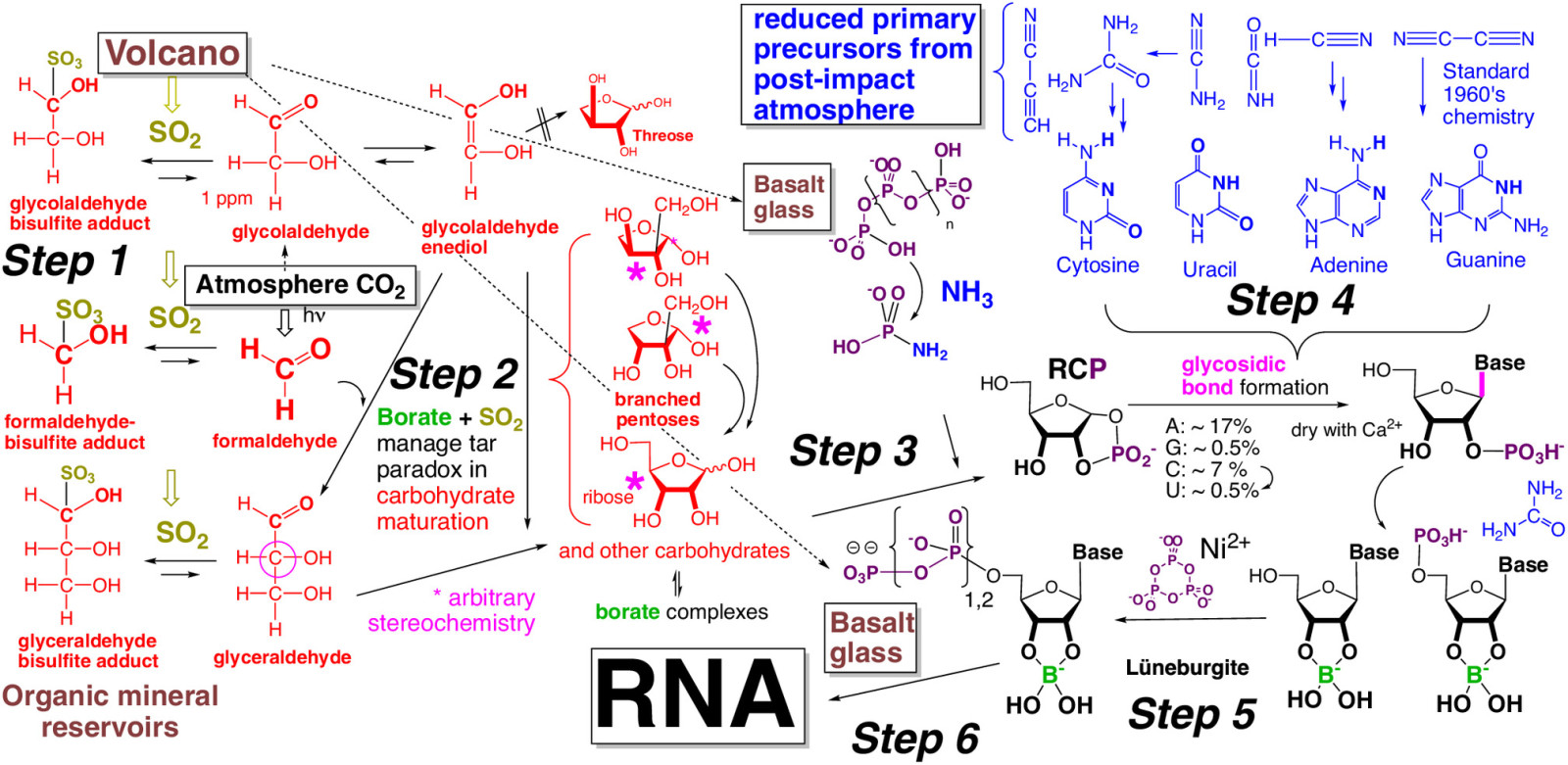
The team’s approach was straightforward yet insightful. They combined essential RNA components: ribose sugar, phosphate groups, and the four main nucleobases adenine, guanine, cytosine, and uracil. These were mixed with borates—naturally sourced minerals in seawater—and basalt, a widespread volcanic rock.
They then subjected this blend to repeated heating and drying cycles, simulating the wet-dry fluctuations found in early geothermal or subsurface aquatic systems. Contrary to earlier assumptions that borates would hinder formation, the researchers found borates actually promoted the chemical reactions by stabilizing the otherwise fragile ribose sugar and encouraging phosphate incorporation, which is crucial for forming RNA’s backbone.
Basalt acted as a natural catalyst, replicating mineral surfaces akin to those on Earth around 4.3 billion years ago during frequent asteroid bombardments. These observations imply that neither advanced lab conditions nor human guidance are necessary—just the right natural ingredients and environmental factors.
Implications: From Earth to Space
This research not only bolsters the RNA world model but also proposes a broader framework for how life could originate. The identification of ribose within samples returned by NASA’s OSIRIS-REx mission from asteroid Bennu lends credence to the idea that these RNA components may have an extraterrestrial origin.
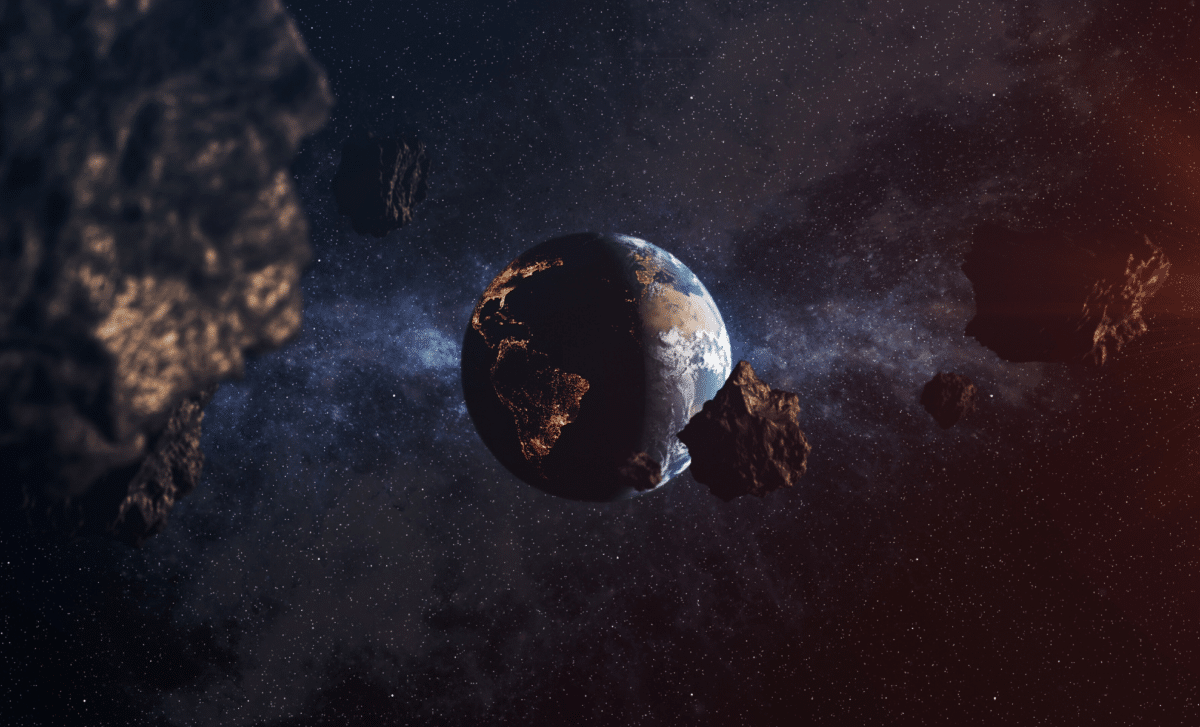
The study suggests a cataclysmic impact from a 500-kilometer-wide protoplanet, rich in organic molecules, may have delivered the necessary material to Earth roughly 4.3 billion years ago, simultaneously supplying energy and raw ingredients for RNA formation.
Similar impact events on Mars and the detection of borates there raise tantalizing possibilities that RNA or its precursors might have arisen on other rocky planets, sparking questions about life’s ubiquity across the universe.
Ongoing Discussion: Natural Process or Experimental Artifact?
Despite widespread excitement, some scientists urge caution. Critics note that even though the experiments aim to replicate natural conditions, artificially combining all components in a laboratory setting introduces human intervention. This highlights an ongoing debate in abiogenesis about when experimental setups shift from naturalistic to artificial.
Still, proponents argue this work marks a notable advancement compared to prior studies that relied heavily on added enzymes or catalysts. Here, chemical reactions unfolded under conditions closely resembling natural early Earth environments, making the results among the most authentic prebiotic simulations so far.
By connecting planetary geology with astrochemical evidence, this research broadens the scope beyond Earth. If borates, ribose, and nucleobases are common on asteroids and Mars and do not require complex conditions to form, then life's building blocks might be a natural outcome of planetary formation processes worldwide.
- Categories:
- News



0 comments
Sign in to Comment