
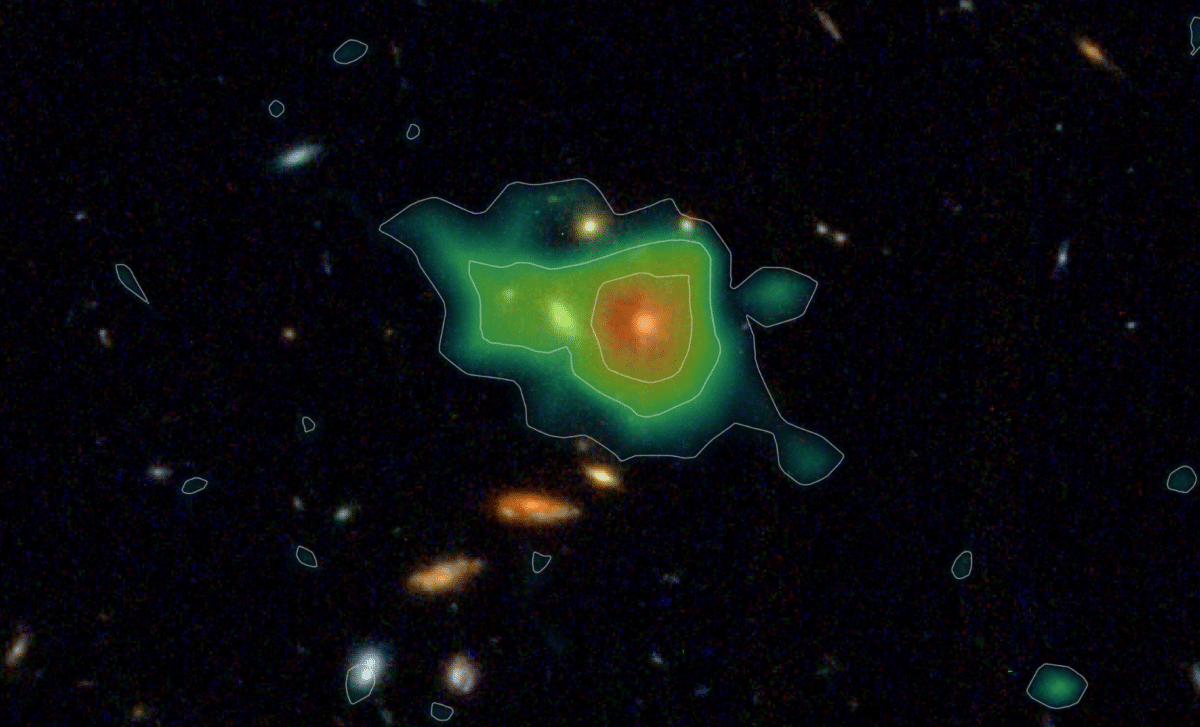
Astronomers have discovered an astonishing 33,000 enormous hydrogen gas halos enveloping galaxies from over 11 billion years ago. These vast structures are crucial for unraveling the mysteries of galaxy formation and were largely unseen until the Hobby-Eberly Telescope Dark Energy Experiment (HETDEX) dramatically increased known detections by an order of magnitude. Detailed in a recent The Astrophysical Journal publication, this breakthrough sheds light on hydrogen’s fundamental influence in driving galaxy growth during the universe’s peak star formation era, known as Cosmic Noon.
Revolutionizing Our View with a Tenfold Increase
The early universe remains a largely uncharted frontier, but the latest results from HETDEX provide unprecedented clarity. Previously, hydrogen gas halos were believed to be rare, extreme phenomena. However, new research in The Astrophysical Journal reveals their numbers have surged from about 3,000 to over 33,000, radically altering our understanding of these structures.
“We’ve been analyzing the same handful of objects for the past 20 or so years,” said Erin Mentuch Cooper, HETDEX data manager and lead author of the study. “HETDEX is letting us find many more of these halos and measure their shapes and sizes. It has really allowed us to create an amazing statistical catalog.”
Add Cosmo Herald as a Preferred Source

This dramatic growth in detected hydrogen halos opens exciting new paths to study the primordial cosmos and the conditions that fostered galaxy development.
Challenges in Spotting Hydrogen Halos
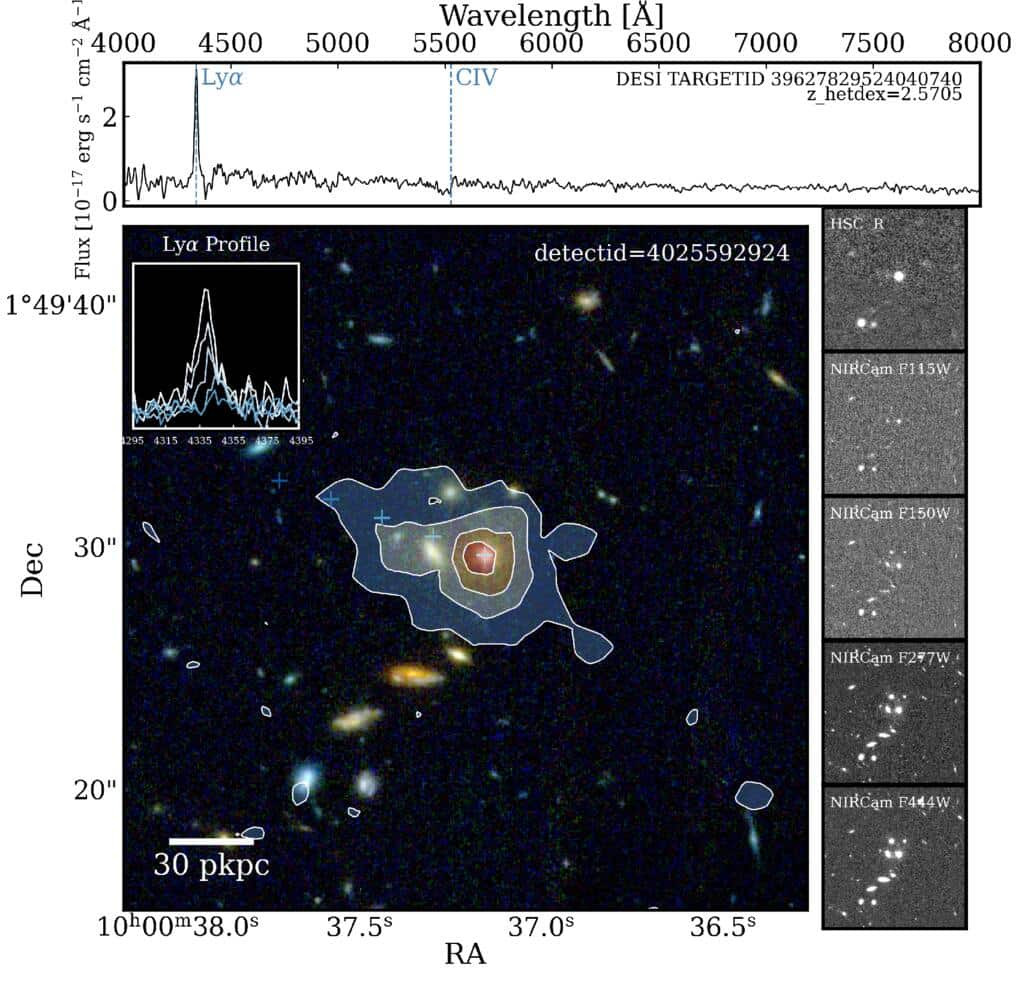
Hydrogen gas halos, or Lyman-alpha nebulae, are notoriously faint, making their detection exceptionally difficult. Unlike luminous celestial bodies, hydrogen does not emit visible light on its own. Instead, it glows when ultraviolet energy from nearby star-forming galaxies or groups excites the gas, allowing sophisticated telescopes to spot these elusive objects. Historically, only the brightest halos were detectable, limiting comprehension of their prevalence and diversity.
The HETDEX collaboration applied innovative sky-survey techniques to uncover vast numbers of these tenuous halos. By leveraging the Hobby-Eberly Telescope’s wide-field observational power, the team has revealed thousands of previously concealed hydrogen clouds, enriching our grasp of the universe’s infancy.
HETDEX’s Data Power: Transforming Cosmic Studies
Central to this scientific advance is HETDEX’s enormous data-gathering capability. This instrument has recorded detailed information for over one million galaxies, along with their surrounding hydrogen formations.
“We’ve captured nearly half a petabyte of data on not only these galaxies but the regions in between,” explained Karl Gebhardt, HETDEX principal investigator and co-author of the paper. “Our observations cover a region of the sky measuring over 2,000 full moons. The scope is enormous and unprecedented.”
HETDEX’s power lies in its ability to collect 100,000 spectra per observation, enabling astronomers to peer deeper into the cosmos than ever before. Dustin Davis, a project scientist and UT Austin postdoctoral researcher, emphasized the significance of this data volume.
“The Hobby-Eberly Telescope is one of the largest in the world… and the instrument HETDEX uses produces 100,000 spectra in each observation. So, we have huge amounts of data and there are all kinds of neat, fun, weird things waiting for us to find.”
Cosmic Amoebas: Diverse Shapes and Expansive Sizes
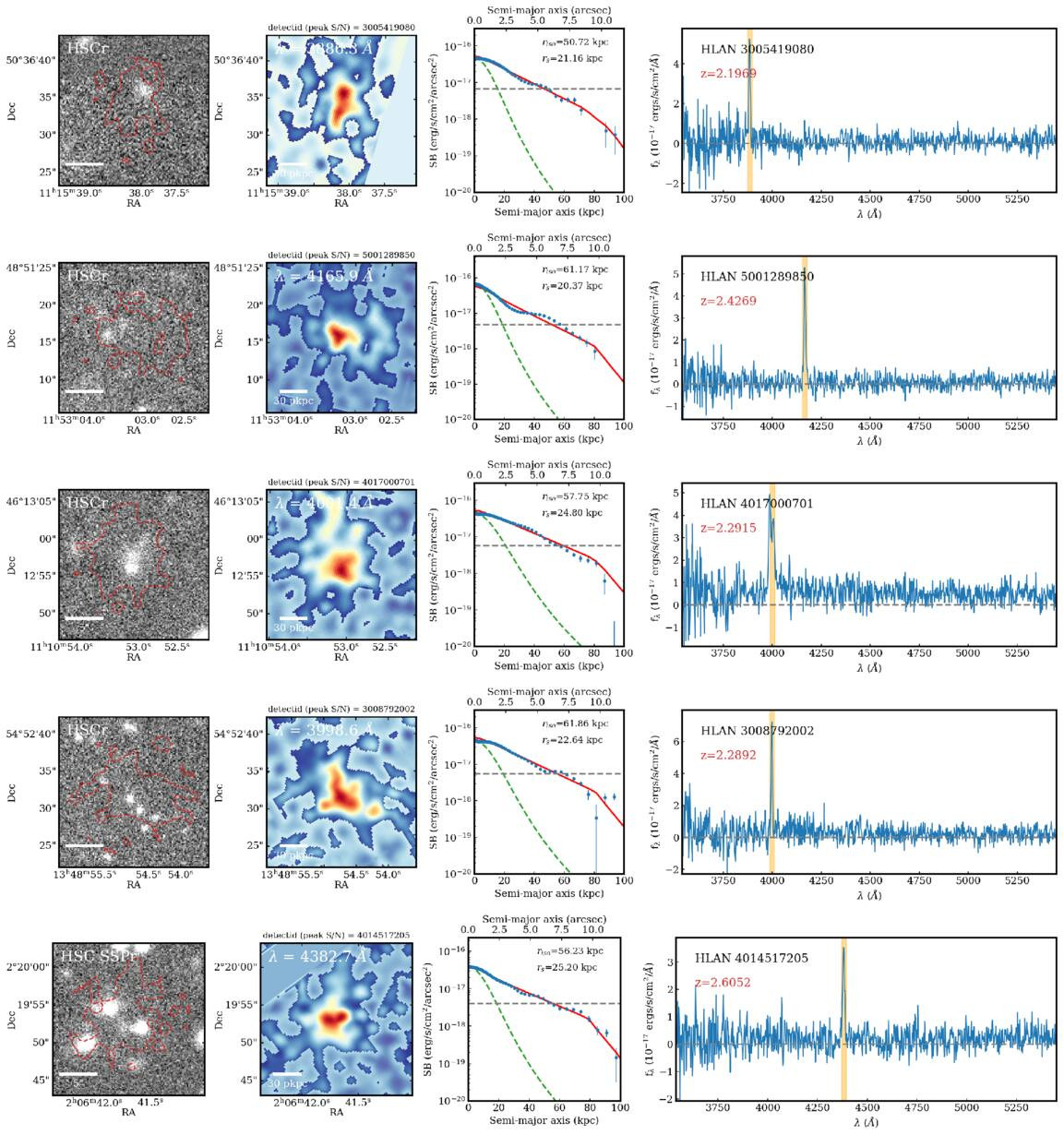
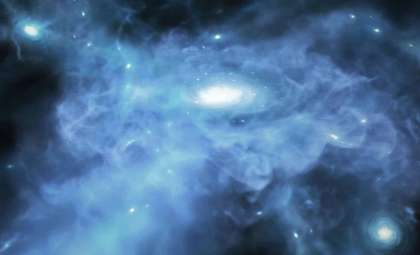
Further investigation by the HETDEX team revealed that hydrogen halos exhibit a wide range of morphologies and sizes. Some appear as simple, elliptical clouds surrounding single galaxies, while others resemble vast, irregular “amoeba-shaped” structures housing multiple galactic members. “Those are the fun ones,” Mentuch Cooper remarked, referring to these sprawling halos with tendrils of hydrogen reaching into intergalactic space.
These alien-like formations highlight the complex and evolving nature of the early universe. With sizes sometimes stretching across hundreds of thousands of light years, these halos provide novel ways to examine how galaxies and their gaseous environments co-evolved. By dissecting their shapes, astronomers gain valuable insight into the physical processes fueling galaxy growth during cosmic dawn.
Pioneering a New Chapter in Early Universe Exploration
Locating over 33,000 hydrogen halos represents not only a monumental increase in known objects but also vastly enriches prospects for future research. This extensive catalog removes previous constraints related to limited sample sizes, enabling scientists to rigorously test and refine theoretical models of galaxy formation and evolution.
“There are various models for galaxies in this epoch that largely work and seem to make sense, but there are gaps and holes,” said Davis. “Now we can focus in on individual halos and see at a greater detail the physics and mechanics of what’s going on. And then we can fix or throw out the models and try again.”
By analyzing these hydrogen gas halos in more detail, astronomers anticipate uncovering new facets of cosmic matter distribution, unveiling the dynamics behind galaxy evolution, and clarifying hydrogen’s role in shaping the universe. This bounty of data sets the stage for groundbreaking discoveries in understanding our cosmic origins.
- Categories:
- Astronomy






0 comments
Sign in to Comment