
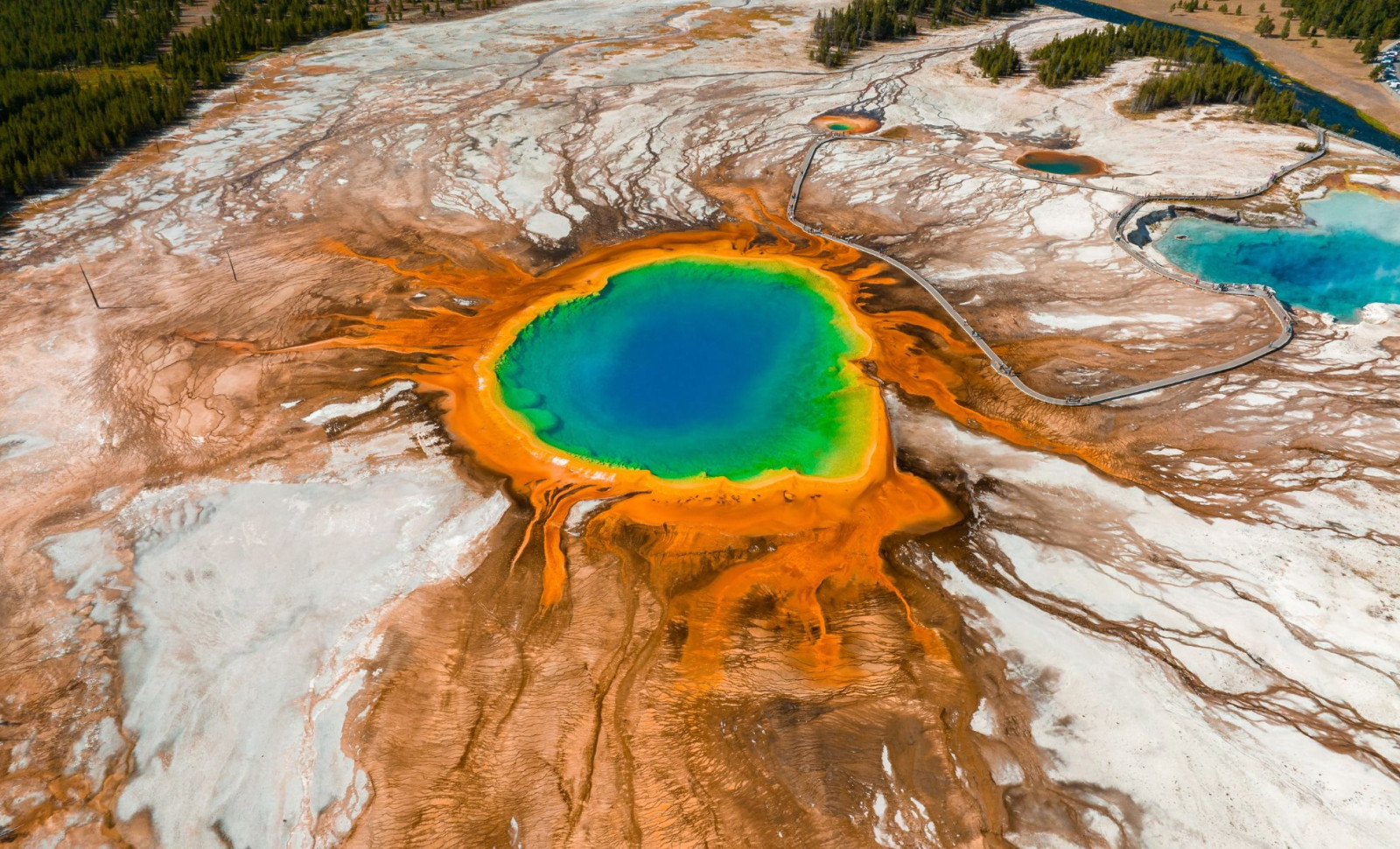
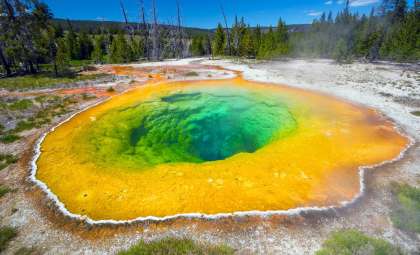
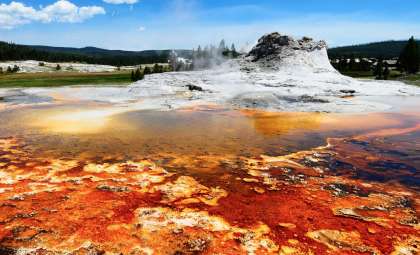
Recent findings propose that Yellowstone's volcanic power comes not from a singular deep plume, as traditionally thought, but from a widespread, slow-moving stream of heated rock beneath the North American plate. This new understanding could reshape how researchers perceive one of Earth's most studied volcanic regions.
Appearing in Science, the paper is based on an intricate 3D reconstruction of the area. The results indicate a dispersed and dynamic magma system rather than a narrow large-scale underground magma chamber.
Supereruptions, though infrequent, are monumental in volume, capable of expelling over 1,000 cubic kilometers of volcanic material. The immense scale keeps scientists continually refining their models of these phenomena.

A More Extensive and Evolving Magmatic Network
The prevailing model long held that a vast reservoir of molten rock accumulates underground until pressure leads to an eruption. However, research from the Institute of Geology and Geophysics of the Chinese Academy of Sciences suggests this depiction no longer fits the observed data.
“The driving mechanism for Yellowstone’s volcanism remains debated, owing to both the complex tectonic history of western North America and the elusive underlying mantle dynamics,” the authors write.
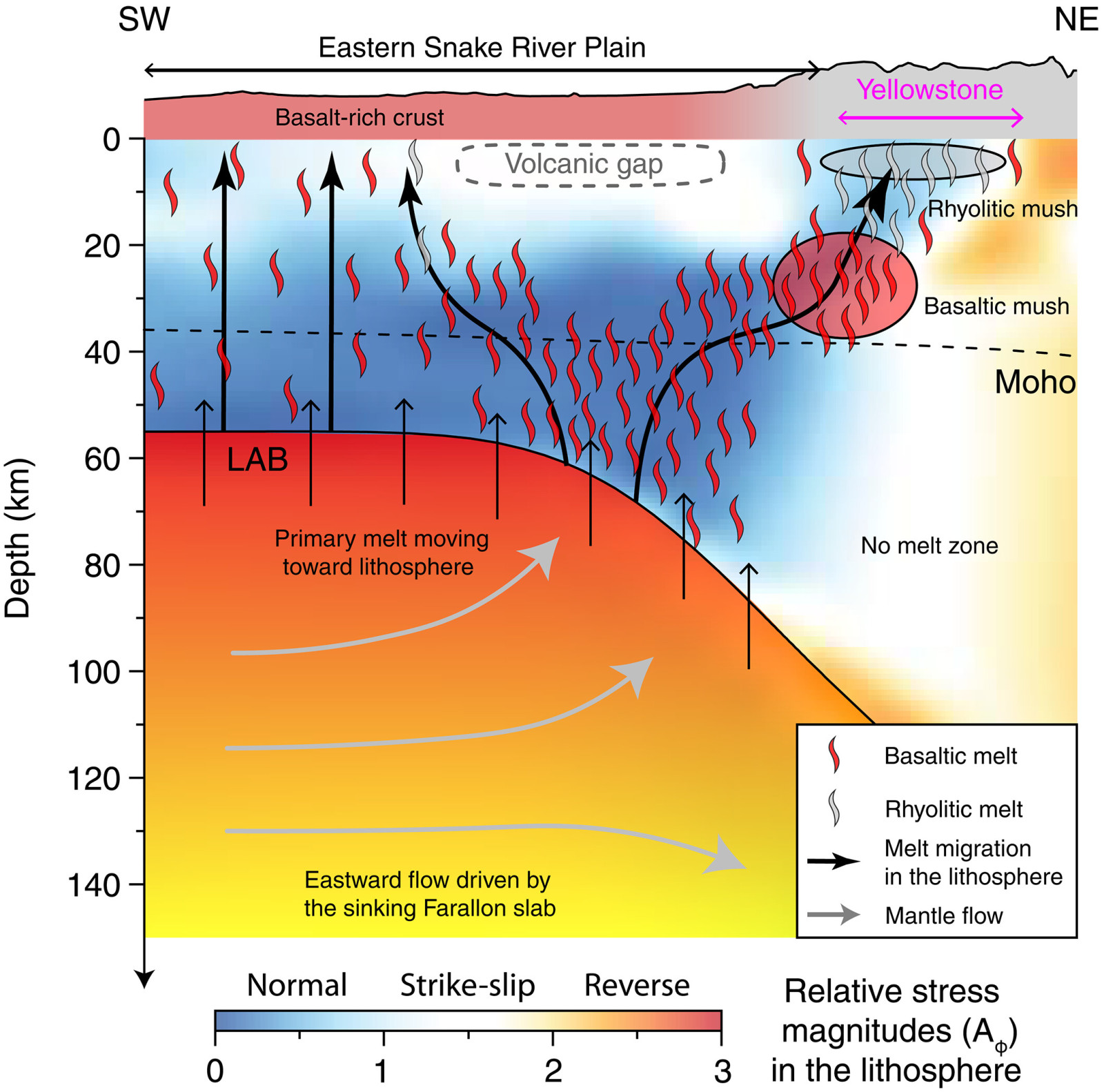
Researchers explain that beneath Yellowstone, magma is largely contained within a magma mush, a composite of semi-molten and solid rock spread across the lithosphere. This viscous mixture does not easily ascend.
The paper highlights that fully molten magma pockets emerge only shortly before volcanic eruptions, indicating the absence of a permanent liquid magma chamber as the defining feature. The researchers note:
“The Yellowstone volcanic system, located in the tectonically active western United States, has fueled several of the largest caldera-forming events in the past 2.1 million years. Therefore, its next eruption may also cause severe consequences and major societal impacts.”
An Eastward Mantle Flow Linked to Ancient Plate Tectonics
The study introduces the concept of a mantle flow moving eastward beneath North America. According to the publication in Science, this movement is associated with fragments of the Farallon Plate buried deep within the continent.
As this heated rock travels beneath thicker lithospheric regions, it is forced downward, inducing decompression melting that generates magma without relying on a traditional deep mantle plume source.
Lead authors such as Zebin Cao and Lijun Liu emphasize this alternative explanation challenges decades-old Yellowstone magma models.
Dynamics Directing Magma Through Earth's Crust
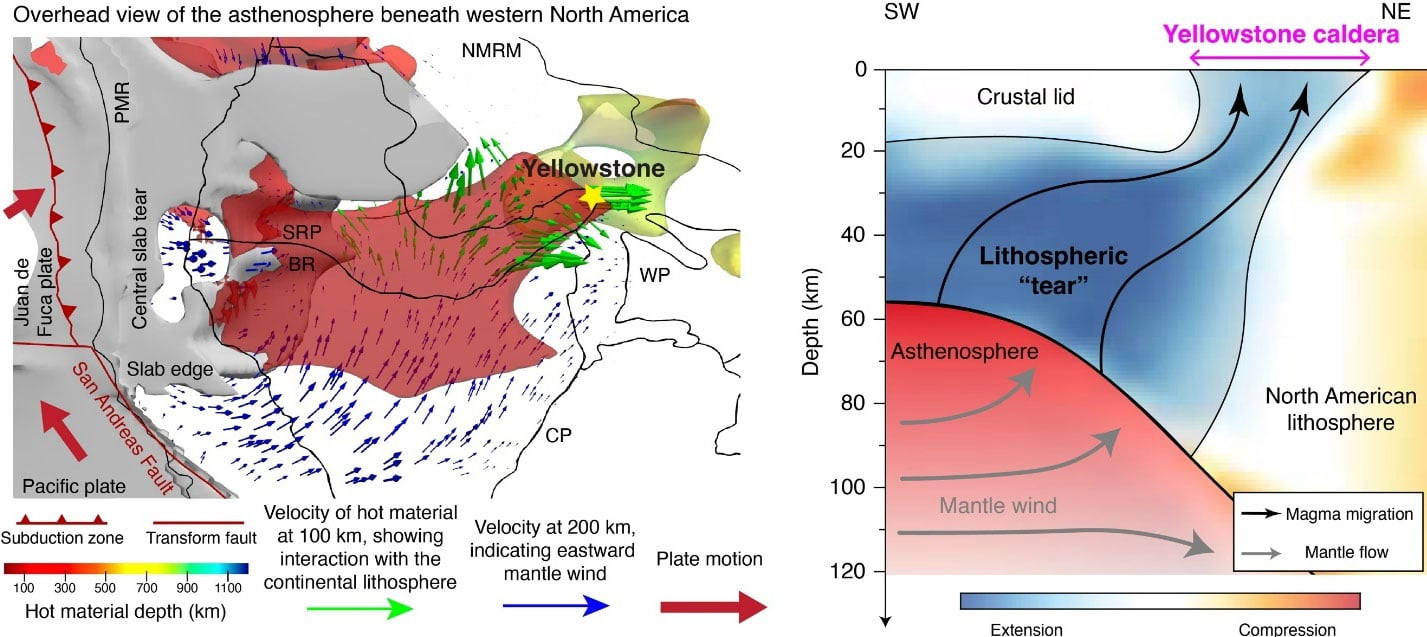
The latest investigation also explores magma migration after formation. The eastward mantle flow meets counteracting forces from the west, generating tension that stretches the lithosphere apart.
This process creates a channel-like feature dipping southwest beneath Yellowstone. The authors state this configuration aligns with observed geophysical and geochemical evidence.
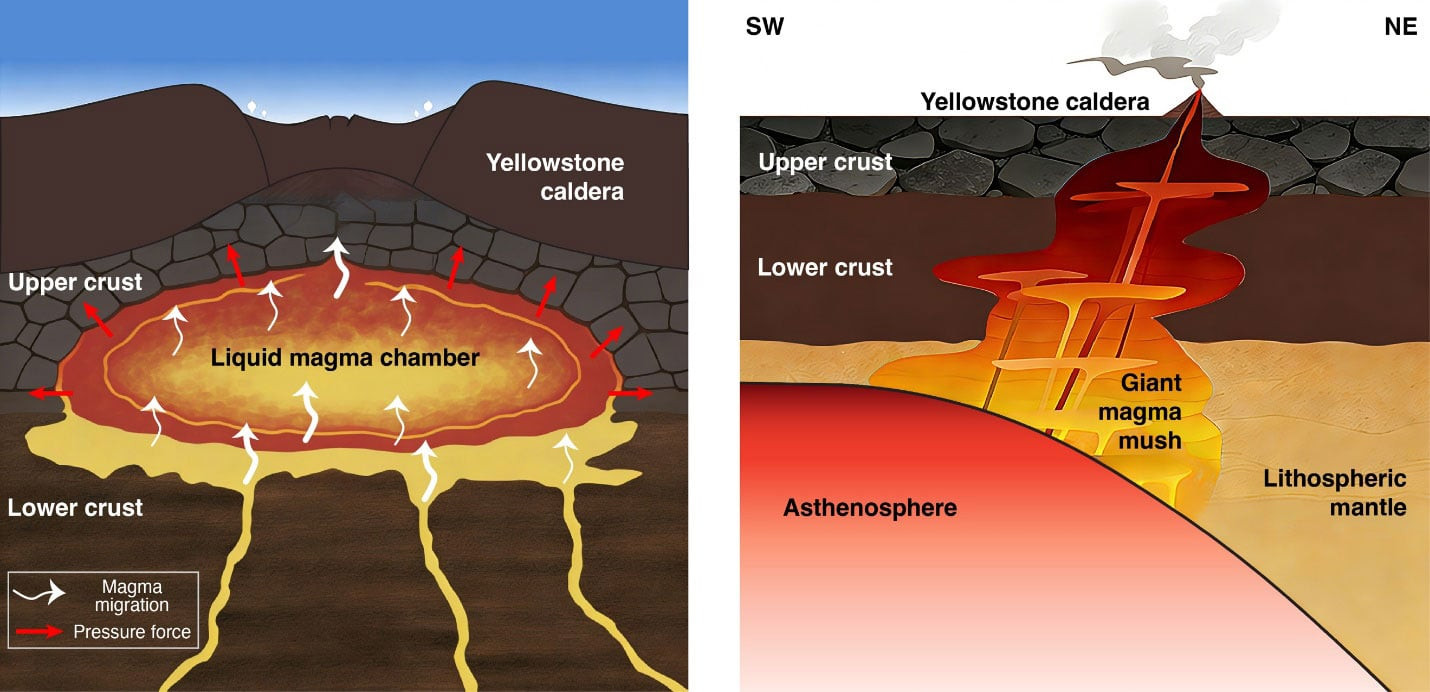
Rather than a solitary, vast magma chamber, Yellowstone’s volcanic plumbing consists of an extensive, interconnected network. As USGS experts clarify:
“Yellowstone is not overdue for an eruption,” they state. “Volcanoes do not work in predictable ways and their eruptions do not follow predictable schedules.”
- Categories:
- Science



0 comments
Sign in to Comment