
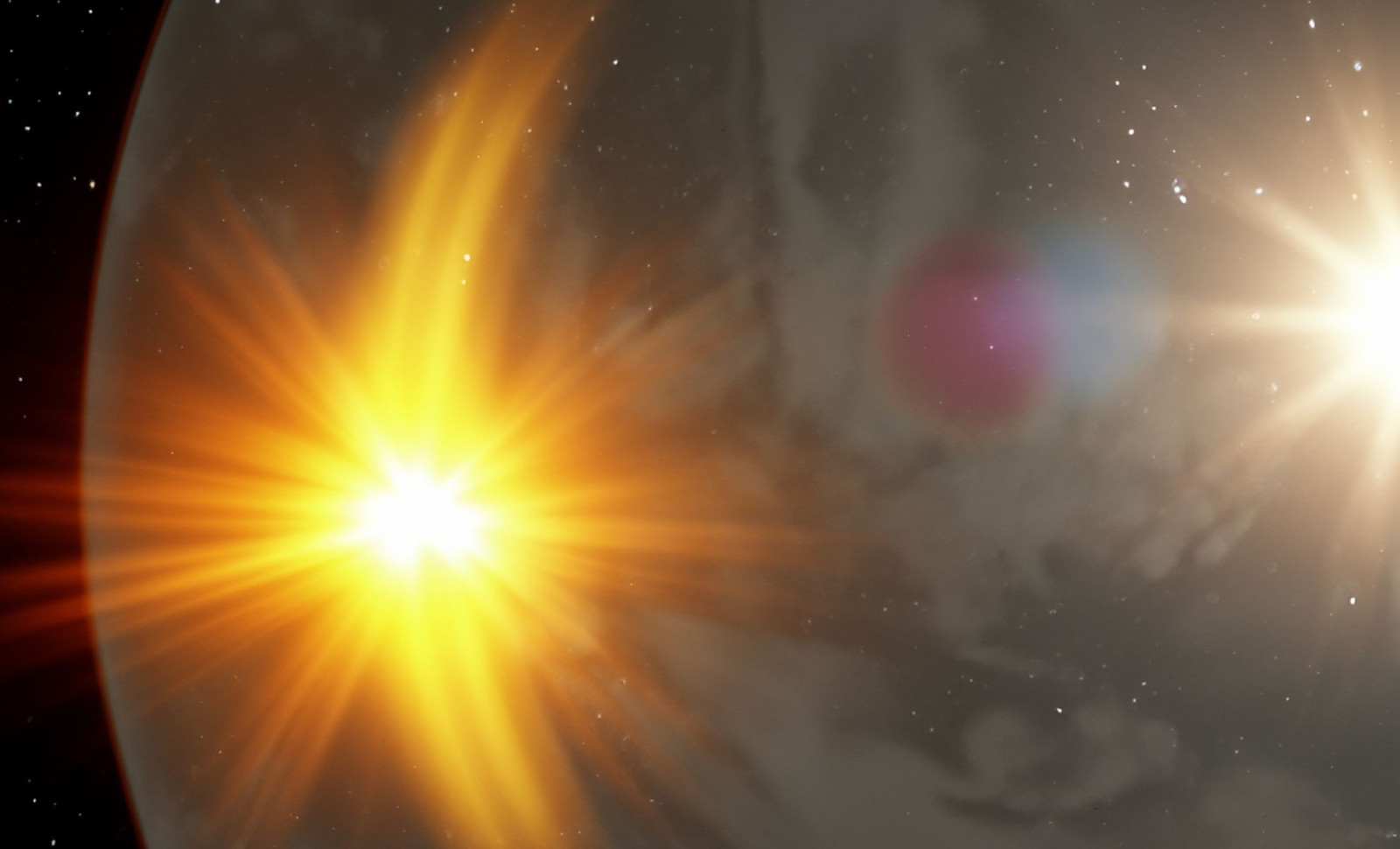
Scientists have successfully mapped the shape of the heliosphere, the magnetic shield generated by solar wind that safeguards our Solar System from harmful cosmic rays. Contrary to earlier assumptions, this protective bubble is neither a perfect sphere nor an ellipse but exhibits a uniquely unexpected form described as a “deflated crescent.”
The heliosphere extends well beyond the furthest planets, acting as an invisible barrier against interstellar radiation that could threaten Earth and its neighboring planets. A research team at Los Alamos National Laboratory employed advanced observational techniques to chart this boundary in unprecedented detail.
The Heliosphere: A Magnetic Fortress of Our Solar Neighborhood
The heliosphere is a vast magnetic region created by the solar wind—a stream of charged particles such as protons, electrons, and alpha particles emitted by the Sun. It defines the interface between the Solar System and the surrounding interstellar medium and plays a vital role in shielding the planets from high-energy galactic particles. Although its significance is well known, the exact contours of this shield have long been debated.

Earlier models, such as a 2020 study using data from Voyager spacecraft, predicted the heliosphere to be roughly spherical or slightly elongated. However, more recent research led by Dan Reisenfeld combined with observations from the IBEX satellite has unveiled a far more intricate shape.
Innovative 3D Mapping Technique
The breakthrough stemmed from a novel approach that studied the heliosphere’s outer edges via data from IBEX, which detects energetic particles resulting from interactions at the boundary. The team utilized an echolocation-style method, akin to animal navigation strategies. Reisenfeld explained:
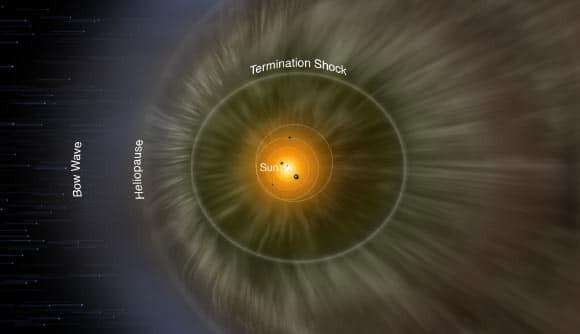
By tracking energetic neutral atoms (ENAs) formed from collisions between solar wind and interstellar particles, the researchers constructed a three-dimensional representation of the heliosphere. Their results show the closest distance from the Sun to the heliopause is approximately 120 astronomical units, whereas the opposite boundary stretches beyond 350 astronomical units.
Revealing a “Deflated Crescent” Geometry
This research challenges previous perceptions by illustrating that the heliosphere’s shape approximates a “deflated crescent.” Findings from the Los Alamos group indicate that the Solar System’s protective magnetic bubble is not spherical or oval but rather exhibits an elongated and asymmetrical form.
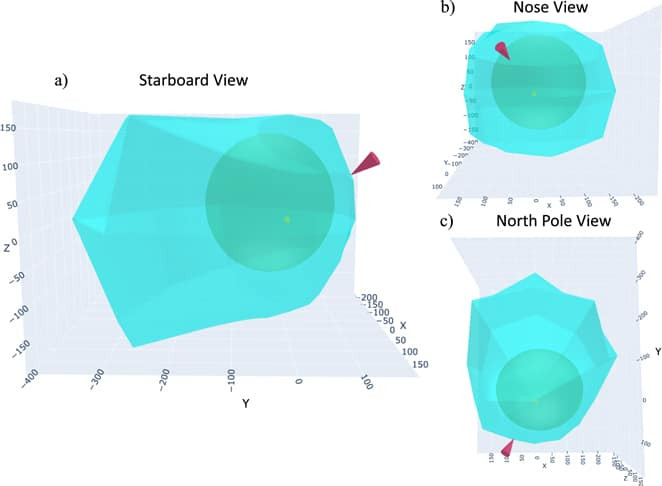
The distorted shape likely results from the interplay between solar wind pressures and the opposing forces of the interstellar medium, causing a large-scale deformation across the heliosphere.
- Categories:
- Science







0 comments
Sign in to Comment