

Memory loss has traditionally served as a hallmark symptom for identifying cognitive decline, but emerging studies indicate that changes in speech rhythm might reveal the onset sooner. Persistent hesitation in everyday speaking, long thought to be harmless, is now receiving renewed attention from researchers.
In laboratory settings, older individuals frequently demonstrate slower speech and longer pauses. Previously attributed solely to aging, these behaviors are now being linked to identifiable trends in executive cognitive functions.
Recent findings from a joint effort by the University of Toronto and Baycrest Health Sciences reveal that verbal reaction times could be more effective than standard memory evaluations in catching early cognitive issues. This technique prioritizes the pace of speech over mistakes in word selection as a critical diagnostic factor.

Published in late 2025 within the journal Aging, Neuropsychology, and Cognition, the study is among the first to confirm these results across a wide age group using engaging, remote testing methods. These insights come amid growing efforts to develop accessible, non-invasive brain health monitoring tools for early-stage detection.
Processing Speed Theory Gains Support in Controlled Experiments
The team tested 125 adults, aged between 18 and 85, using a picture-word interference task, which required participants to name images while disregarding distracting words. When distractor words were related in meaning, older participants showed slower responses. When distractors shared similar sounds, the expected quicker response seen in younger groups was less evident among older subjects.
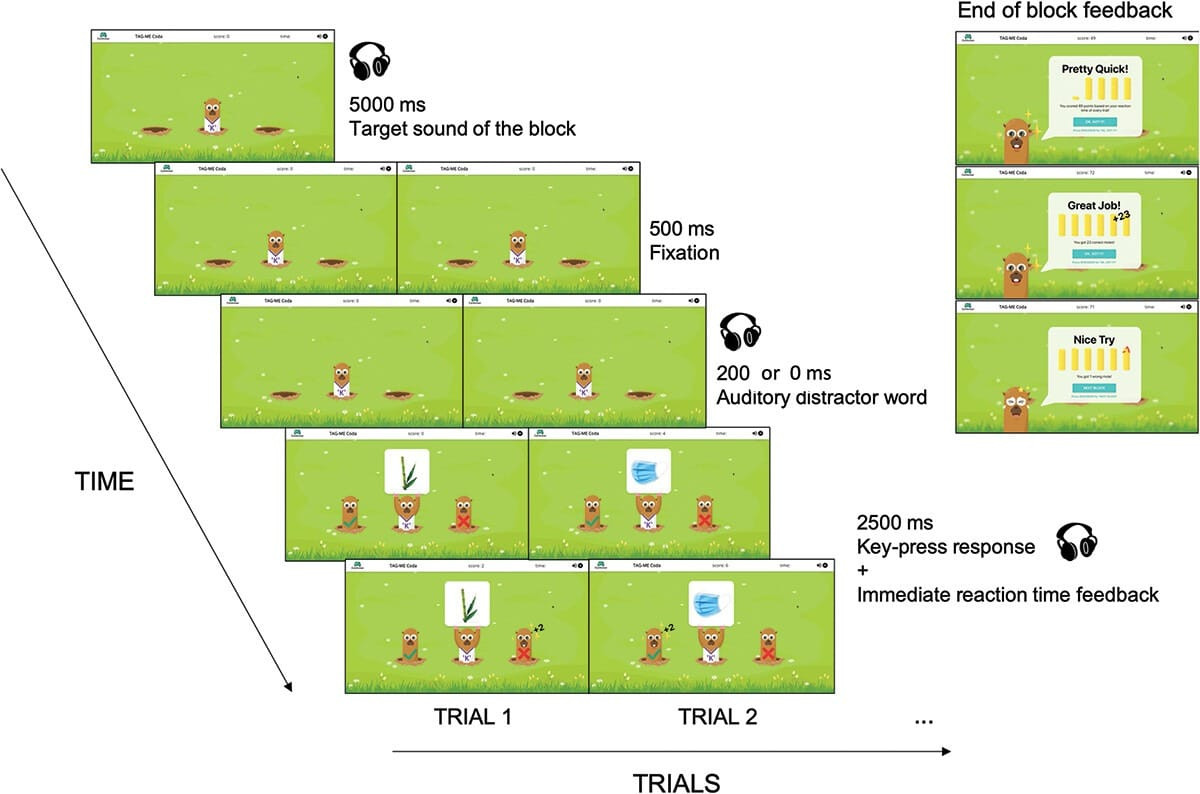
This experimental setup builds on prior research outlined in the open-access paper on the transmission deficit model versus blocking hypothesis, which examined phonological retrieval difficulties in aging. This framework was combined with the processing speed theory, which received the most robust empirical backing.
The results challenge the validity of two competing hypotheses: the inhibition deficit hypothesis, suggesting age-related failure to suppress irrelevant words, and the transmission deficit hypothesis, which attributes problems to weakened connections between concepts and sounds. Neither explained the observed behaviors comprehensively.
Spontaneous Speech Analysis Highlights the Importance of Speaking Rate
Participants also completed picture description tasks, producing untimed speech samples examined for pauses, speed, and clarity. Statistical analysis revealed two key patterns: more frequent pauses and slower speech. Among these, only speech speed correlated significantly with task performance.

This finding is consistent with earlier work published in Frontiers in Psychology, which explored the underlying cognitive dynamics behind delays in word retrieval among seniors. The present study enhances this understanding by identifying speech rhythm as a steadier indicator of executive function decline than pure verbal fluency.
Authors propose that speech speed assessments could detect early cognitive decline more effectively than tools like the Montreal Cognitive Assessment (MoCA) or Mini-Mental State Examination (MMSE), which focus mainly on memory and language accuracy. Supporting evidence includes a 2022 PubMed study showing acoustic speech markers can identify early brain changes well before memory symptoms arise.
Barriers and Future Prospects for Clinical Use
Despite promising findings, the study faced practical challenges. Thirty-two older participants were excluded due to not meeting requirements like headphone use, necessary for consistent audio data. Additionally, speech transcription and analysis techniques are not yet routinely available in clinical settings.
The majority of subjects spoke only one language; data from multilingual participants suggested potential interference effects. While researchers accounted for education and motor speed, future studies must include more diverse populations and conduct clinical follow-ups to confirm predictive accuracy.
The complete data and methods are publicly available through Taylor & Francis Online and the Open Science Framework. Research teams in Canada and Europe are exploring how to incorporate these insights into routine healthcare processes.
- Categories:
- Science












0 comments
Sign in to Comment