
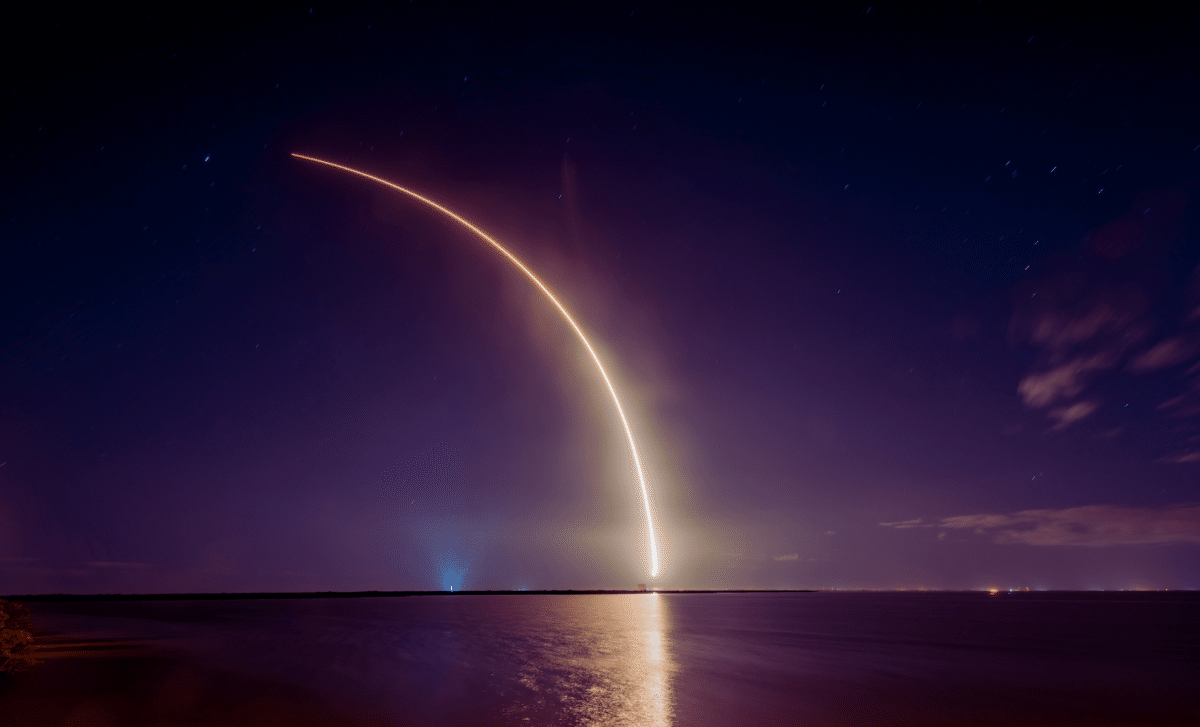
In late December 2025, a startling revelation showed that SpaceX’s Starlink satellite network conducted nearly 300,000 avoidance maneuvers to prevent potential space collisions. Since its launch commencement in 2019, Starlink has grown to approximately 9,400 satellites, now representing almost 65% of all active satellites orbiting Earth. This dominant presence in low Earth orbit has prompted the Federal Communications Commission (FCC) to require SpaceX to submit updates twice a year detailing the constellation’s collision prevention efforts. Nevertheless, scientists and space safety experts are increasingly worried about the long-term viability of maintaining such an extensive satellite system amidst escalating orbital congestion.
Increasing Space Traffic Challenges Due to Starlink
SpaceX’s Starlink satellites aim to deliver worldwide internet access, but their prominence raises vital concerns regarding the density of satellites and the heightened risk of crashes. The reported figure of nearly 300,000 collision avoidance maneuvers in 2025 highlights the immense operational and technical effort to safely navigate the crowded low Earth orbit environment, according to New Scientist.
“That’s a huge amount of manoeuvres,” says Hugh Lewis, a space expert at the University of Birmingham in the UK. “It’s just an incredibly high number.”
Add Cosmo Herald as a Preferred Source

This surge in maneuvering activity accentuates how saturated Earth’s orbital paths have become, with every additional satellite escalating the potential for close encounters and possible collisions.
The company’s mega-constellation is having to perform a huge number of manoeuvres to prevent a collision in Earth orbit https://t.co/oE1NafzxbW
— New Scientist (@newscientist) January 23, 2026
While necessary to safeguard the satellites, the frequency of these evasive actions opens broader discussions in the space sector. With numerous firms planning their own satellite groups, space is becoming increasingly congested, posing serious challenges for the safe and sustainable use of Earth's orbits.
“From a physics point of view, it’s not good,” says Lewis. “We are moving ourselves towards a pretty bad scenario in orbit. It is not sustainable.”
The escalating clutter in Earth’s orbital environment raises alarms about future opportunities for exploration and communications infrastructure.
Ethical and Legal Concerns Over Starlink's Orbital Control
Starlink’s rapid expansion into a dominant presence within low Earth orbit sparks important discussions about space access rights. The constellation operates between 340 and 570 kilometers altitude—a crucial orbital band shared by many other satellites. “This clearly shows how SpaceX effectively controls that orbit,” notes Samantha Lawler, a space researcher at the University of Regina, Canada. Her observation points to tensions in the Outer Space Treaty, which promotes equitable access to space for all nations. The overwhelming number of Starlink satellites risks undermining this principle by monopolizing prime orbital real estate, igniting debates on the implications of privatizing space corridors and restricting others’ activities.
SpaceX’s heavy footprint emphasizes the uncharted challenges of orbital governance. Although these maneuvers protect the system, concerns mount over what might occur if an error happens during such complex operations. “They’re executing all these maneuvers flawlessly,” Lawler explains, “but one misstep could create catastrophic consequences.” A collision triggered by a mistake could exponentially increase orbital debris and make vital regions of space inaccessible to future satellites.
The Escalating Threat of Space Debris
A paramount hazard linked to satellite collisions is the subsequent breakdown into countless debris particles. Even a small impact can generate thousands of fast-moving shards that jeopardize other spacecraft by triggering a chain of further collisions. Experts like Hugh Lewis warn that the surge of satellites—if not carefully managed—could spiral into unmanageable debris proliferation. “It’s a concerning trajectory,” Lewis states, underscoring the risks of multiplying satellites without robust safety frameworks. The potential fallout includes widespread damage to operations critical for communication, navigation, and Earth observation.
To combat this threat, companies such as SpaceX employ advanced tracking and prediction systems to anticipate collisions and avert them. Nonetheless, managing these enormous constellations demands an unprecedented scale of maneuvering, prompting questions about how feasible such activity is over the long haul. The space industry faces the vital task of balancing innovation with the imperative for a sustainable, secure orbital environment.
- Categories:
- Space






0 comments
Sign in to Comment