

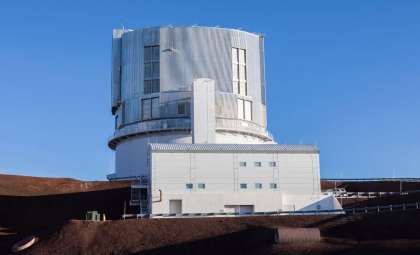
Utilizing the powerful Subaru Telescope located in Hawaiʻi, researchers have uncovered a massive exoplanet along with a brown dwarf orbiting distant stars. Published in The Astronomical Journal, these findings mark the inaugural success of the OASIS (Observing Accelerators with SCExAO Imaging Survey) initiative. By merging precise space telescope data with Subaru’s cutting-edge imaging tools, OASIS is successfully identifying elusive celestial objects previously hidden from view.
OASIS: Advancing the Hunt for Hidden Exoplanets
The OASIS project is revolutionizing the detection of large planets and brown dwarfs typically concealed by the intense light of their host stars. Although only a small fraction of stars—around 1%—harbor such companions detectable through direct imaging, OASIS adopts innovative strategies as outlined in a study published in The Astronomical Journal to uncover these rare objects.
By leveraging data from two European Space Agency missions, Hipparcos and Gaia, scientists monitor stars that exhibit subtle motions induced by gravitational pulls from unseen objects. These “wobbled stars” offer vital clues to the presence of hidden planets or brown dwarfs. Target stars are then observed using Subaru’s SCExAO (Coronagraphic Extreme Adaptive Optics) system, which excels at capturing sharp, high-contrast images despite the faintness of these companions caused by their stars’ overwhelming glare.

This combination of precise space-based measurements and sophisticated ground-based imaging is transforming our ability to spot otherwise invisible systems. So far, OASIS has allowed the direct capture of images for planets and brown dwarfs too dim for traditional techniques, paving the way for fresh insights into planetary systems.
Introducing HIP 54515 b and HIP 71618 B: A Giant Planet and a Substellar Object
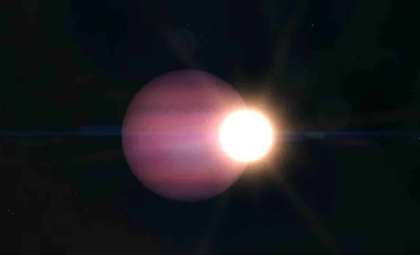
The first discovery, HIP 54515 b, is a giant exoplanet residing approximately 271 light-years away within Leo’s constellation. Weighing nearly 18 times Jupiter’s mass, it orbits its star at a range comparable to Neptune’s distance from the Sun. Though enormous in size, HIP 54515 b is faint and would appear as tiny as a baseball from 100 kilometers away. This milestone was achieved thanks to Subaru’s exceptional resolution.
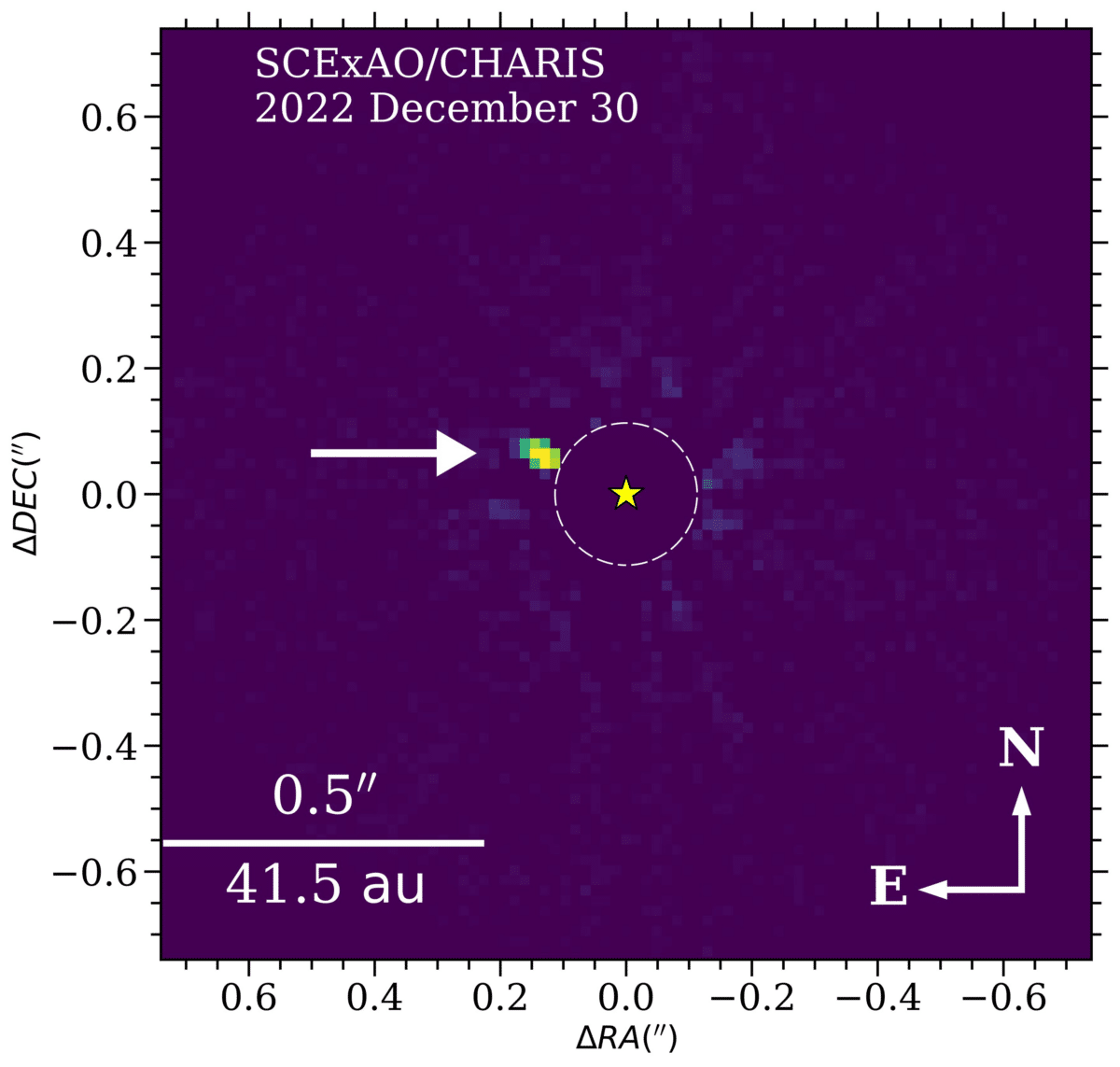
Another significant find is HIP 71618 B, a brown dwarf located roughly 169 light-years away in Bootes. Brown dwarfs, sometimes called “failed stars,” form like actual stars but lack sufficient mass to sustain nuclear fusion, making them much dimmer. HIP 71618 B is notable for its mass—around 60 times Jupiter’s—and its potential role in future observational studies.
This brown dwarf’s prime importance lies in its relevance to NASA’s upcoming Roman Space Telescope, which will employ coronagraphs to block stellar light and enable direct imaging of distant exoplanets. HIP 71618 B’s characteristics make it an excellent test subject for these new technologies aimed at capturing planets billions of times fainter than their host stars.
Implications for the Roman Space Telescope and Beyond
The Subaru Telescope's recent achievements extend well into the future of astronomical research. Discoveries like HIP 54515 b and HIP 71618 B are critical in assembling targets to aid the performance tests of NASA’s Roman Space Telescope’s coronagraph instruments. These tools are essential for observing Earth-sized exoplanets around far-off stars.
Before the emergence of the OASIS project, pinpointing suitable objects to trial these coronagraphs was challenging. Spotting HIP 71618 B marks a milestone toward honing these imaging technologies. As the Roman Space Telescope launch approaches, Subaru’s pioneering findings will directly support the advancement of methods vital for detecting and studying distant worlds.
This synergy of space-based star monitoring and ground-based direct observation exemplifies the progress in modern astronomy. The Subaru Telescope continues to be at the forefront of exploring planetary systems as new space missions prepare to expand our cosmic horizon.
- Categories:
- Space




0 comments
Sign in to Comment