
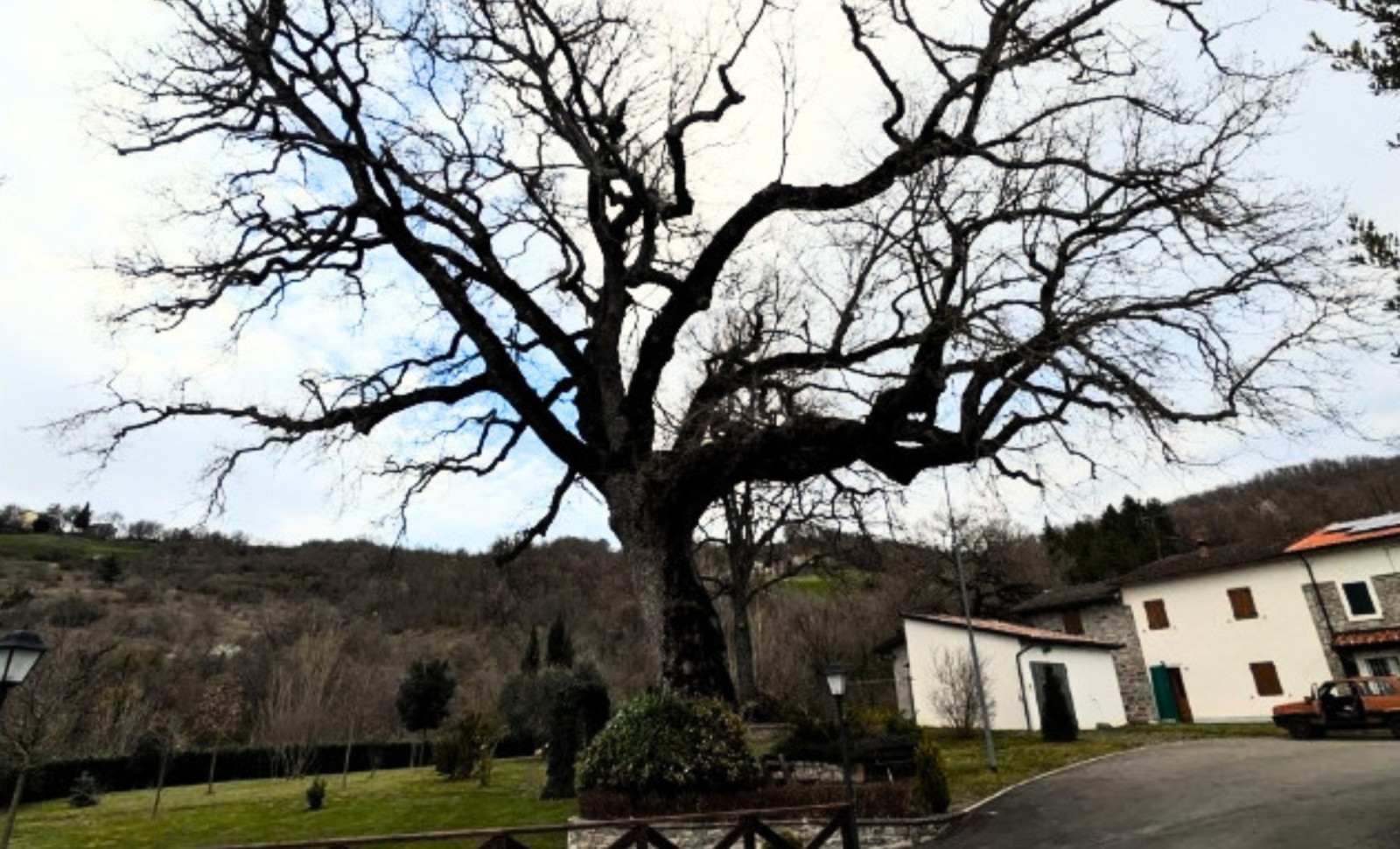
For multiple generations, a family made yearly payments to their neighbor to ensure the preservation of an ancient oak tree, only to later discover it was already on their own property.
Over the course of three generations, one family regularly compensated their adjacent neighbors to protect a grand oak standing between their homes. They operated under the assumption that the tree belonged to the other family. However, this belief proved incorrect.
When the supposed owner in the third generation threatened to remove the tree, the paying family commissioned a surveyor to clarify the property boundaries. The findings were startling: the oak was fully situated on the land of the family who had been financing its upkeep all along.

This revelation resolved a strange, decades-old dispute in Capanna Foresta, a quaint area near Porretta Terme in the Bolognese Apennines. The oak, known as a roverella or downy oak, continues to thrive today.
A Longstanding Informal Agreement Passed Through Generations
The tale began years ago when the man who believed he owned the tree planned to cut it down. According to Valido Capodarca, a renowned expert on ancient trees who documented the case in 1985, the neighbor had a deep emotional attachment to the tree and wished to keep it in view.
To prevent its removal, the neighbor proposed a yearly payment in exchange for sparing the oak. The offer was accepted without either party verifying the property lines.
This verbal agreement was handed down from fathers to sons and then grandsons. For three generations, one family paid, while the other collected.
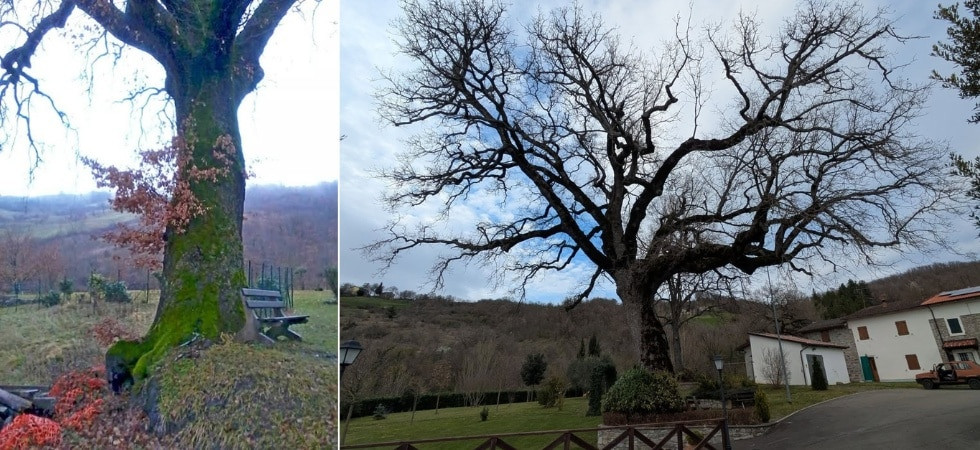
Capodarca heard the story from the vice commander of the Porretta Terme forestry station during research for his 1986 book “Emilia Romagna, ottanta alberi da salvare” (Eighty Trees to Save in Emilia Romagna). The oak stood in a farmyard bordered by two farmhouses, presumed to be exactly on the property border.
Cutting Threatened, Leading to an Unexpected Revelation
The delicate arrangement unraveled when the grandson of the original man insisting on felling the tree declared he no longer honored the deal and intended to cut the oak.
His neighbor, also a grandson of the original parties, tried to persuade him otherwise. When negotiation failed, he examined property documents seeking a legal basis to prevent the tree's removal.
He then conceived a plan. As Capodarca recounts, “If even one centimeter of the tree is on my land, then it belongs to me, and the neighbor risks cutting what is not his.”
The neighbor commissioned a municipal surveyor who, using cadastral maps, conducted measurements and confirmed that the oak was not partially but entirely on his family's land. It had been there all along, meaning the family had been paying for a tree they legally owned.
The Fate of the Oak: Decades Later the Mystery Remains Partially Solved
Capodarca learned this story in 1985 but was unaware of the outcome. The neighbor discovered the truth but stood firm, threatening legal action. “This was the scenario in 1985,” Capodarca noted. “It remained uncertain whether the oak survived.”
Years later, in 2015, a friend named Paola Campori visited the site and took photographs. Capodarca wrote that these images “at least partially resolved the doubt, showing the oak in good health.”
Today, the oak is safeguarded by the Emilia Romagna region and is listed on Google Maps as “Albero Monumentale, Quercia Roverella” at Capanna Foresta.
Now belonging to their fourth generation, descendants of the original neighbors continue to live nearby. A century after the initial disagreement, the oak tree remains rooted, separating their properties as always.
The Enduring Legacy of This Ancient Oak
Valido Capodarca, now in his eighties, was among Italy’s pioneers in extensively studying and documenting historic trees. His efforts in the 1970s and 1980s helped generate recognition of monumental trees as valuable living heritage. The downy oak from Capanna Foresta featured in his Emilia Romagna collection of eighty vital trees.
The case lacks a straightforward legal conclusion, but Capodarca reflected simply: “What matters is that the oak is still alive for whatever reason.”
Whether the two families formally reconciled remains unknown. Nonetheless, this century-old tree continues to stand, a living symbol of a prolonged miscommunication and enduring family connection.
- Categories:
- News








0 comments
Sign in to Comment