
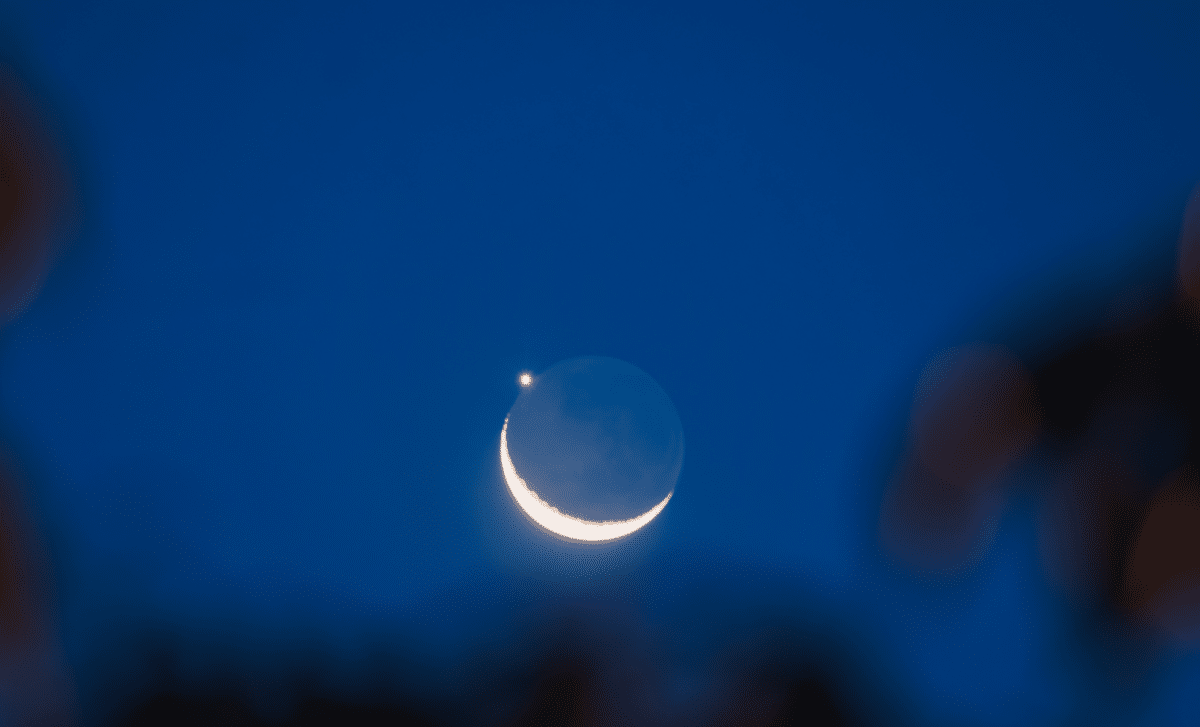
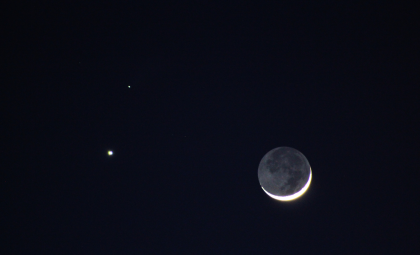
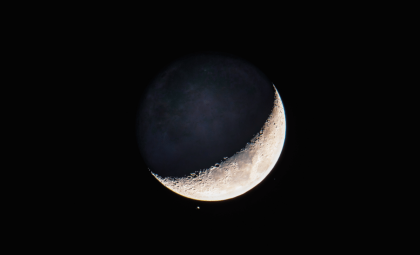
Skywatchers will be treated to a spectacular astronomical display tonight, featuring a close encounter between the crescent Moon and Mercury. Shortly after sunset, these two celestial bodies will appear side by side in the western horizon, providing a captivating view. Just beneath them, the brilliant Venus will also be visible, enriching the evening’s cosmic arrangement. For some lucky observers, an exceptional occultation will occur, where the Moon temporarily obscures Mercury, offering a rare chance to witness this elusive planet vanish and reappear.
The Delicate Crescent Moon Aligns with Mercury
As twilight fades into night, the waxing crescent Moon will approach Mercury in the western skies, creating an enchanting pairing. The Moon will be found just slightly above the small, quick-moving planet, providing an excellent opportunity for viewers across the U.S. to spot Mercury, which often proves challenging to find. Venus, though strikingly bright, will sit lower in the sky, making Mercury’s position near the Moon especially noticeable.
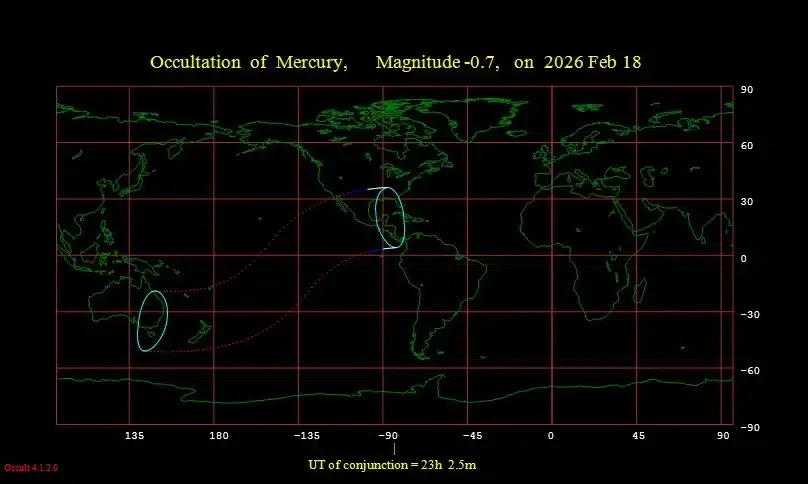
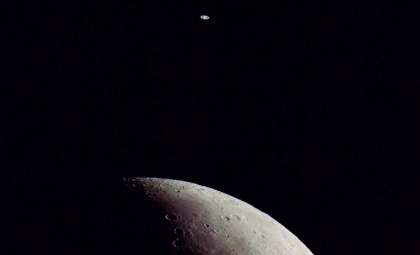
Both veteran astronomers and casual observers alike can enjoy this alignment of inner planets. According to Astronomy Magazine, in some locations, the Moon will pass directly in front of Mercury in an occultation. This means Mercury will momentarily disappear behind the lunar surface, an intriguing event that varies depending on your geographic location. On the East Coast, Mercury will appear north of the Moon, whereas on the West Coast, it will be positioned lower right of the thin crescent.

Venus Illuminates the Sky Just Below Moon and Mercury
Enhancing the celestial show, Venus will shine brightly this evening, situated beneath the Moon and Mercury. Boasting a magnitude of –3.9, Venus stands out as one of the most luminous objects visible in early nightfall. Positioned roughly 12 degrees above the horizon half an hour after sunset, it will be distinctly noticeable despite the fading daylight.
However, Venus’s low altitude means that observers in areas with obstructions like hills or tall buildings might find it harder to spot. In any case, anyone with an unobstructed view toward the west should easily catch a glimpse of this radiant planet, providing a stunning contrast against the darkening twilight.
Jupiter’s Moon Ganymede Performs a Transit and Casts a Shadow
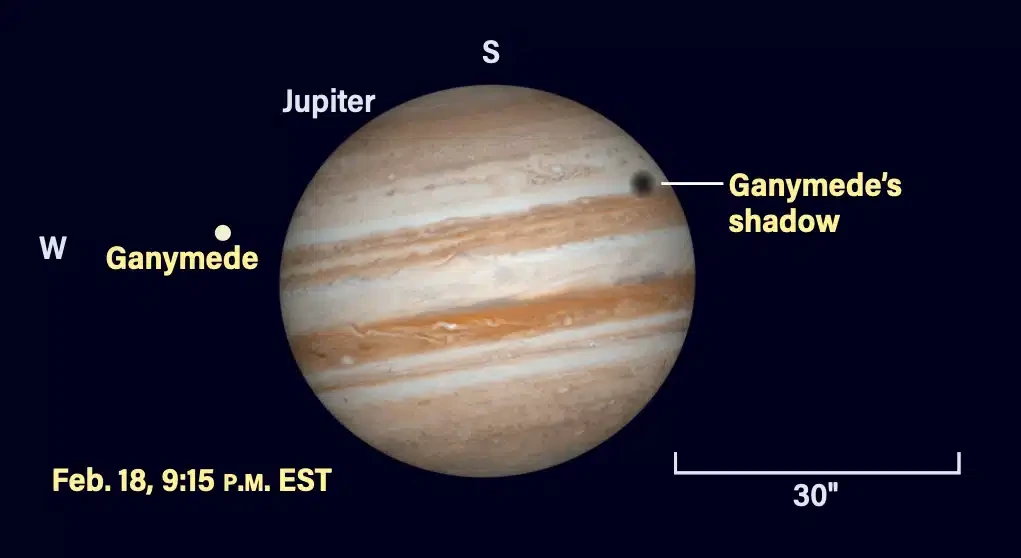
While attention is focused on the Moon and Mercury in the west, Jupiter will stage an exciting event opposite them. Around 9 p.m. EST, Jupiter’s largest moon, Ganymede, will move across the face of the gas giant, slightly dimming a portion of its bright cloud tops. This transit will be observable from much of the United States as night falls.
The spectacle continues as Ganymede’s shadow follows its transit, creating the illusion of a “bite” taken out of Jupiter’s southeastern edge. This shadow transit will linger for several hours, extending until nearly midnight, offering a captivating view of one of Jupiter’s moons and its shadow traversing the giant planet’s atmosphere. This event is particularly rewarding for those observing through telescopes.
Tips to Experience These Extraordinary Sky Events
To spot both the Moon’s close approach to Mercury and Ganymede’s transit of Jupiter, timing is essential. The Moon and Mercury pairing will be best viewed shortly after sunset, so be sure to find a clear western horizon early in the evening. Venus and Mercury’s low altitude mean setting up where the view isn’t blocked will improve visibility. For the Jupiter event, plan on observing around 9 p.m. EST or later to catch Ganymede’s transit and shadow casting.
Many aspects of these events are visible without optical aid, but binoculars or a telescope will greatly enhance the experience, revealing details like the transit and shadow on Jupiter’s disk. This is an ideal occasion for novice astronomers to practice identifying planets and their moons in the night sky.
- Categories:
- News

0 comments
Sign in to Comment