

Researchers from the University of Chicago have initiated an innovative experiment designed to detect ultrahigh-energy neutrinos—extraordinary particles from the far reaches of space that might shed light on some of the cosmos’ most intense events.
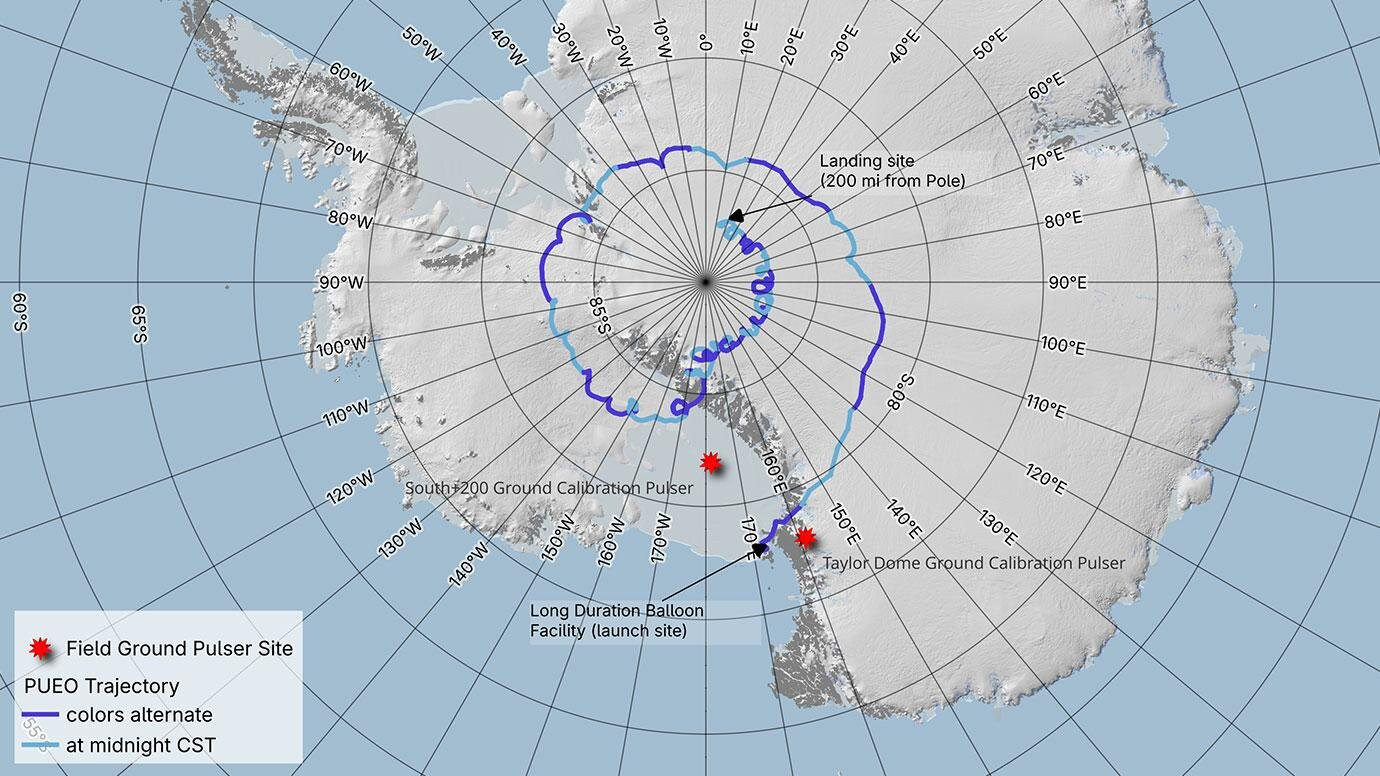
The initiative, known as PUEO (Payload for Ultrahigh Energy Observations), was launched via a NASA balloon from Antarctica on December 20, 2025, ascending to approximately 120,000 feet. Following an adventurous 23-day flight, the payload safely descended on January 12, 2026, bringing back invaluable data that could unlock fresh cosmic discoveries.
PUEO represents one of NASA’s first Astrophysics Pioneers missions, a program aimed at breaking new ground in space observations. Its main objective is to detect energetic neutrinos—rare cosmic messengers traveling vast distances across the universe.

A One-of-a-Kind Detection Device
Creating the PUEO payload was a complex undertaking spanning five years. Scientists from multiple institutions around the world—including six U.S. universities and collaborators from Europe and Asia—combined their expertise to engineer an instrument finely tuned to identify these rare neutrinos.
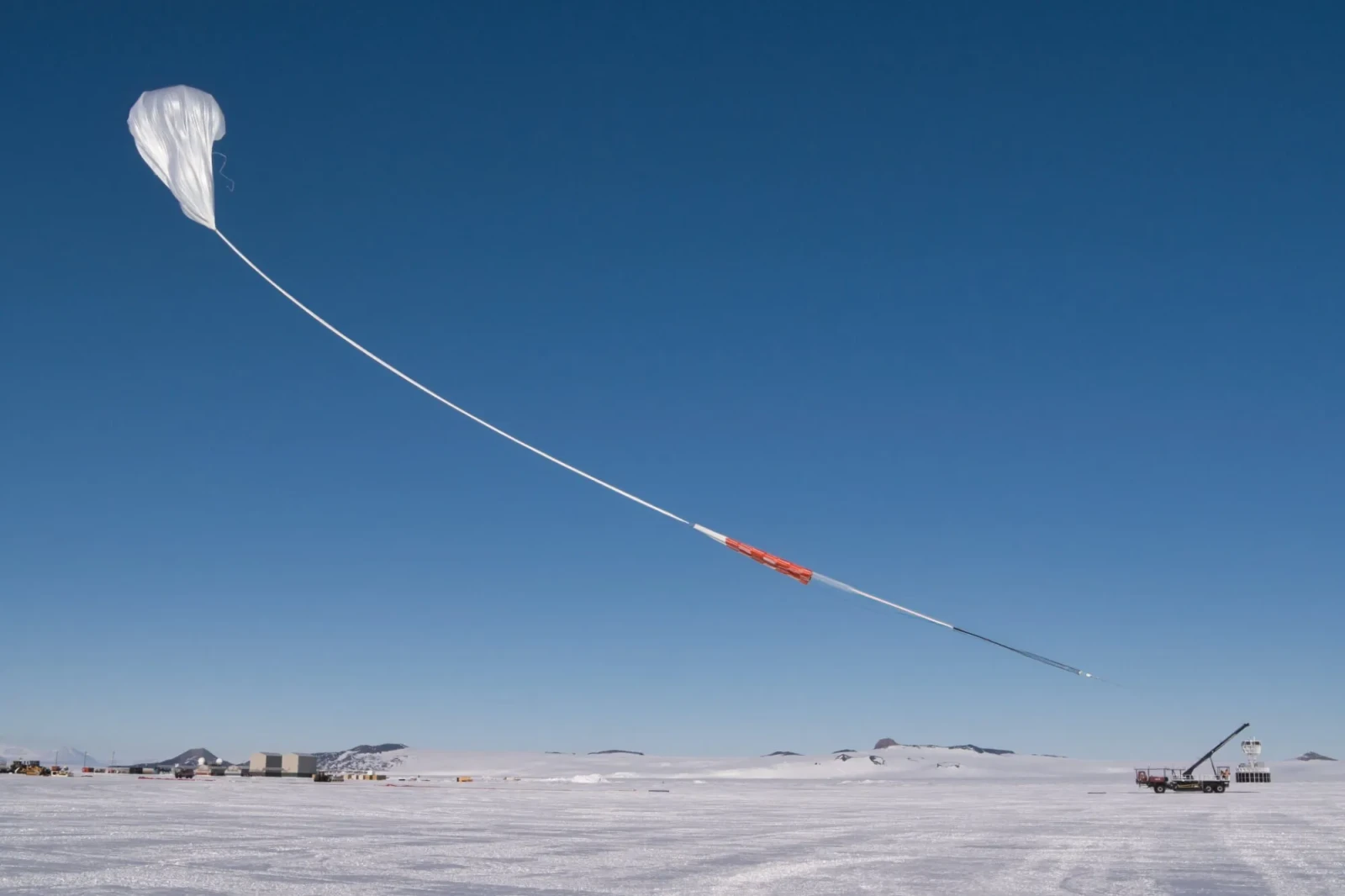
Cosmin Deaconu, a research professor at UChicago, explains that PUEO’s breakthrough stems from its use of 96 ultra-sensitive radio antennas, which detect faint radio signals emitted when a neutrino strikes an atom embedded in Antarctic ice. To prepare for the harsh environment, the team rigorously tested the system at a NASA facility in Texas simulating near-space conditions.
The payload journeyed from Texas to New Zealand before reaching Antarctica for its launch. While the balloon’s liftoff was successful, the team faced tension, as Keith McBride, a postdoctoral researcher at UChicago, remarked:
“The balloon and payload are so long that if you have strong variation in layers of the atmosphere, you could be in trouble.”
The Flight’s Complex Journey
Upon reaching its target altitude of 120,000 feet, PUEO began its crucial mission of tracking high-energy neutrinos. This venture required constant attention from scientists who monitored the balloon’s status and addressed unexpected issues, such as the payload’s slower rotation. This caused uneven sunlight exposure, potentially risking overheating of sensitive electronics. The diligent team managed these challenges to keep the instrument functioning properly.
The University of Chicago report notes that despite hurdles, PUEO performed reliably during the flight. Solar panels extended as anticipated, and extra antennas deployed to enhance detection sensitivity. Graduate student and Radio Frequency electronics lead Rachel Scrandis shared her perspective:
“There is something so exciting (and a little unnerving) seeing the last five years of your work float away.” she added, “We built PUEO to be the world’s most sensitive experiment to ultrahigh energy neutrinos, but after launch, we are at the mercy of the winds to carry us over ice that will let our experiment shine.”
Data Recovery Marks a New Chapter
Following more than three weeks aloft, PUEO safely returned, landing approximately 200 miles from the South Pole. The true significance of the mission lies in the extensive dataset collected. Containing between 50 and 60 terabytes of information on possible neutrino events, data retrieval was a critical, time-sensitive effort. Researchers must now undertake detailed sorting, calibration, and analysis to determine whether the elusive ultrahigh-energy neutrinos were captured.
While full analysis might take up to a year, the team remains optimistic about uncovering new knowledge regarding the universe’s most powerful phenomena. As McBride expressed:
“It’ll probably take us a month just to run the numbers on the computer—it’s that much data.”
For now, the scientists are content knowing their ambitious mission has advanced humanity’s grasp of the cosmos’ highest-energy events.
- Categories:
- Science












0 comments
Sign in to Comment