
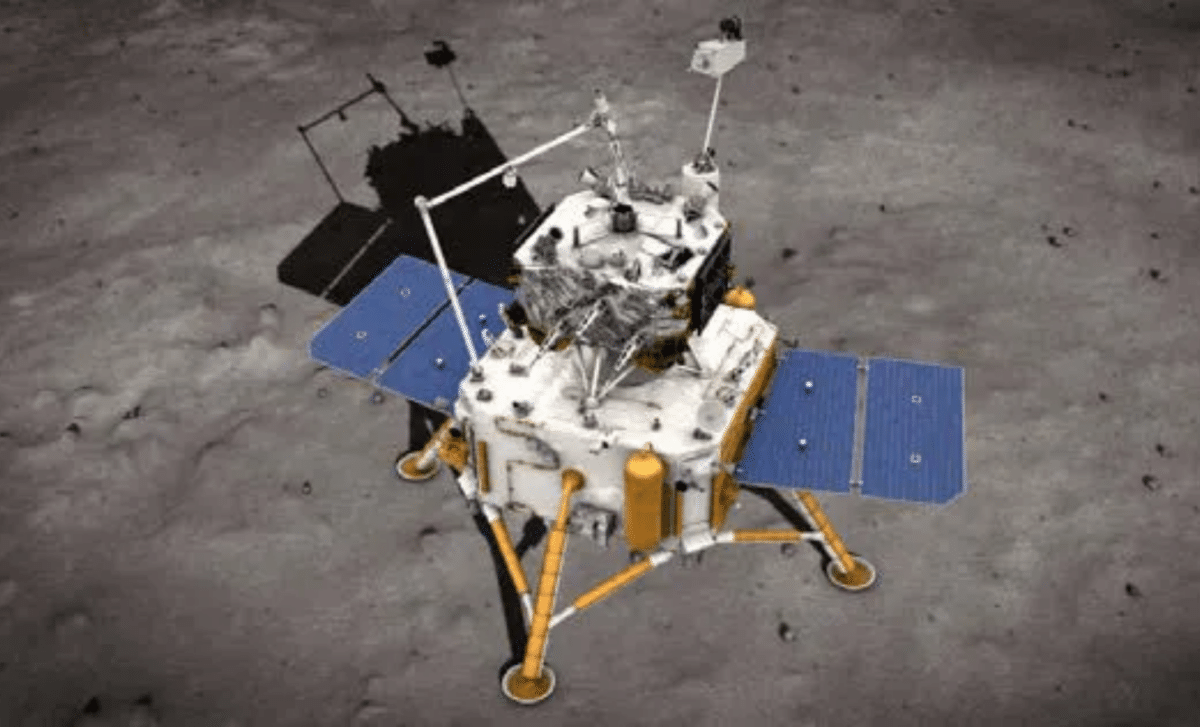
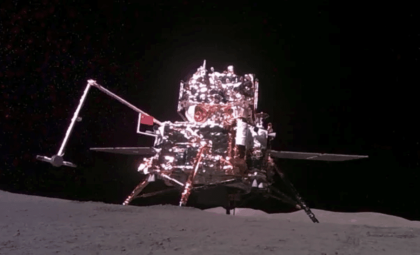
Scientists analyzing lunar soil brought back by China’s Chang’e 5 mission have uncovered two previously unknown minerals, offering fresh insights into the Moon’s geological evolution, according to the Beijing Research Institute Of Uranium Geology. Invisible without advanced microscopy, these minerals carry unique chemical fingerprints that shed light on the Moon’s transformation from a molten body into the layered celestial object observed today.
Unveiling Hidden Treasures in Microscopic Moon Particles
The discovery emerged from examining particles so tiny they challenged even state-of-the-art handling techniques. Researchers detected novel crystal formations within volcanic material gathered from the lunar surface during the Chang’e 5 expedition. These micrograins possess atomic structures unlike any minerals previously identified on Earth.
Through meticulous laboratory work, the team carefully isolated and studied these particles at the atomic scale. The fragility of the specimens demanded extraordinary precision, as any slight disturbance risked damaging or losing these priceless samples.

“We had to control every breath and move with immense caution to avoid blowing away this precious lunar find,” explained Ge Xiangkun of BRIUG.
This delicate approach reveals how easily such rare findings can remain undiscovered. What seems like mere dust becomes a detailed record of ancient planetary processes under advanced technological scrutiny. Each tiny grain holds clues about conditions billions of years ago when it first formed.
The research by the Beijing Research Institute Of Uranium Geology highlights how ultra-high-resolution analysis of returned samples can reveal entirely new classes of minerals.
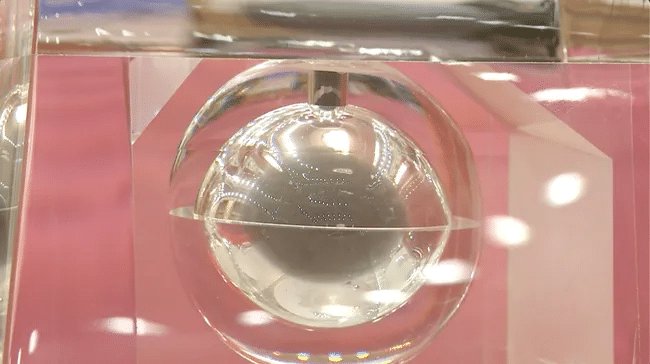
Introducing Magnesiochangesite-(Y) and Changesite-(Ce)
The first mineral discovered has been named magnesiochangesite-(Y), reflecting its magnesium and yttrium-rich composition. The second, confirmed after further analysis and comparisons with lunar meteorites found on Earth, is called changesite-(Ce).
These names comply with international mineral classification protocols, which require confirmation not only of chemical makeup but also precise atomic structures. This rigor ensures that the findings are genuine and uncontaminated.
These new minerals bring the count to seven and eight representing unique lunar materials uncovered from returned samples. They expand our understanding of the Moon’s diverse mineralogy and serve as valuable reference points in planetary geology.
Despite containing rare earth elements, the discovery holds more scientific than commercial value—due to their microscopic sizes, these minerals do not indicate economically exploitable resources but illuminate elemental behavior during planetary formation.
Clues About the Moon’s Formation and Cooling Process
The chemical profiles of these minerals add vital information about the Moon’s early phases. When the lunar surface existed as a vast magma ocean, elements separated out during cooling and solidification stages.
The newly found minerals are enriched in light rare earth elements, differing from the heavier rare earth signatures prevalent in samples from the Apollo missions. This suggests varying solidification timelines and processes in distinct lunar regions.
The Chang’e 5 soils have been dated to approximately 2.03 billion years old, significantly extending the period of lunar volcanic activity previously understood. These minerals contribute further detail that connects chemical differentiation to specific points within that timeframe.
Analyzing these compositional differences enables scientists to better piece together the Moon’s interior evolution, magma movements, and rock formation across its surface.
The Importance of These Tiny Mineral Structures for Planetary Research
Minerals capture environmental data at their time of formation, preserving temperature, pressure, and chemical context. In these new minerals, elements like magnesium, yttrium, and cerium provide important evidence about conditions deep inside ancient lunar magma chambers.
Finding identical mineral species in both Chang’e 5 samples and lunar meteorites supports the discovery’s validity and indicates that these minerals are part of widespread geological phenomena rather than isolated occurrences.
This study underscores the irreplaceable value of retrieving physical samples from space, enabling laboratory analyses that remote sensing cannot replicate.
Future lunar missions will be essential to determine the distribution of these minerals across the Moon. Each new sample collection will help refine our grasp of lunar geodynamics and broader planetary evolution mechanisms.
The findings demonstrate how even the tiniest fragments of lunar soil can revolutionize scientific understanding, revealing a richly detailed and dynamic history embedded in what might otherwise appear as simple dust.
- Categories:
- Science




0 comments
Sign in to Comment