
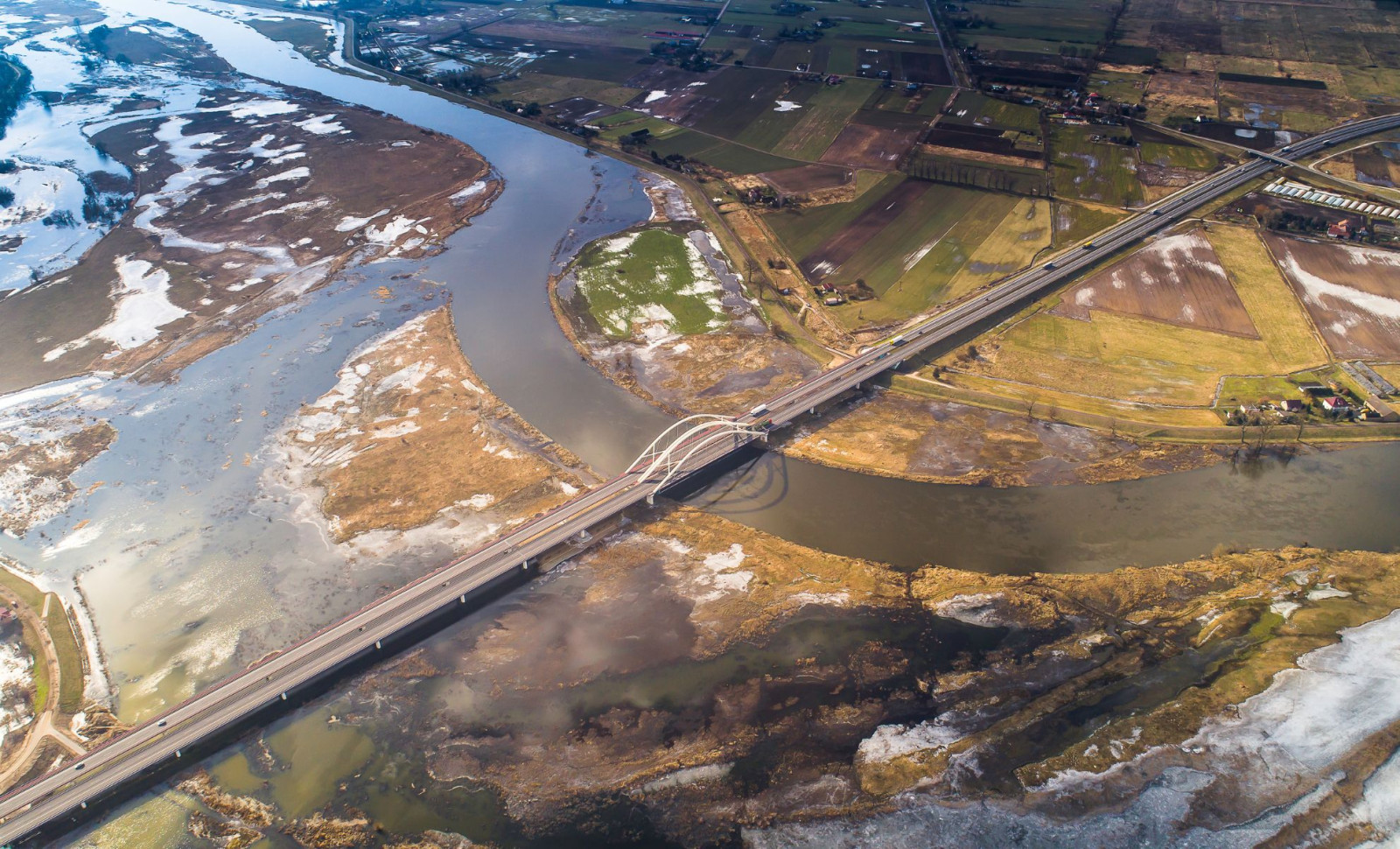
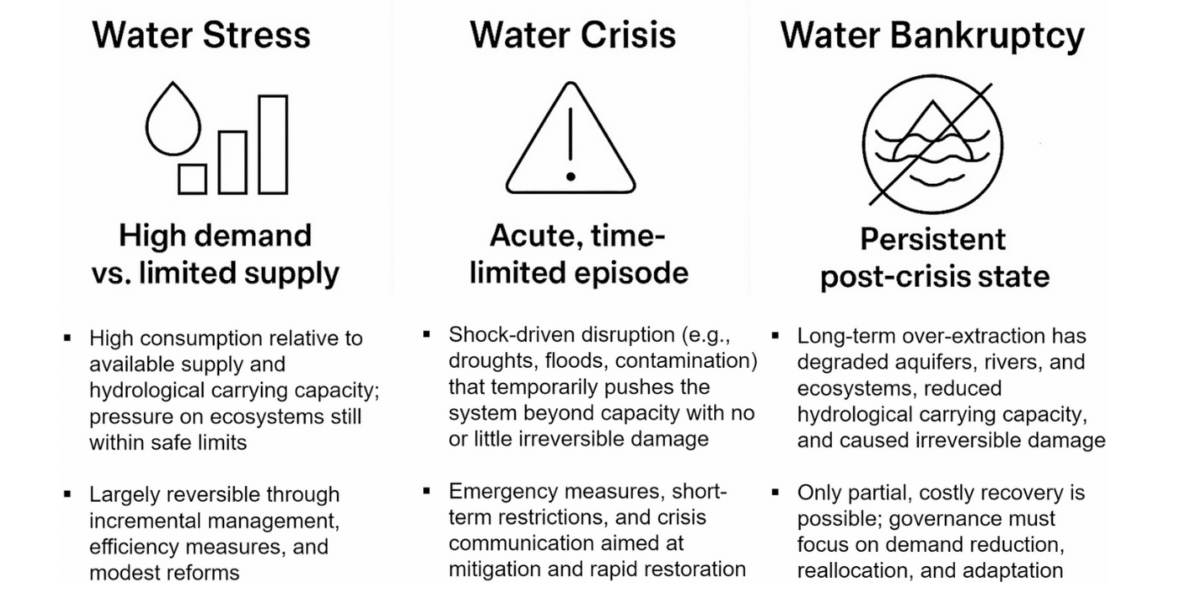
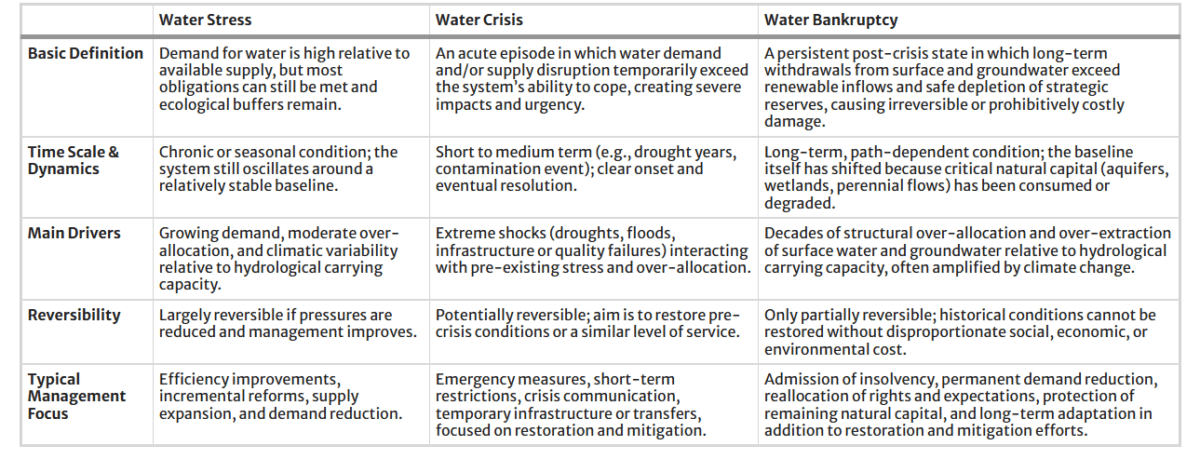
A recent United Nations study reveals that global freshwater consumption has surpassed the planet’s natural replenishment rates. Scientists refer to this critical condition as "water bankruptcy," where surface water sources are no longer able to fulfill demand in various regions.
The United Nations University Institute for Water, Environment and Health highlighted the increasing dependence on groundwater reserves, which take significantly longer to renew. This trend is already impacting vast segments of the world’s population.
The report estimates that approximately four billion individuals experience water scarcity for at least one month annually. It also found that 75 percent of the global population lives in nations grappling with shortages, pollution, or drought conditions.

Declining Global Water Stocks
The study illustrated this challenge through a straightforward analogy. According to Kaveh Madani, rivers and rainfall function like a "checking account," while groundwater and glaciers act as long-term savings. Both sources are being depleted faster than their natural recovery, with an estimated 70 percent of major aquifers currently diminishing—some of which may suffer irreversible damage.
The consequences are already apparent. In Turkey, extensive groundwater extraction has been tied to the emergence of nearly 700 sinkholes. Near Beijing, desert expansion has intensified dust storms causing fatalities. Increasing agricultural activity in arid zones combined with rising temperatures are noted as key contributors.
Societal Impacts of Water Deficits
As Madani emphasized, diminished freshwater availability can influence employment and everyday life, especially in farming communities. He also urges reevaluating our terminology:
“If you keep calling this situation a crisis, you’re implying that it’s temporary. It’s a shock. We can mitigate it”.
Iran exemplifies the severity of these challenges. The nation recently endured its driest autumn in half a century, while dam projects and groundwater withdrawal have drastically lowered water levels in Lake Urmia. Such stresses have fueled social unrest. Officials have contemplated relocating parts of Tehran and pursued cloud seeding to boost precipitation.
Challenges in Reducing Water Consumption
Cutting back on water use in agriculture is crucial but complex, as numerous livelihoods rely on irrigation. Bradley Udall from Colorado State University explains that more efficient irrigation methods don’t always translate to less total water use. Technologies like drip irrigation reduce runoff, limiting the water that would otherwise return to rivers.
The Colorado River demonstrates these dynamics: its flow has decreased by about 20 percent over 20 years, with reservoirs at roughly 30 percent capacity. Udall warns that if water levels drop to 10 to 15 percent, river flows may cease to support dam operations.
The report underscores that without accurate water usage data, crafting effective policies remains elusive. Madani highlighted that many nations still lack proper mechanisms for monitoring their water consumption.
“By acknowledging the reality of water bankruptcy, we can finally make the hard choices that will protect people, economies, and ecosystems. The longer we delay, the deeper the deficit grows,” he concluded.
- Categories:
- Science









0 comments
Sign in to Comment