
Physicists have long relied on established models to understand the stability of atomic nuclei, but recent findings are challenging these conventional notions. Despite the orderly appearance of the periodic table, the inner workings of atomic nuclei involve complex interactions that occasionally defy previous expectations. A new paper published in Nature Communications reveals surprising deviations from accepted nuclear behavior in areas once considered well understood.
The focus of this breakthrough is on molybdenum isotopes, notably Mo-84 and Mo-86. Researchers discovered that a subtle change of just two neutrons induces a significant alteration in their internal structure. Such results invite fresh perspectives on atomic architecture, especially near the N=Z line, where numbers of protons and neutrons are equal.
When Nuclear Patterns Fail
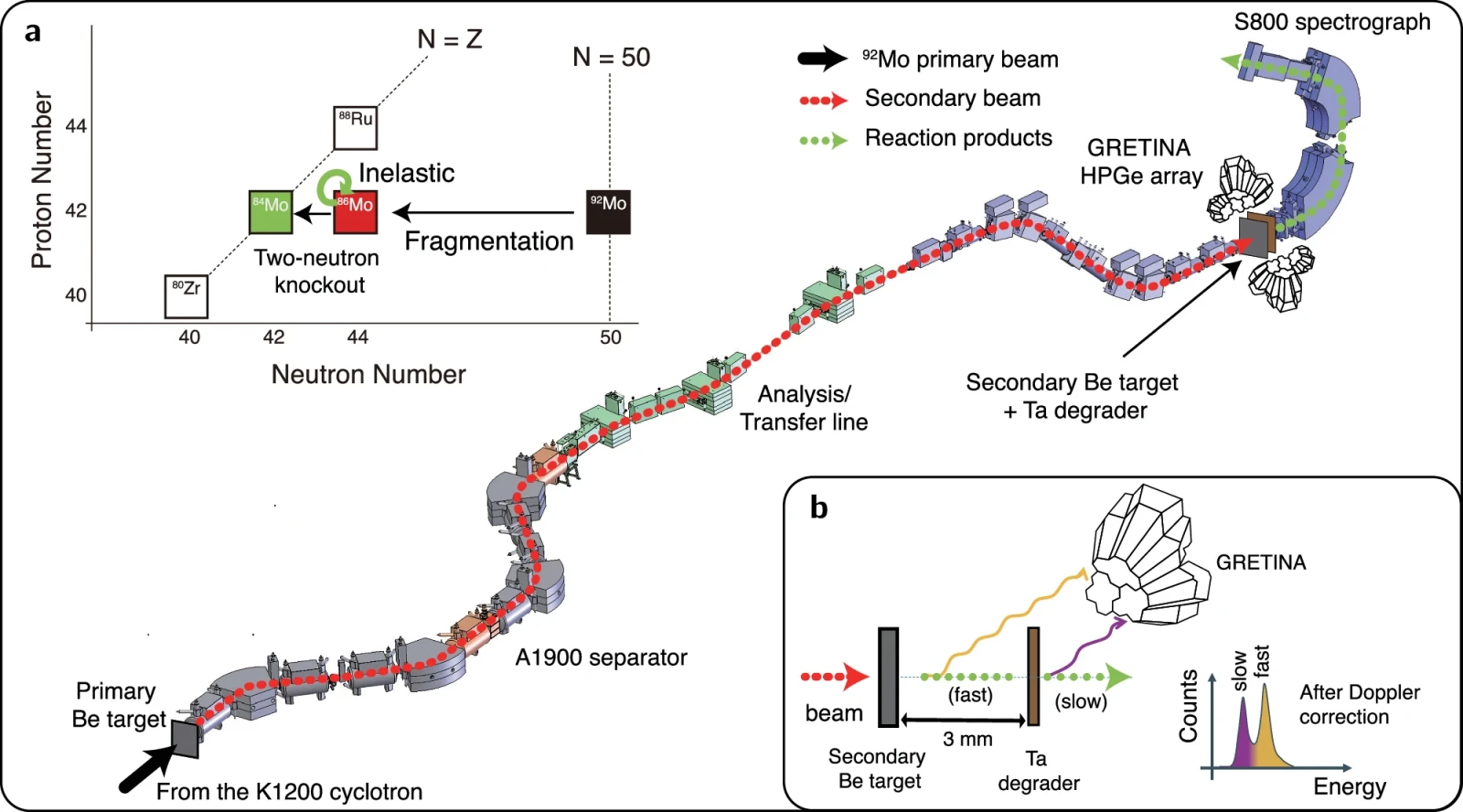
Popular Mechanics details how this investigation began by bombarding a beryllium target with accelerated Mo-92 ions. As these nuclei collided and fragmented, the team examined the behavior of Mo-86 when it interacted with another target. Some nuclei transitioned into Mo-84, emitting characteristic gamma rays during the process.

These gamma emissions were detected using GRETINA—an advanced gamma-ray detection system—alongside the sophisticated TRIPLEX apparatus, which captures ultrafast nuclear events. Unexpectedly, the results showed particle-hole excitation in Mo-84, a phenomenon typically associated with neutron-rich isotopes of exotic nature.
Simply put, protons and neutrons were pushed into higher energy states, creating vacancies that disturbed the nucleus’s usual symmetry and triggered deformation. Such distortions characterize an “island of inversion,” but identifying this effect in a proton-rich, symmetric isotope was unprecedented.
A Remarkable Nuclear Phenomenon in a Traditionally Stable Zone
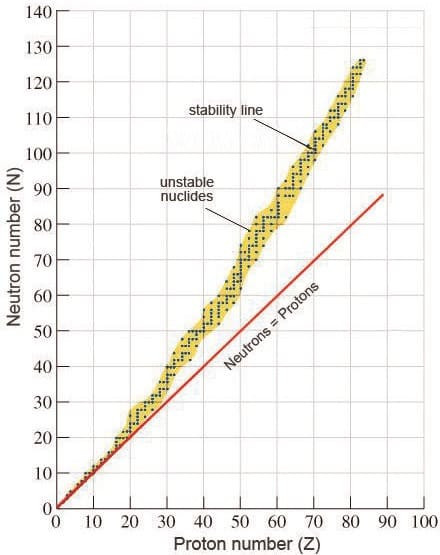
Previously, islands of inversion were often observed in neutron-heavy isotopes such as beryllium-12 or magnesium-32. These nuclei exhibit irregular, unstable configurations uncommon in nature. These regions mark boundaries where classical nuclear concepts, like magic numbers of nucleons, lose predictive power.
However, the current discovery reported in Nature Communications positions such an island within a typically stable zone. The research highlights how Mo-84 and Mo-86—despite their proximity in mass—show drastically contrasting internal nuclear arrangements. What makes this island unique is the involvement of both protons and neutrons simultaneously, making the phenomenon isospin-symmetric, a rare characteristic in nuclear physics.
This subtle but critical insight reveals a nucleus that deviates not merely due to neutron excess but because both nucleon types act in concert to alter structure. The authors stated that:
“The two isotopes [reveal] a profound change in their structure and affords deeper insight into the evolution of the nuclear structure at the proton-rich side of the stability line.”
Challenging Experiments, Lasting Discoveries
Generating these molybdenum isotopes presented significant experimental challenges. As described in their study, producing medium-weight nuclei with nearly equal proton and neutron counts requires advanced methodologies. Instruments like GRETINA and TRIPLEX are among the select global tools capable of capturing such fleeting nuclear transformations.
The scientists emphasize that exploring these isospin-symmetric nuclei opens promising avenues for investigating other elements near the N=Z line. For now, molybdenum atoms provide a crucial glimpse into unexplored nuclear behaviors.
Perhaps the overarching lesson here is that, even after over a century of nuclear research dating back to Ernest Rutherford in 1911, atomic nuclei still harbor unexpected phenomena. Within what was considered the most stable regions of the periodic table, novel nuclear instabilities are emerging.
- Categories:
- News













0 comments
Sign in to Comment