
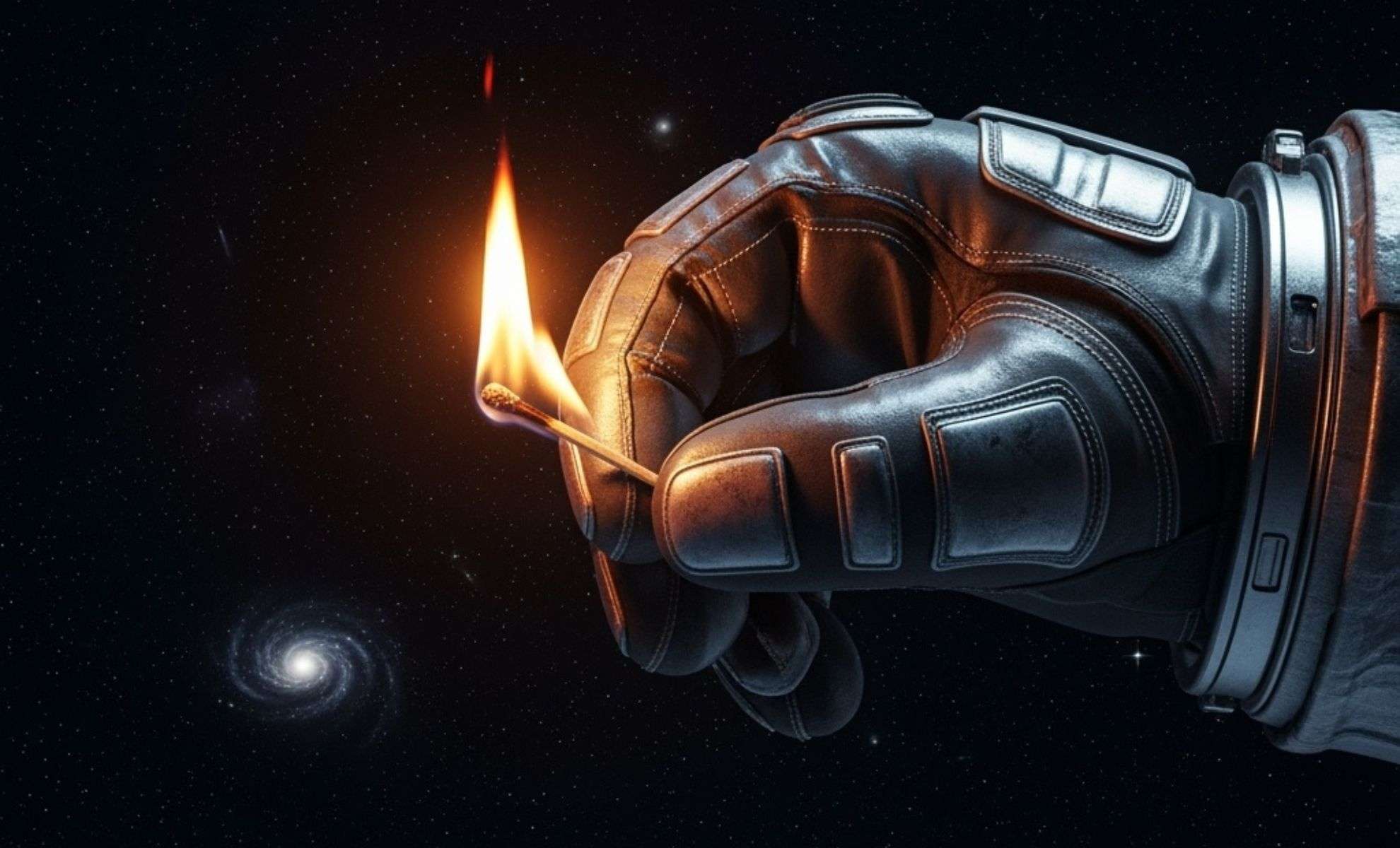
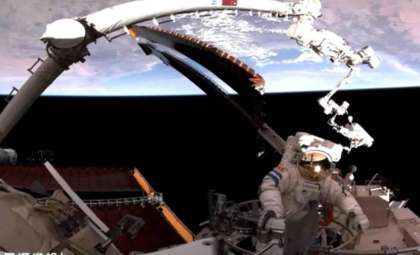
Inside China’s Tiangong space station, lighting a match turned into an extraordinary physics demonstration witnessed by thousands on Earth.
This experiment was more than just a simple demonstration; it highlighted how everyday phenomena like fire transform under microgravity conditions. The event provided engineers, educators, and enthusiasts a unique glimpse into the challenges of life aboard space stations.
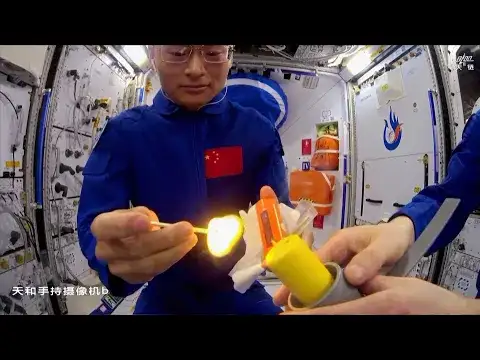
The experiment was conducted by Gui Haichao and Zhu Yangzhu, crew members of Tiangong. Broadcast live to classrooms throughout China, their demonstration went beyond theory: the match flame acted in ways no Earth-bound observer would expect. According to Carroll County Observer, the flame exhibited no flickering or elongation toward the top as seen under gravity.

How Fire Changes in Weightlessness
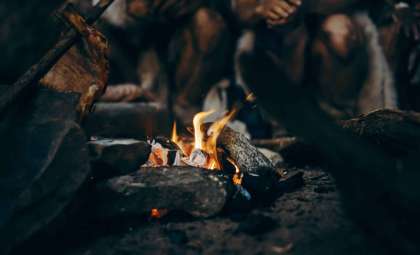
On Earth, a candle flame flickers because heated air rises, drawing fresh oxygen upward and shaping the flame into a teardrop. Without gravity, this convection process vanishes, causing everything to slow down dramatically.
The Carroll County Observer describes the astronauts observing a “slower, bluer flame” that formed a near-perfect sphere—calm, stable, and oddly peaceful. Oxygen diffused evenly around the flame instead of rushing upward, and combustion byproducts remained nearby, altering how the fuel combusted.
This phenomenon isn’t just a visual oddity; it reveals important dynamics of how fire behaves inside spacecraft, where understanding heat transfer and gas movement in enclosed, zero-gravity environments is crucial for safety. The controlled flame yielded vital findings, despite its unexpected behavior.
Tiangong’s Approach Differs From the ISS
Many are unaware of the strict controls on fire aboard the International Space Station (ISS), and this caution is well justified. After a serious fire incident on the Russian Mir station in 1997, fire experiments on the ISS have been limited to highly secured containers with extensive monitoring.
In contrast, China’s Tiangong station permits open flame demonstrations under strict supervision, blending educational outreach with scientific research. Safety measures like ventilation and fire containment protocols are in place, but the station’s philosophy embraces showing fundamental science in action.
Far from reckless, this method reflects a commitment to making space science more accessible and engaging for future generations watching from Earth.
I made this – that time ESA astronaut @Astro_Alex made Mission Control think he might have snuck an actual candle onto @Space_Station. It's amazing what you can do with an old penlight and some spare metallic tape: https://t.co/5UvfA1kC8j pic.twitter.com/TFlHX42YOp
— ESA Technology (@ESA_Tech) March 9, 2021
Beyond the Show: Scientific Implications
While the visual spectacle drew attention, the experiment’s scientific contributions were equally significant. Tiangong’s Combustion Experiment Rack (CER) facilitates probing how flames behave without gravity’s influence—examining expansion, extinction, and soot formation.
Without convection, combustion remnants linger near the flame, affecting the temperature and chemical reactions involved. This knowledge plays a vital role in enhancing spacecraft safety by aiding the design of ventilation systems, smoke detection, and fire extinguishing technologies tailored for space conditions rarely encountered on Earth.
- Categories:
- News




0 comments
Sign in to Comment