
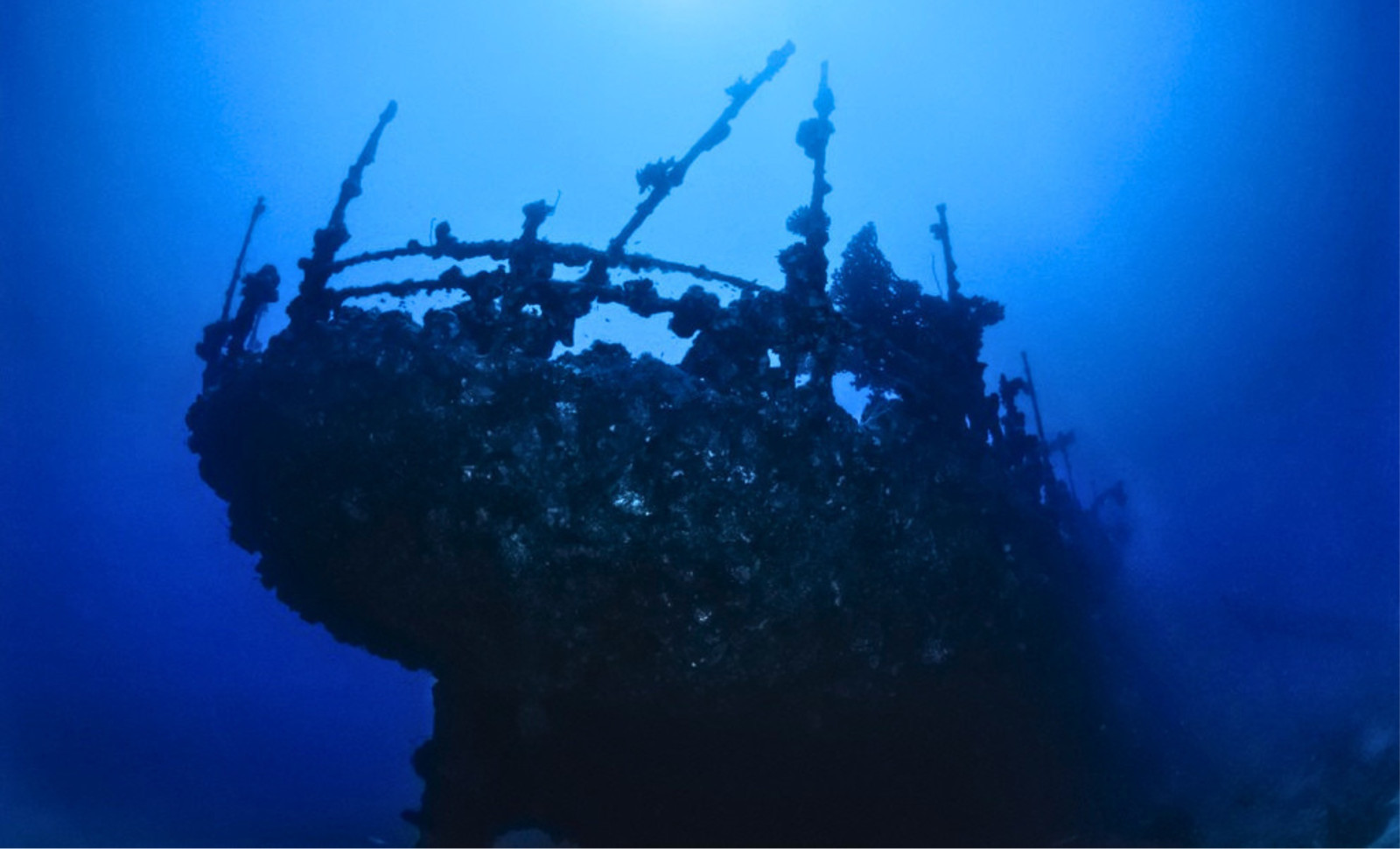
Pollen remnants preserved within the pitch used to waterproof an ancient Roman ship have enabled researchers to trace the vessel’s voyages and repair events across the Adriatic Sea. This innovative discovery offers a unique voyage record, crafted not from typical artifacts like cargo or coins, but from the very substances that maintained the ship’s watertight integrity.
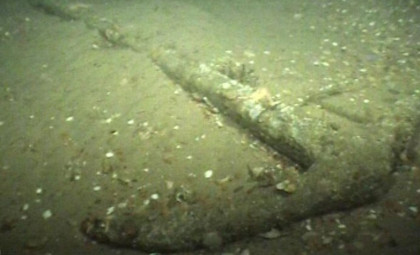
The ship, named Ilovik-Paržine 1, sank approximately 2,200 years ago near Ilovik Island, Croatia. In a detailed study released on April 24, 2026, in the journal Frontiers in Materials, French and Croatian scientists revealed that the vessel’s adhesive coatings hold stratified evidence of its construction origin, repair locations, and the dissemination of maritime expertise throughout the Mediterranean.
By integrating chemical profiling with palynology, the team analyzed ten waterproofing samples gathered from various parts of the wreck. Their results highlighted at least four separate coating phases, each correlating with different operational periods of the ship’s lifespan.

Tracking a Merchant Ship’s Journey Through Layers of Pitch and Wax
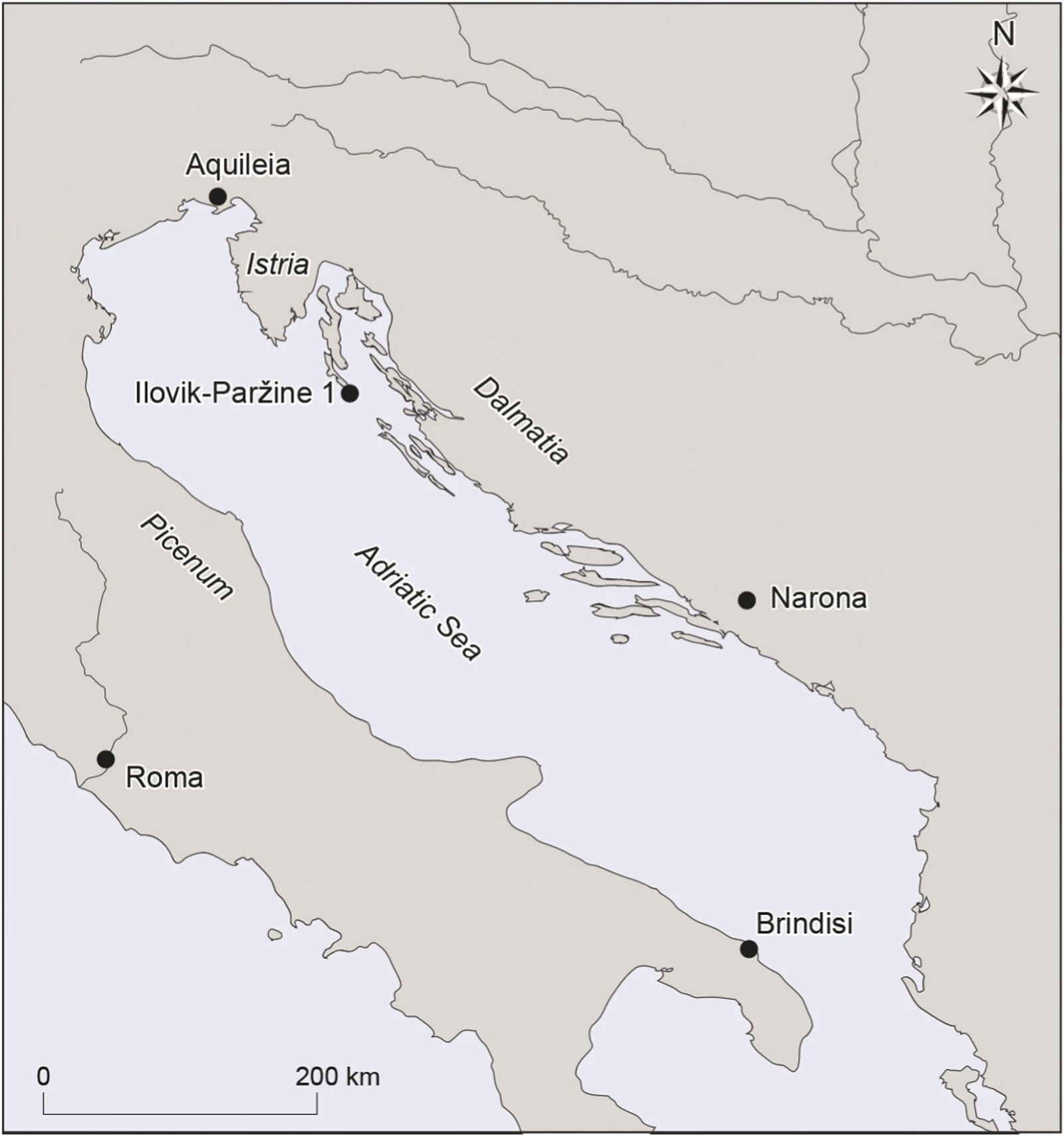
Since its discovery in 2016 at Paržine Bay, the Ilovik-Paržine 1 wreck has been examined during five field seasons by the Croatian Conservation Institute and France’s Centre Camille Jullian. The vessel dates back to about 170 B.C., a time when Rome was rapidly asserting dominance over the Mediterranean region. Earlier studies of ballast stones suggested that the ship was constructed near Brundisium, known today as Brindisi in southern Italy.
Brindisi served as a crucial Adriatic port during the Roman Republic, a fact further substantiated by the coating’s pollen analysis. The earliest layers contained pollen characteristic of Apulia’s typical Mediterranean flora, including olive trees, hazel bushes, and holly oak.
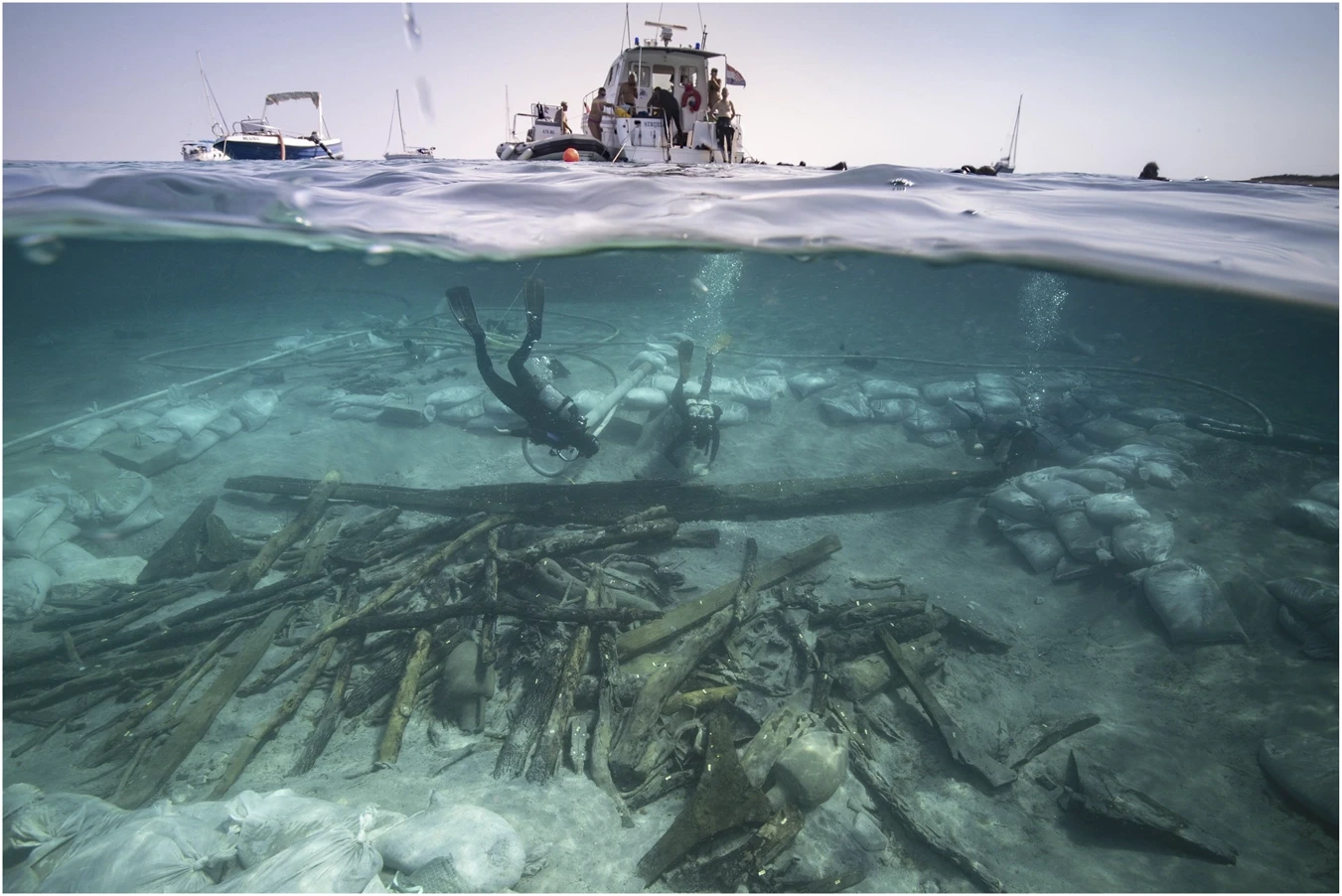
The coatings also narrate a more extended saga. As the ship sailed and required repairs, fresh waterproof layers were applied, each trapping pollen from the local environment, effectively marking the vicinity of each maintenance event.
The Chemistry Behind an Ancient Maritime Mystery
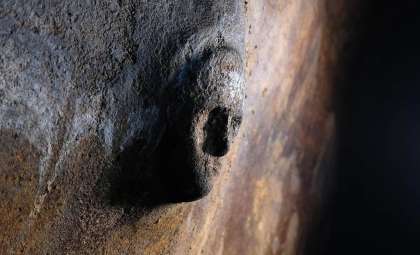
Most samples consisted of a pitch made by heating coniferous wood, likely pine, in low-oxygen conditions. Using gas chromatography-mass spectrometry, analysts detected diterpene markers typical of the Pinaceae family. Elevated quantities of dehydroabietic acid and presence of aromatic compounds like retene indicated the resin had been subjected to temperatures above 300°C.
One sample, labeled PA 101, was unique—a blend of pitch and beeswax. This mixture was termed zopissa by the Roman writer Pliny the Elder in his Natural History. Beeswax addition improves flexibility in cold conditions and reduces viscosity when warm, easing repair applications during voyages. The detection of long-chain wax esters confirmed the beeswax presence.
"What surprised us chemically was this combination of pitch and beeswax in one sample, while the others contained pitch exclusively," stated Armelle Charrié from the University of Strasbourg, corresponding author of the Frontiers study.
The presence of zopissa connects Ilovik-Paržine 1 to a broader ancient Mediterranean vessel-building practice. Similar mixtures were found on older ships, such as a Greek-era wreck off Marseille from the seventh century B.C. According to Charrié, "This finding exemplifies how technological knowledge circulated and transferred throughout the Mediterranean basin," as quoted in Discover Magazine.
The Intricate Detective Work of Microscopic Pollen
Pollen analysis was key to distinguishing between repair episodes. Although many pitch layers appeared chemically similar, their embedded pollen told unique environmental stories.
Led by palynologist David Kaniewski at Toulouse’s TRACES laboratory, the study identified four distinct pollen-related vegetation patterns among the ten samples. One showed Mediterranean forest dominated by holly oak and rockrose; another revealed juniper and heather scrublands; the third contained evidence of marshy meadows rich in sedges, grasses, and cruciferous plants; the remainder corresponded to a matorral habitat including olive groves, hazel, asters, and coastal alder woods.
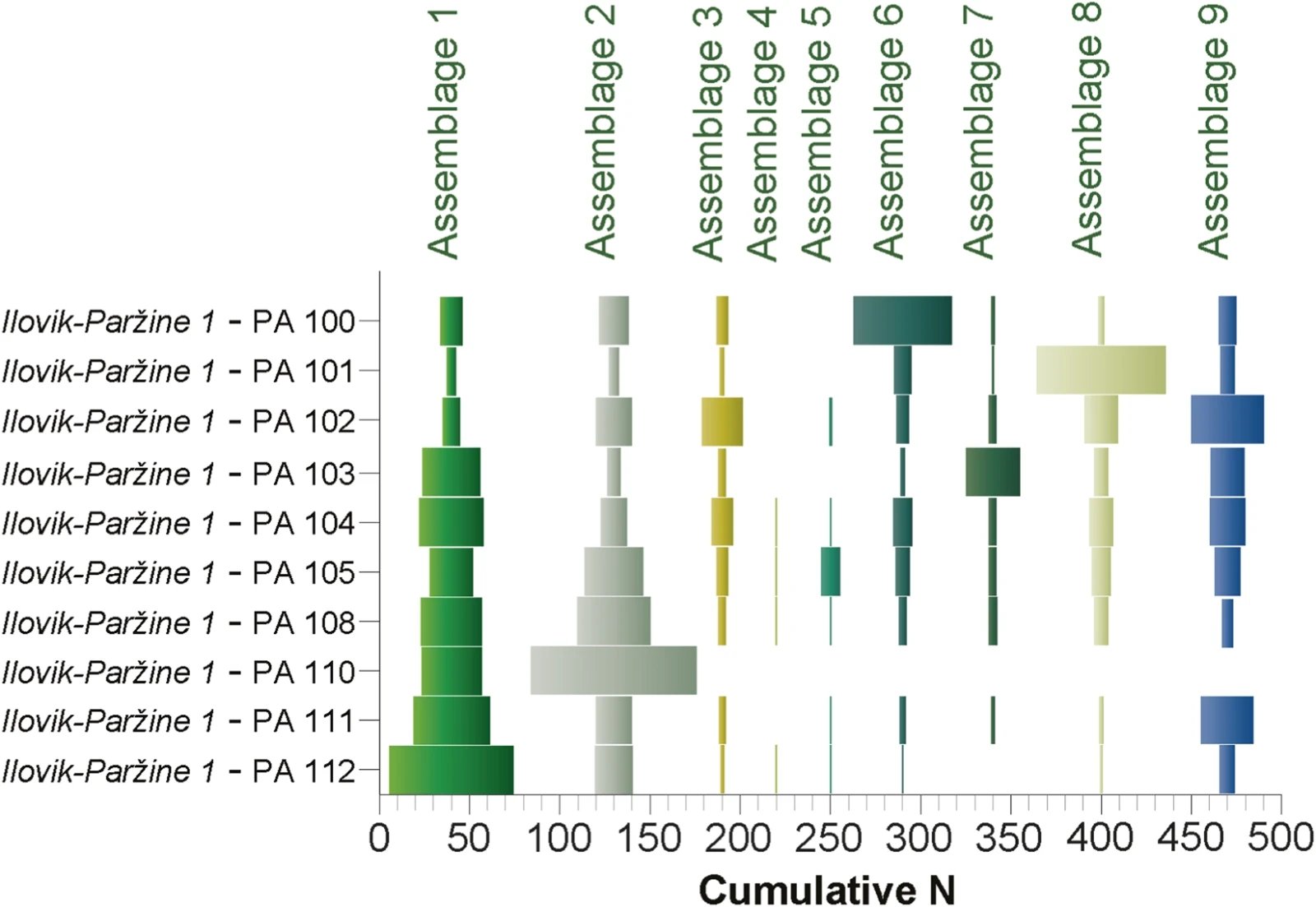
The spatial distribution of these pollen signatures across the hull suggests a methodical repair pattern. While the stern and midship coatings were uniform, the bow featured three distinct layers, indicating multiple localized repairs rather than a single full recoating event. This pattern implies deterioration rates varied by hull section or repairs were applied specifically where leaks developed.
Ancient Sealants Offer New Insights to Maritime Archaeology
Maintenance practices on ancient ships have been largely overlooked in maritime archaeology. Researchers often focus on timber provenance, but the non-wood components that ensured seaworthiness receive less scrutiny. “We have no archaeological sources directly addressing Roman ship repair,” Charrié remarked. “The challenge is recognizing repair evidence without written documentation.”
The Ilovik-Paržine 1 research provides a breakthrough. By correlating molecular data with palynological analysis, the team showed these coatings serve as environmental archives. They concluded that this “analytical strategy opens new research avenues in naval archaeology.”
This technique is now being applied to other Adriatic shipwrecks. The Adriboats project continues investigating adhesives on sewn and mortise-and-tenon vessels along Dalmatia’s coast, uncovering not only construction materials but also routes and maintenance practices of ancient mariners.
- Categories:
- Science




0 comments
Sign in to Comment