
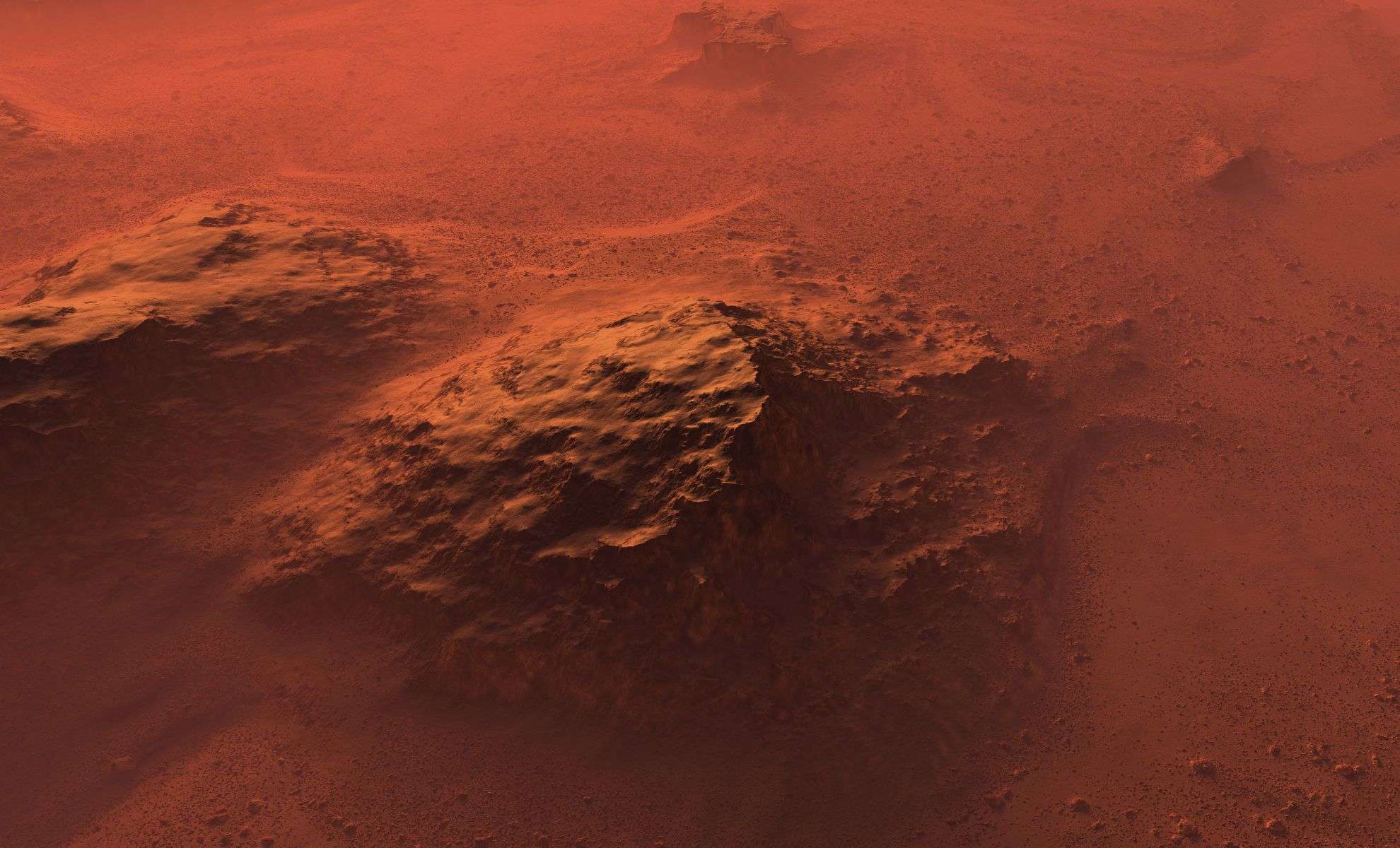
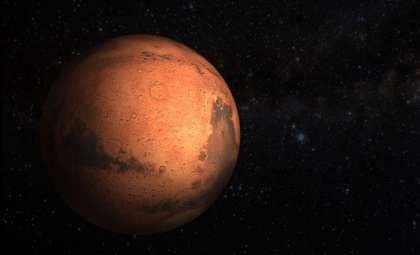
Recent studies propose that intense volcanic eruptions from billions of years ago may have deposited considerable ice near Mars’s equatorial region, traditionally believed to be too warm and arid to sustain such ice. Verification of this could redefine future investigations for extraterrestrial life and select landing sites for astronauts.
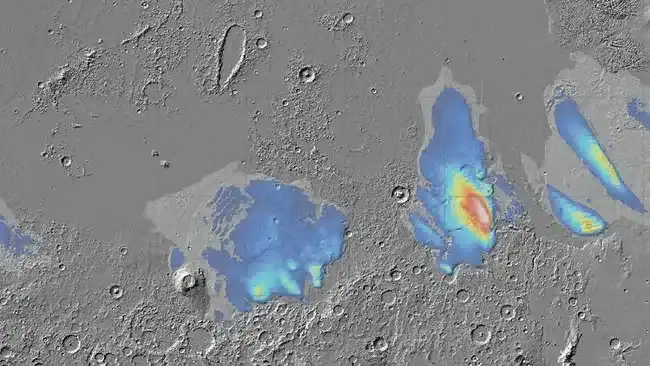
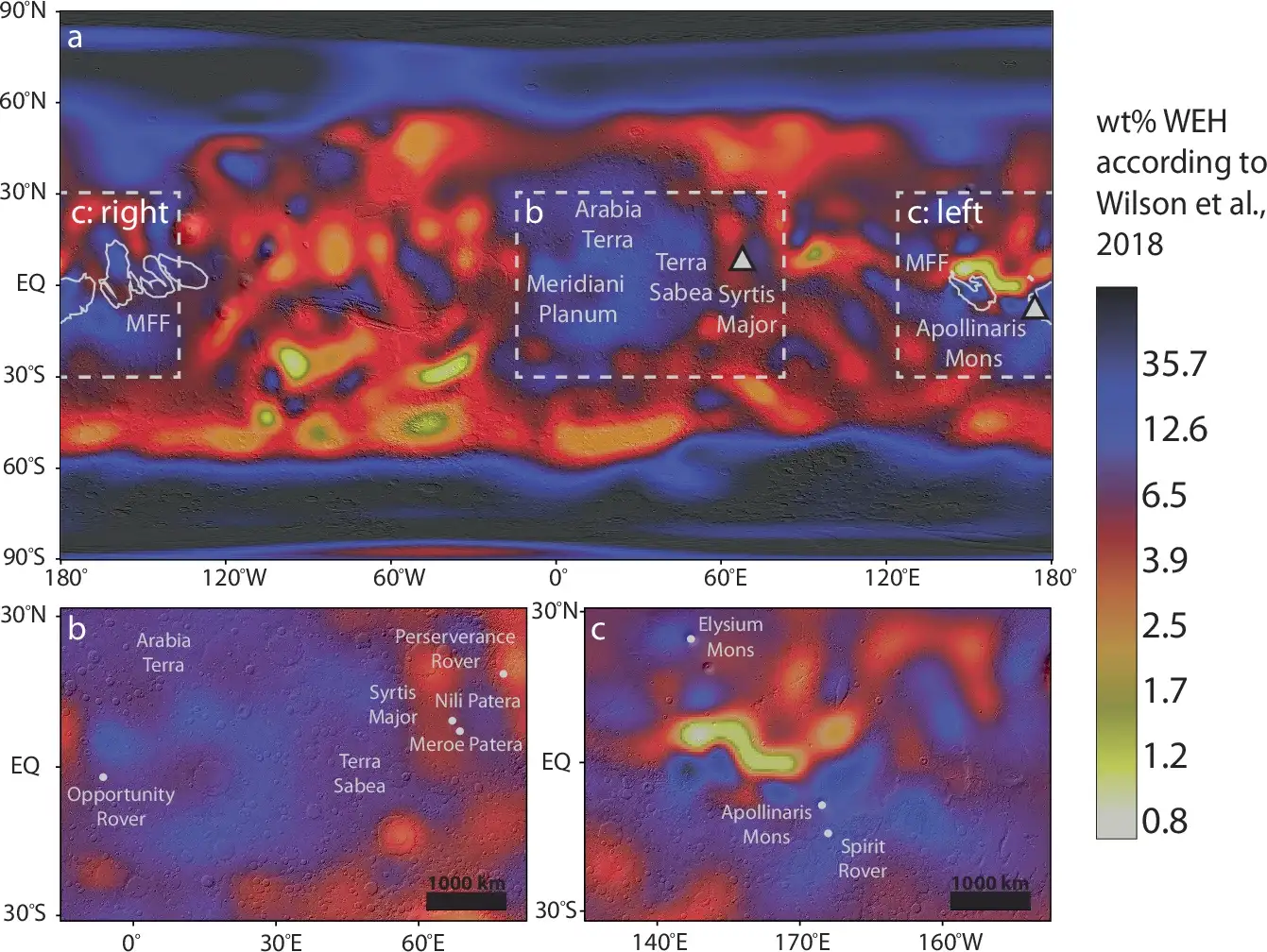
For many years, ice on Mars was thought to be restricted to its polar caps. However, hydrogen data collected by orbital spacecraft have revealed unexpected indications of possible subsurface ice closer to the planet's equator. This intriguing observation has left scientists searching for explanations.
The research detailed in Nature Communications explores simulations showing how ancient volcanic explosions could have released vast amounts of water vapor high into Mars’s atmosphere, leading to localized snowfall around its mid-latitudes. This hypothesis offers a plausible cause for elevated hydrogen measurements recorded by missions such as Mars Odyssey and ExoMars Trace Gas Orbiter.

Volcanic Activity and Ice Accumulation
Between 4.1 and 3 billion years ago, Mars underwent periods of vigorous volcanic eruptions. New climate models indicate these events might have propelled significant quantities of water vapor into the cold upper atmosphere, where it quickly froze and precipitated as ice.
The study estimates that a single vigorous eruption lasting only a few days could deposit as much as 5 meters of ice near the eruption site, according to the publication. The lead author conveyed the significance of these findings.
“Explosive volcanism could repeatedly seed low latitudes with ice and ash, producing buried or insulated ice deposits that help explain the excess hydrogen signals measured near the equator,” said planetary scientist Saira Hamid at Arizona State University.
Concealed Ice Beneath Martian Volcanic Ash
The fate of this equatorial ice may be preservation beneath thick layers of volcanic ash rather than disappearance through melting or sublimation. These ash deposits would have acted as protective insulation, shielding the ice from Mars’s thin atmosphere and harmful radiation, thus maintaining it for millions of years.
“Imagine how much ice could be delivered after repeated eruptions over the course of millions of years,” Hamid noted, as cited by Space.com.
As reported by Phys.org, this volcanic ash layer is crucial for explaining how ice could endure in Mars's comparatively warmer equator, with the potential for vast, stable ice reservoirs hidden just beneath the surface.
Shaping Future Exploration of the Red Planet
Sites thought to contain subsurface equatorial ice might become top priorities for exploration, offering accessible water supplies for future robotic missions and human settlers alike.
“Volcanic regions may be high-priority targets,” said Hamid, underlining the strategic implications of the study.
Beyond logistical considerations, these ice-rich regions provide new insights into Mars's habitability. The study’s authors theorize that volcanic eruptions may have injected sulfur compounds into the atmosphere, triggering a cooling period that allowed ice accumulation and persistence. Simultaneously, geothermal heat and volcanic chemicals could have created transient habitats with conditions favorable to life.
This interplay between volcanic processes and water ice introduces fresh avenues for the pursuit of biosignatures, encouraging researchers to broaden their scope beyond the polar regions to ancient volcanic landscapes where ice and ash have preserved clues to Mars’s past.
- Categories:
- Space







0 comments
Sign in to Comment