

A colossal “gravity anomaly” beneath Antarctica intensified as the continent evolved into an ice-covered landmass millions of years ago, reveals recent research in Scientific Reports. This discovery connects one of the Earth’s most unusual gravitational features to deep planetary processes and a significant era in Antarctic climate evolution.
The Planet’s Weakest Gravity Zone
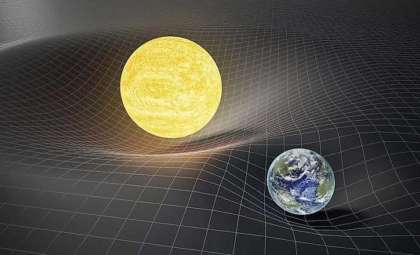
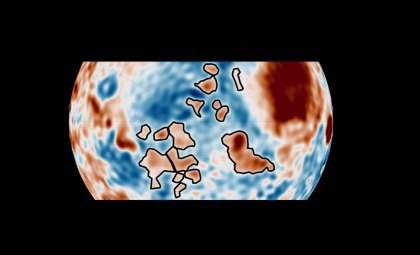
After accounting for Earth’s spin, the lowest gravitational strength anywhere on our planet is detected beneath Antarctica. Known as a gravity anomaly, this doesn’t mean gravity vanishes there, but rather that measurements are notably lower than predicted by standard models.
Though imperceptible to those traversing the ice sheet, satellites have captured this subtle dip from space. This weak gravity region even redistributes ocean water, as water migrates toward stronger gravitational pull.

Near Antarctica, this causes the ocean surface to lie marginally lower relative to Earth’s center. This phenomenon has long puzzled scientists. The latest study indicates the cause stems from deep within the planet.
Insights from Earth’s Deep Mantle
Leading the investigation were Alessandro Forte from the University of Florida and Petar Glišović of the Paris Institute of Earth Physics. Their research suggests that variations in mantle density beneath Antarctica explain the gravity anomaly.
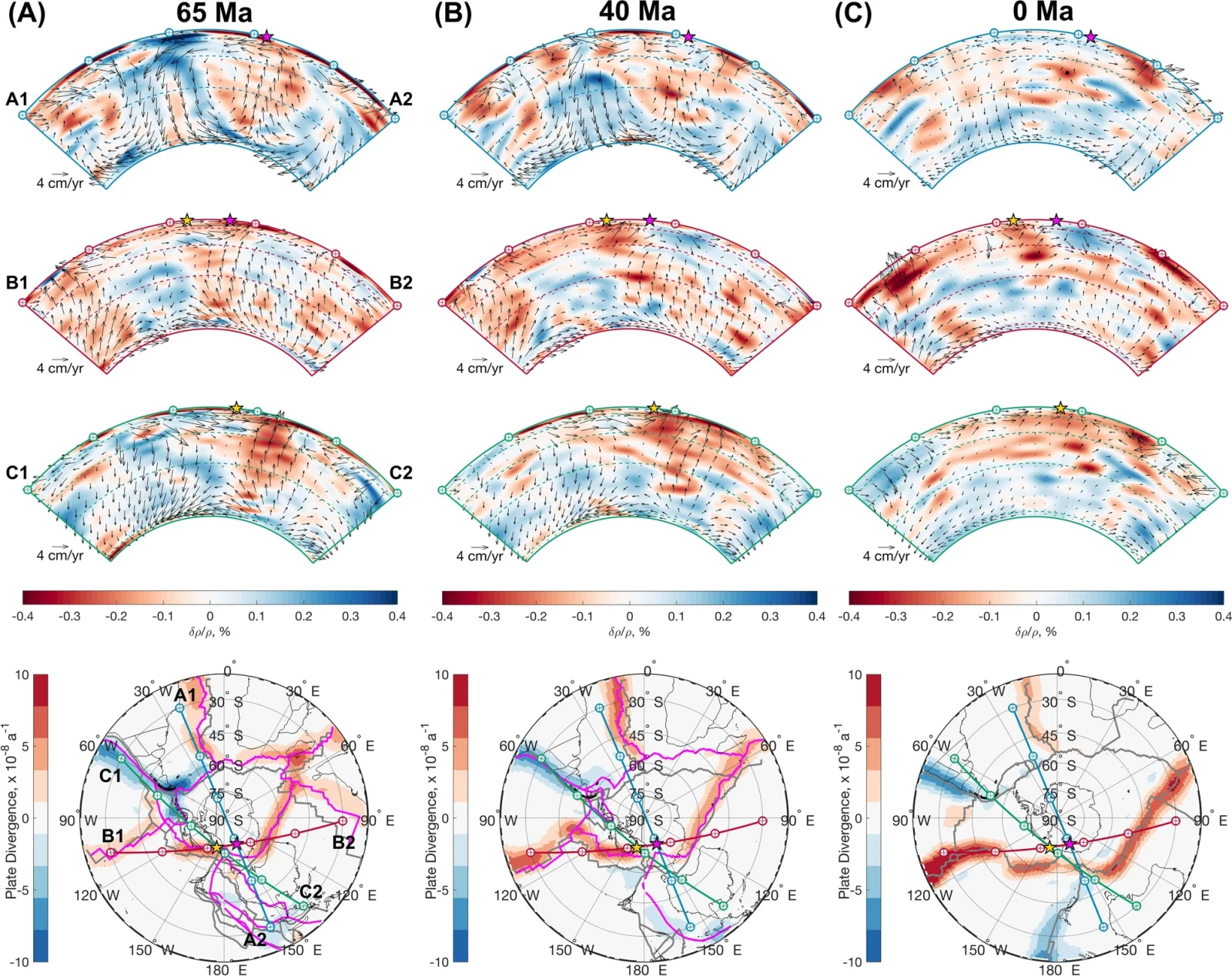
To uncover these interior features, the researchers examined global seismic data. As seismic waves propagate through Earth, their speed changes depending on the density of the material they pass through, enabling scientists to create a 3D map of Earth’s interior. Using this model, they calculated the resulting gravitational field, which closely matched satellite measurements, reinforcing their conclusion.
“Imagine doing a CT scan of the whole Earth, but we don’t have X-rays like we do in a medical office. We have earthquakes,” stated Forte in a University of Florida statement. “Earthquake waves provide the ‘light’ that illuminates the interior of the planet.”
Tracing Gravity Changes Over Millions of Years
One of the study’s most remarkable insights emerged when the team simulated mantle dynamics to trace the evolution of the gravity field over the last 70 million years. Their results revealed that Antarctica’s gravity anomaly was not always present in its current form.
The anomaly grew notably between approximately 50 and 30 million years ago, coinciding with Antarctica’s transformation into a continent blanketed by ice. While this doesn’t establish a direct cause, it suggests that deep Earth processes may have influenced surface climate shifts during this critical period.
Could Gravity Shape Ice Sheet Development?
The mechanisms involved are subtle yet significant. Gravity contributes to the distribution of ocean waters worldwide, and even minor variations in Earth’s gravitational field can affect sea surface heights and long-term ocean currents. Concurrently, slow mantle convection can modify continental elevations over geological timescales.
“If we can better understand how Earth’s interior shapes gravity and sea levels, we gain insight into factors that may matter for the growth and stability of large ice sheets,” he explained.
Such elevation shifts can influence regional climates, ice sheet stability, and glacier movement. Future research aims to determine whether these deep mantle activities quietly altered Antarctica’s surface environment, potentially encouraging the expansion of its icy coverage.
- Categories:
- News




0 comments
Sign in to Comment