
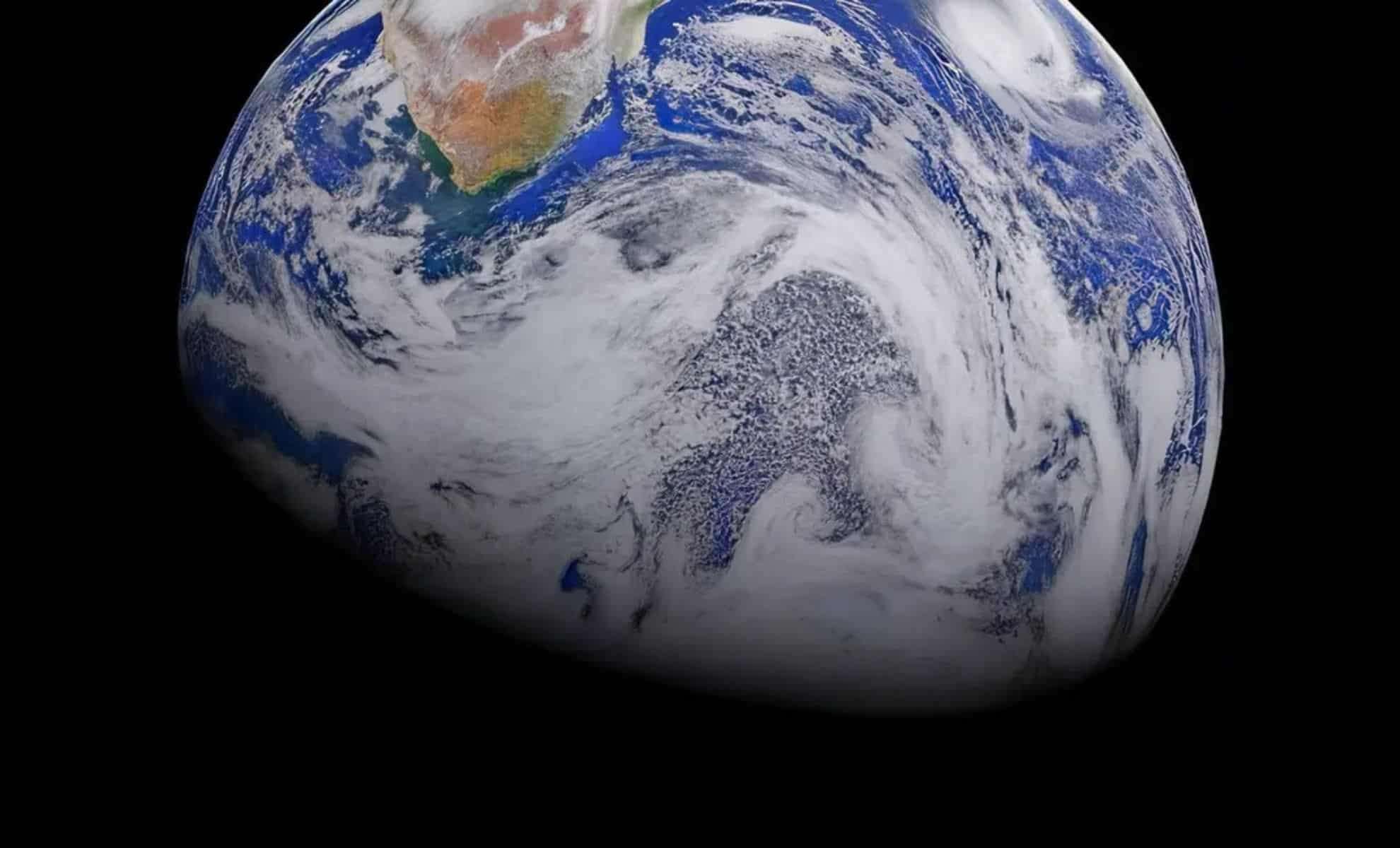
The eddy-driven jet (EDJ) in the Southern Hemisphere, a vital atmospheric current influencing weather across South America, Southern Africa, Australia, and Oceania, is experiencing notable alterations. This swift westerly wind belt has been drifting further south and intensifying, thereby reshaping regional climates. New findings indicate that global warming accounts for nearly half of this change, while other climatic factors also contribute.
Key Contributors to the Jet Stream’s Movement
Researchers have monitored evolving wind behaviors in the Southern Hemisphere’s EDJ, identifying two prominent changes: an acceleration of wind speeds and a gradual southward shift of its central axis. To dissect the causes driving these adjustments, a team led by Julia Mindlin at the Institute for Meteorology, Leipzig University utilized causal inference techniques, enabling them to pinpoint specific influences even amid overlapping variables.
Mindlin’s group estimated that about 50% of the jet stream’s poleward drift stems directly from global warming, with the remaining portion influenced by a mixture of interrelated climate factors.

Many of these changes are linked to human impacts, though some elements are still difficult to fully identify. “Our results reveal the complex ways the jet stream reacts to climate change, especially as wind intensities increase at such a rapid pace,” Mindlin explained.
Advancing Climate Forecast Accuracy for the Coming Years
Beyond uncovering the causes of the jet’s displacement, the scientists concentrated on enhancing climate predictive tools. Conventional models often target long-range forecasting, but this study highlights the importance of refining short-term projections, which are critical for sectors like agriculture, water resource management, wildfire mitigation, and infrastructure planning.
By analyzing how well various models replicate the EDJ’s observed dynamics, the researchers excluded less accurate simulations and prioritized those closely aligned with real-world patterns. This model weighting approach tightens the predicted scope of jet stream changes over the coming decade. “The techniques we propose can improve forecast reliability for the next ten years,” Mindlin noted.
Implications of the Jet Stream Shift for Regional Climates
The EDJ’s southward migration also alters its climatic influence. Areas situated poleward of the jet may encounter heightened storm activity, stronger wind events, and shifts in ocean currents and marine biodiversity, while equator-proximate zones might see fewer weather fronts, resulting in drier summers and increased drought susceptibility.
For example, elevated wind speeds could further challenge crop production in southern Australia, which is vulnerable to climatic variability. Similarly, changing jet patterns affect water supply in Chile and Argentina by modifying reservoir inflow patterns. In Southern Africa, intensified winds may exacerbate wildfire risks, complicating fire management efforts.
Using Causal Inference to Decipher Complex Climate Interactions
To better disentangle the intertwined climate influences, the team applied causal inference methods, which allow them to evaluate the impact of each factor independently. This enables questions such as, “How would outcomes differ if the tropical Pacific warming had not occurred?” allowing deeper insights into overlapping effects from greenhouse gases, sea surface temperature changes, and atmospheric circulation shifts.
Combining causal inference with a “storyline” technique—which charts sequential cause-and-effect pathways—helps translate complex global signals into local repercussions. Such approaches empower policymakers to connect large-scale climate trends with regional risks, facilitating more informed planning. As these methodologies evolve, they promise to become essential tools for generating localized and actionable climate risk assessments.
- Categories:
- News











0 comments
Sign in to Comment