
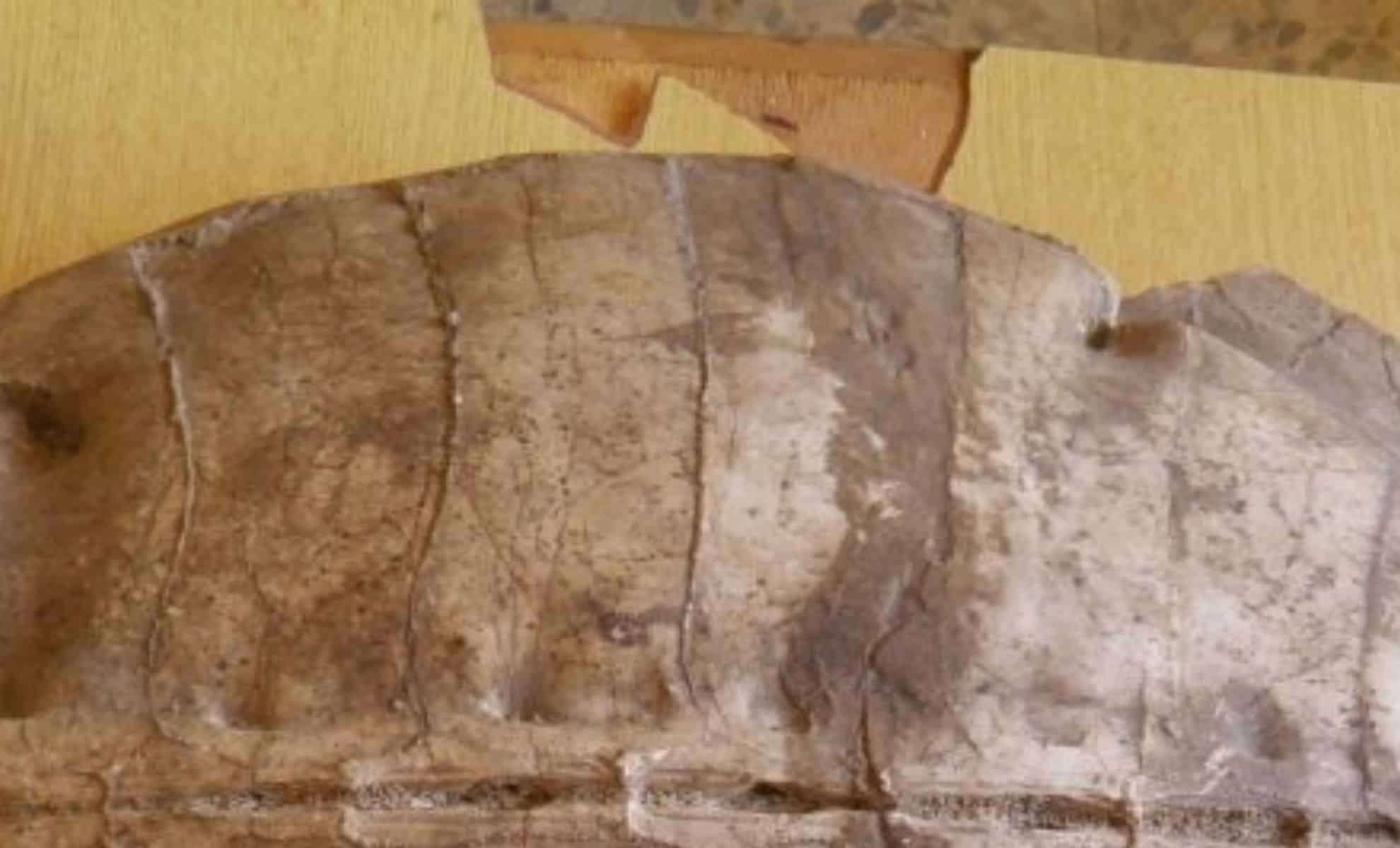
Researchers have uncovered a remarkable 50-million-year-old fossil of a sea turtle in northern Syria, representing the nation’s first officially documented vertebrate fossil species. Published on July 23, 2025, in Papers in Palaeontology, the specimen introduces Syriemys lelunensis, a new species that offers fresh insights into the evolution and distribution of ancient marine turtles.
A Fossil That Lay Forgotten
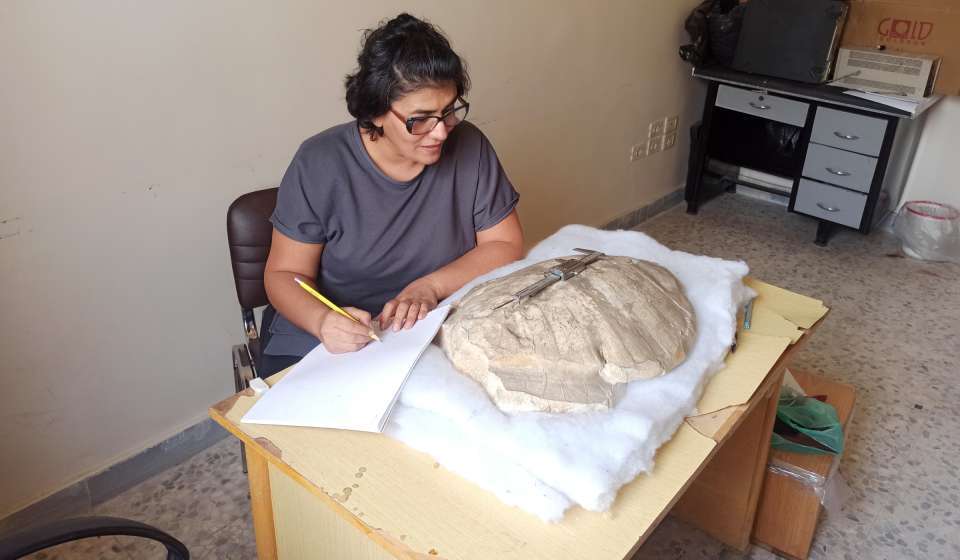
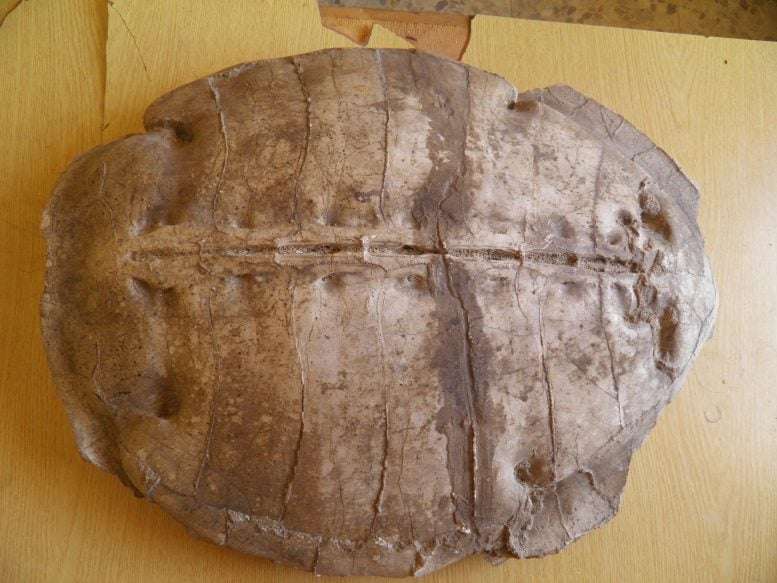
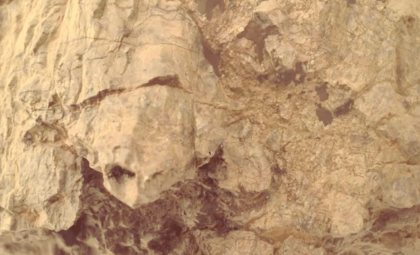
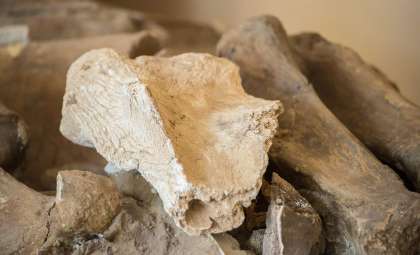
During a 2010 quarry blast near Al-Zarefeh, close to Afrin city, the fossilized remains of an ancient sea turtle surfaced. Stored for over ten years at the offices of Syria’s General Directorate of Geology and Mineral Resources in Aleppo, it was not until an international team of scientists examined the specimen that its significance became clear. The fossil comprises a nearly complete internal mold of the shell’s carapace, along with sections of the lower shell, pelvic girdle, and hind limbs. Its oval-shaped carapace measures 53 cm in length and 44 cm in width.
The research was spearheaded by Wafa Adel Alhalabi, a Syrian-Brazilian paleontologist affiliated with the University of São Paulo. Collaborators from Germany, Lebanon, Canada, Syria, and Brazil joined forces to formally name and describe the species Syriemys lelunensis, a name that combines the Greek words for "Syria" and "turtle."

Unraveling an Ancient Lineage
Distinct from modern side-necked turtles, which inhabit freshwater environments exclusively, Syriemys lelunensis was part of the extinct Stereogenyini, a group adapted to marine life. This fossil discovery extends the known existence of this turtle lineage by over ten million years, revising previous timelines concerning their evolution and migration.
The fossil’s age was determined by analyzing foraminifera—tiny shelled protozoans—within the surrounding sediment. These microfossils confirmed the turtle dates back to the early Eocene epoch, a period defined by warm climates and extensive shallow seas.
Insights From the Ancient Tethys Sea
Millions of years ago, the region now known as Syria was beneath the Tethys Ocean, an expansive seaway that provided a habitat for marine reptiles like Syriemys lelunensis. Dr. Gabriel S. Ferreira of the Senckenberg Centre for Human Evolution and Palaeoenvironment in Tübingen remarks that this finding “introduces a new geographic location for the Stereogenyini distribution.”
Fossils of this turtle family have been discovered across continents including South and North America, the Caribbean, Africa, and East Asia. The Syrian fossil strengthens the idea that the Mediterranean basin once acted as a pivotal center for the evolution of these ancient sea turtles.
Preserving Science During Turmoil
The unearthing of this fossil underscores the power of global scientific cooperation. “Given the ongoing challenges in Syria, discussing fossils might seem detached from reality,” notes Professor Max Langer, head of the PaleoLab at the University of São Paulo and co-author of the paper. “Yet, this publication highlights Syria’s scientific potential and the perseverance of research despite adversity.”
This discovery initiates a broader project known as Recovering Lost Time in Syria, focused on cataloging and studying the country's geological heritage. The initiative builds upon fossil samples that Alhalabi documented in situ before war rendered the sites inaccessible.
- Categories:
- News




0 comments
Sign in to Comment