
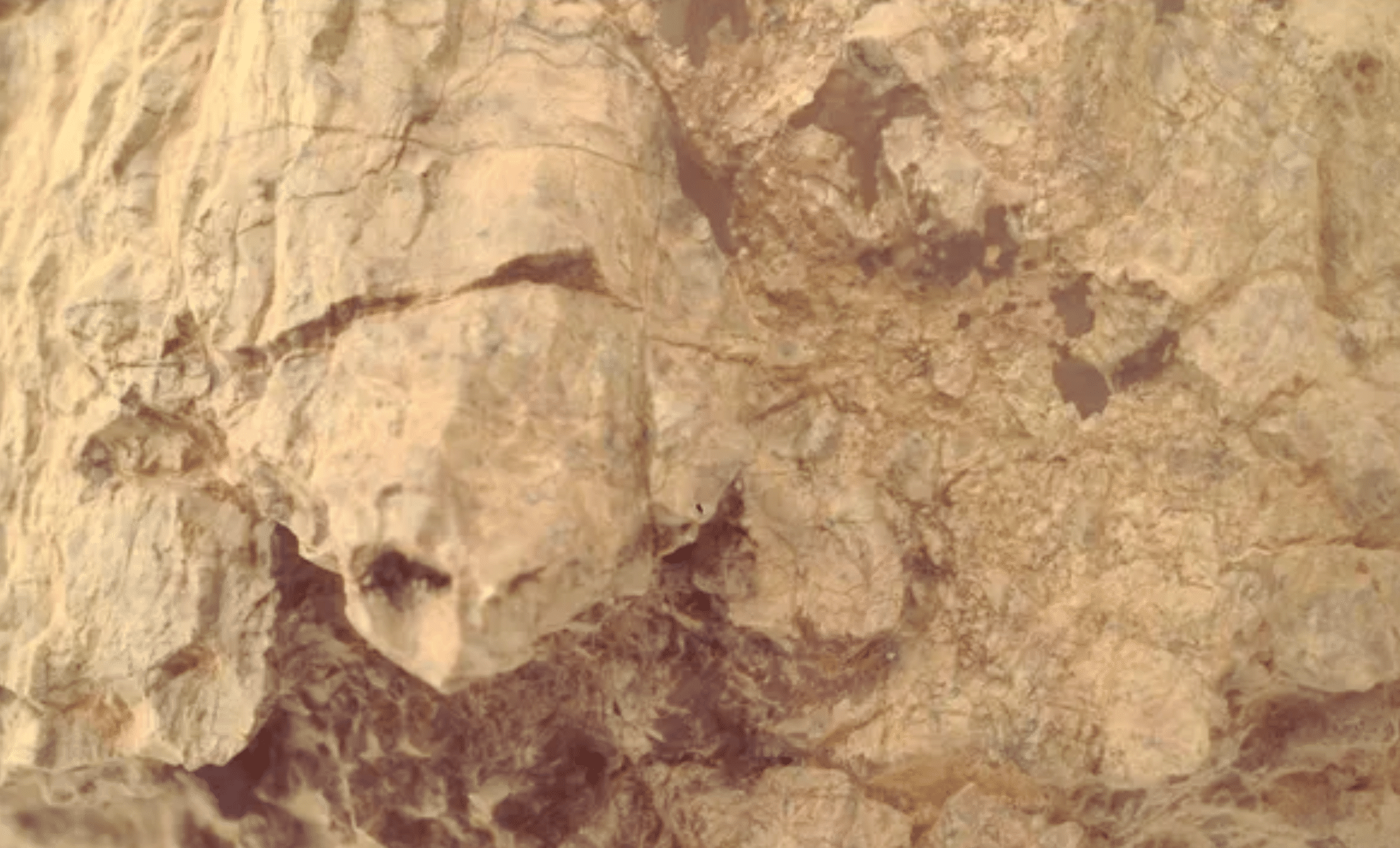
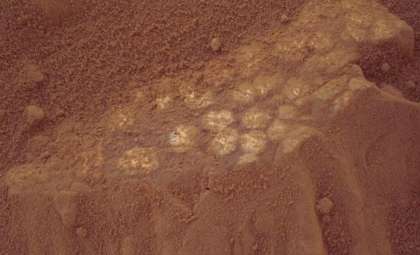
NASA’s Perseverance rover has once again offered a glimpse into Mars’ intriguing surface, revealing a rock formation resembling a turtle, photographed on August 31, 2025. As detailed by Space.com, this remarkable image was taken using the rover’s advanced SHERLOC-WATSON camera system, which allows close examination of Martian minerals and textures. The rock’s resemblance to a turtle’s head emerging from its shell highlights the unexpected and diverse landscapes scientists continue to explore on Mars.
Decoding the Curious Turtle-Like Rock on Mars
This notable picture was captured during the rover’s 1,610th sol on the Martian surface, located within the 28-mile-wide Jezero Crater, an ancient basin once believed to have contained a lake. The rock’s shape, evocative of a turtle’s head peeking from its shell, quickly attracted interest thanks to its striking familiarity. Despite its lifelike resemblance, it is a natural geological formation, emphasizing the wonder robotic missions continue to bring by uncovering Mars’ varied surface features.
To capture this image, Perseverance employed the SHERLOC instrument (Scanning Habitable Environments with Raman & Luminescence for Organics and Chemicals) mounted on its robotic arm, working in tandem with the WATSON camera (Wide Angle Topographic Sensor for Operations and eNgineering). SHERLOC illuminates the target with ultraviolet light, while WATSON records high-resolution close-ups of the rocks, allowing detailed examination of surface textures and composition. Together, these instruments provide unparalleled insights into Martian geology.

Significance of the Turtle-Shaped Rock to Mars Geology
While seeing recognizable shapes in rock formations is not unusual during planetary exploration, this “turtle rock” extends beyond a mere visual curiosity. Mars’ landscape is heavily influenced by wind erosion, sediment deposition, and historical water activity, making such formations valuable clues in reconstructing the planet’s geological history.
Scientists suggest that wind abrasion played a crucial role in sculpting the turtle-shaped contours. Jezero Crater itself is known for complex sedimentary layers, including delta formations where water and wind once interacted over millions of years. Investigating the rock’s layering and texture helps researchers understand Mars’ changing climate, atmospheric conditions, and mineral content over time, informing models of how Mars evolved from a possibly habitable environment to its present dry and cold state.
SHERLOC-WATSON: Exploring Mars at the Microscopic Level
The SHERLOC-WATSON instrument set plays a vital role in assessing the planet’s mineral makeup. Using spectroscopic methods, SHERLOC detects organic compounds and minerals associated with aqueous environments. Meanwhile, WATSON captures detailed imagery that situates these findings within visible patterns on rock surfaces.
This technology is essential for two main purposes: identifying potential past habitats for life and aiding the selection of rock samples for future return missions. As the first rover equipped with a sample caching system, Perseverance bases much of its sample targeting on data from SHERLOC and WATSON.
By combining chemical analysis with high-resolution imagery, this toolset lets scientists interpret Mars’ rock record like a detailed archive, unveiling the physical and chemical processes that shaped particular locations over billions of years.
Pareidolia on Mars: Seeing Familiar Patterns in Alien Terrain
The turtle-like rock adds to numerous Martian images that inspire pareidolia, a psychological tendency where human minds perceive recognizable shapes in random patterns. Similar examples include “faces,” “spoons,” and even “crabs” seen in previous Mars rovers’ photos, fueling both imagination and scientific curiosity.
Though these appearances are coincidental, they hold value by drawing attention to ongoing missions and fostering public interest. While no one suggests actual turtles roam Mars, such images enhance engagement, encourage geological literacy, and remind researchers of the challenges in interpreting extraterrestrial landscapes through human perception.
Jezero Crater: A Key Site for Mars Exploration
Chosen as Perseverance’s landing zone due to its rich geological diversity, Jezero Crater offers layered sedimentary deposits thought to preserve traces of ancient microbial life. As the rover navigates this terrain, every rock formation presents opportunities for scientific discovery.
Features like fine layering, cross-beds, and mineral veins here support ideas that stable bodies of water once existed on Mars. Analyzing these materials with instruments such as SHERLOC and PIXL (Planetary Instrument for X-ray Lithochemistry) helps pinpoint environments that might have supported life.
Though the turtle-shaped rock is not itself a breakthrough, it symbolizes the unusual and captivating natural forms that Perseverance routinely encounters on the Martian surface.
- Categories:
- News





0 comments
Sign in to Comment